Batch-to-Batch Consistency in Reamer Manufacturing: How We Prevent Dimensional Drift in Bulk Orders
When sourcing CNC cutting tools for high-volume automotive component machining, initial sample performance is only half the battle. For industrial tool distributors supplying Tier 1 and Tier 2 automotive manufacturers, the true test lies in batch-to-batch consistency.
A variation of just a few microns in a reaming tool across a 500-piece order can disrupt automated machining lines, lower process capability (Cpk), and cause catastrophic scrap rates for end customers. More importantly, dimensional drift damages a distributor's reputation—a cost far exceeding the price of the reamer itself.
This guide explores the root causes of dimensional drift in volume production, how advanced manufacturing engineering solves them, and how choosing the right carbide reamers and PCD cutting tools transforms your Total Cost of Ownership (TCO).
1. The Silent Profit Killer: The Real Cost of Dimensional Drift for Distributors
For a cutting tool distributor, delivering a carbide reamer order with batch inconsistencies triggers a domino effect of unbudgeted costs:
· Escalating Scrap & Inspection Costs: When hole tolerances slip from IT6 to IT8 midway through a production batch, workpieces fail internal Quality Assurance. The downtime required to recalibrate CNC machines directly impacts line efficiency.
· Depreciated Cpk Performance: Automotive quality standards (IATF 16949) demand stringent statistical process control. Unstable reamers cause process capabilities (Cpk) to drop below the required 1.33 threshold, triggering supplier audits.
· RMA Overhead and Engineering Hours: Managing Return Merchandise Authorizations (RMA) forces your local application engineers to spend days troubleshooting at the end-user's facility rather than closing new sales.
· Excess Setup & Presetting Times: Inconsistent cutter geometry forces machine operators to manually adjust tool presetters and offset parameters on every tool change, destroying line OEE (Overall Equipment Effectiveness).
2. Root Causes of Inconsistency in Mass-Produced Reamers
Achieving micron-level dimensional stability across large production batches requires complete control over materials, thermal dynamics, and edge preparation.
Material Grain & Substrate Instability
In standard carbide reamers, variations in binder content (Cobalt) or carbide grain distribution lead to uneven thermal expansion and micro-wear rates. In PCD cutting tools, inconsistent PCD diamond grain sizes create localized stress points, causing unpredictable edge chipping during high-speed finishing of aluminum alloys.
Thermal Expansion and Machine Drift
Conventional tool grinding without real-time thermal compensation leads to subtle dimensional drift as the grinding machine warms up during long production runs. A 2°C ambient temperature fluctuation can alter grinding precision by several microns.
Edge Micro-Geometry and Burr Formation
Inconsistent honing or spark erosion (EDG) processes yield irregular cutting edge radii. Without precise edge preparation, cutting forces fluctuate dramatically between individual tools in the same batch, causing premature wear and chatter marks.
3. How Advanced Tool Manufacturing Guarantees Batch-to-Batch Precision
To eliminate dimensional drift in bulk orders of PCD cutting tools and carbide reamers, our production process integrates strict engineering controls at every stage:
[Raw Material Sourcing] ➔ [EDG & EDM Processing] ➔ [3D Chipbreaker Design] ➔ [100% ZOLLER Inspection]
Ultra-Fine PCD Grain Selection
We source certified diamond substrates with uniform particle distribution. By matching specific PCD grain sizes to the workpiece material (e.g., high-silicon aluminum vs. composite materials), we ensure identical edge sharpness and wear resistance across every PCD reamer produced.
EDG Spark Erosion & Precision EDM Shaping
Using state-of-the-art wire electrical discharge grinding (EDG), the cutting edges of our PCD cutting tools are eroded with zero mechanical force. This prevents micro-fractures on the PCD layer and maintains edge radii consistency within ±0.001 mm.
Optimized 3D Chipbreaker Geometry
Integrated 3D chipbreakers molded and ground into the reaming tool ensure predictable chip evacuation. By controlling chip formation, cutting temperatures remain stable, eliminating thermal deformation of the tool body during deep-hole finishing.
Automated Thermal Control and 100% Presetter Inspection
All grinding and erosion equipment operate in climate-controlled environments with real-time temperature compensation. Every finished reamer undergoes fully automated 3D optical inspection on ZOLLER presetting systems. We supply full measurement reports and batch Cpk data with every bulk shipment.
4. TCO & ROI Analysis: Calculating the True Value for Procurement Managers
When evaluating suppliers, looking solely at the purchase price of a reamer ignores the hidden costs of tool failure. Let’s compare a standard low-cost supplier against a high-consistency PCD reaming tool supplier in a high-volume automotive aluminum valve guide production line (100,000 components/year).
5. Partnering with a Reliable OEM Tool Manufacturer
For tool distributors aiming to scale their business in North America and Europe, offering private-label carbide reamers and PCD reamers backed by verified batch consistency is the ultimate competitive advantage.
Our Partner Support Program Includes:
· Private Labeling & Laser Marking: Full OEM branding with custom batch QR codes for full traceability.
· Buffer Stock & VMI Programs: Dedicated safety stock in our warehouse to guarantee 48-hour dispatch for urgent replenishment.
· Regrinding & Re-tipping Services: Full secondary life-cycle management to maximize tool life and improve end-user ROI.
· Full Technical & Engineering Support: 24-hour CAD drawing response and cutting data optimization for your end-user RFQs.
Ready to Elevate Your Tooling Line?
Stop letting dimensional drift jeopardize your customer relationships and profit margins. Contact our engineering team today to request sample testing or get a custom OEM quotation for high-precision reamers.
Sharing typical case studies
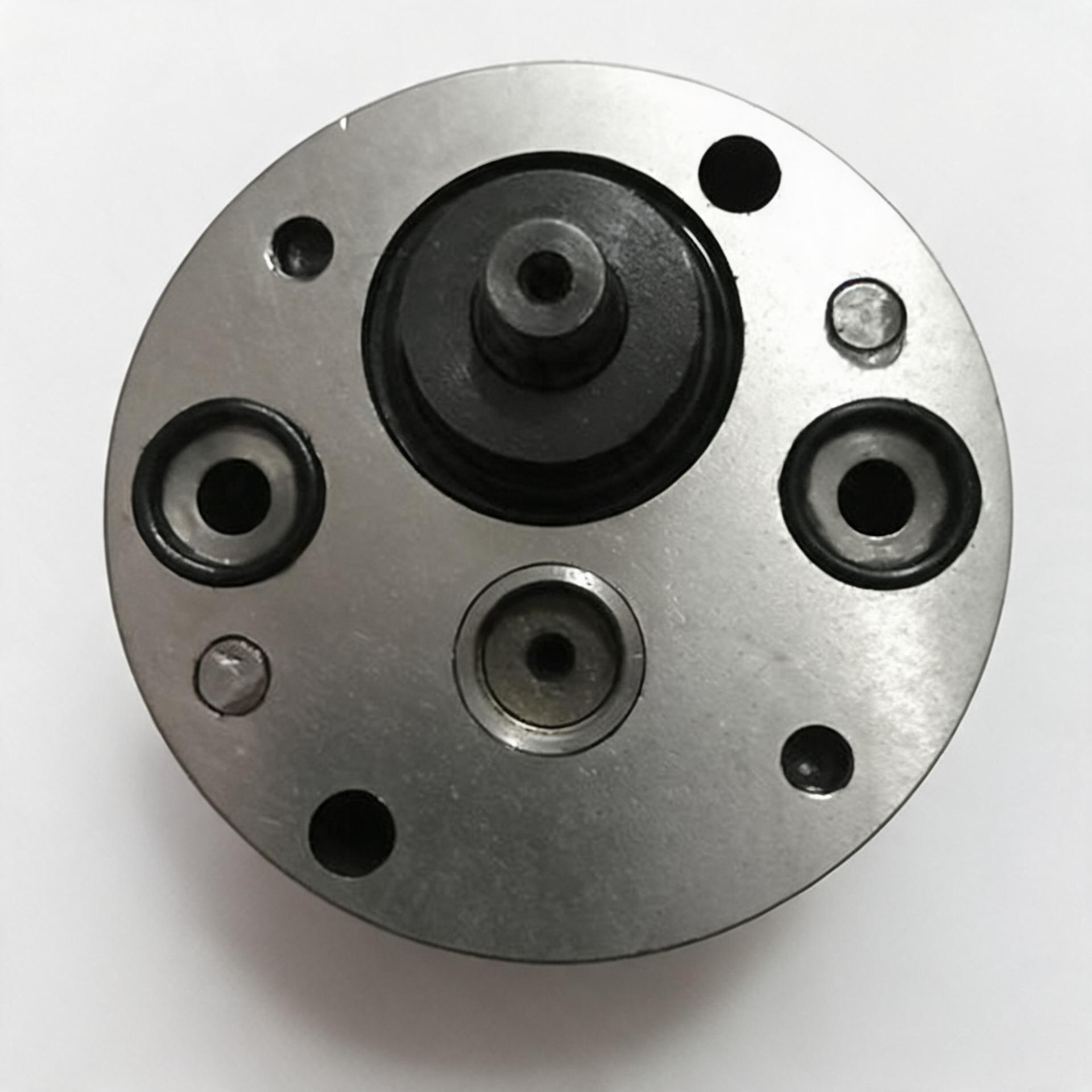
A gear pump is a simple-structured, widely used positive displacement pump that transfers fluid from the low-pressure side to the high-pressure side via the rotation of a pair of meshing gears, commonly employed in medium-and low-pressure hydraulic and lubrication systems. Its key components include: pump housing, driving gear, driven gear, front and rear end caps, bearings, and shaft seals.
Part to be processed: Gear pump rear cover plate •
Material used: Stainless steel 316L
Machine Tool Equipment: Vertical Machining Center •
Cooling Method: Internal Cooling •
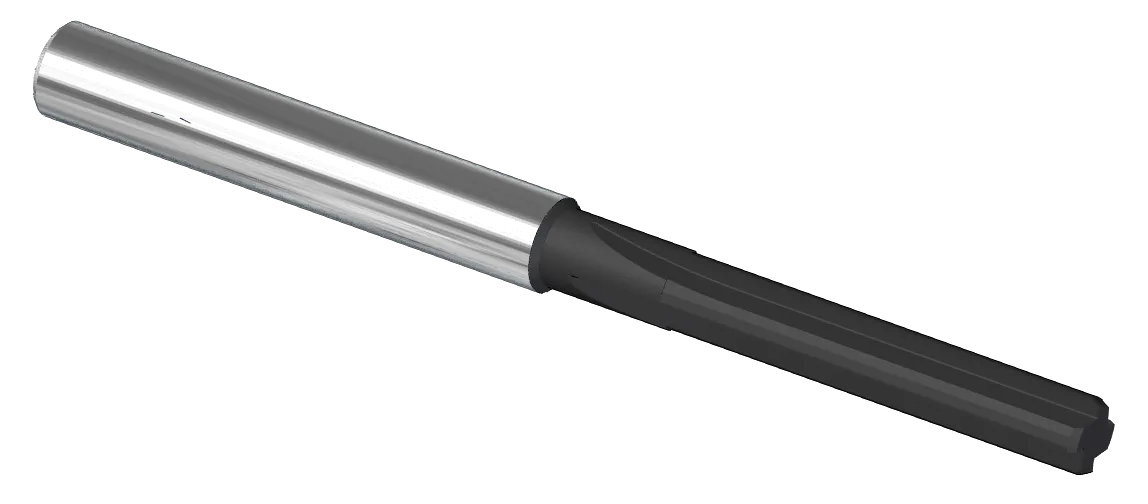
Processing Part: ∅5 Trench Bit •
Durability requirement: 600 units •
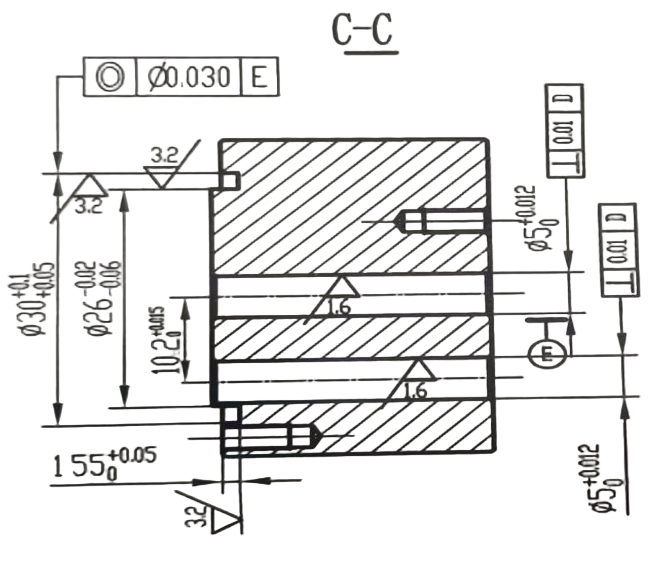
Product Part Drawings:
Challenges in part machining
1. Stainless steel 316L exhibits high plasticity and toughness, making it prone to tool adhesion and chip accumulation during machining. The material demonstrates significant work hardening, which rapidly accelerates tool wear. It also exhibits substantial cutting resistance, elevated cutting temperatures, challenging surface quality control, and difficulties in chip evacuation.
2. The processing requires a hole depth of up to five times the diameter, with a single-hole tolerance of 0.012 mm and a positional tolerance between holes of 0.015 mm. The combination of stringent requirements for depth, hole diameter tolerances, and positional accuracy makes the reaming process extremely challenging.
3. Customers impose stringent control over tool costs, requiring each batch of tools to meet the specified service life and eliminating frequent tool replacements that could disrupt production schedules. Additionally, they mandate a 20% improvement in processing efficiency compared to current levels.
design feature :
1. Tool rigidity and vibration resistance design: The tool core thickness has been specially optimized to enhance overall rigidity, ensuring excellent stability even under extended overhang conditions and guaranteeing consistency across all batches of tools.
2. High-polishing treatment of the groove and improvements to the cutting edge process: The tool chip groove has undergone high-polishing treatment, which not only enhances the surface finish of the tool but also effectively reduces chip blockage, meeting the demands of efficient machining; the cutting edge itself has also been subjected to high-polishing treatment, significantly reducing chip adhesion during operation and improving both cutting efficiency and surface quality.
3. Comprehensive Optimization of Material and Coating Pairing: Tool materials are selected to balance wear resistance with cost-effectiveness, achieving optimal cost performance; the coating not only exhibits excellent wear resistance but also provides superior lubrication properties that effectively facilitate chip removal. Through synergistic optimization of materials and coatings, a perfect balance between performance and cost is achieved, delivering highly competitive, cost-effective solutions for customers.
Final Test Results
Tool diameter: ∅5•
Speed: 520 r/min •
Progression: 0.06 mm/r•
Original imported brand tool lifespan: 500 units (varies significantly) •
XRZ tool life: 600 cycles (highly stable performance with a 20% improvement in machining efficiency)