Special PCD Reamer for High-Silicon Aluminum Alloys: Solving Tool Adhesion and Built-Up Edge Issues
| ■ EXECUTIVE SUMMARY & DISTRIBUTOR GUIDE This guide is engineered for European and North American tooling distributors, integrators, and precision machine shops processing high-silicon aluminum components (e.g., EV motor housings, engine blocks). It covers critical mechanics, parameters, custom selection, and cost-per-hole optimization.Use fixture reference: www.korretto.com |
H2-1: What Is a PCD Reamer and How It Transforms Precision Machining
Poly-Crystalline Diamond (PCD) reamers represent a pinnacle step-change in high-precision hole finishing. Manufactured by diamond micro-powders sintered with a cobalt catalyst onto a tungsten carbide substrate under ultra-high temperature and pressure, PCD inserts deliver extreme hardness (approx. 8,000 HV) and extraordinary thermal conductivity.
Unlike standard solid carbide tools that degrade rapidly under abrasive loads, PCD cutting edges withstand continuous mechanical shearing while dissipating heat instantly away from the cut zone. This thermal efficiency prevents localized thermal expansion in aluminum workpieces, guaranteeing precise hole roundness and concentricity.
PCD tooling is uniquely engineered for non-ferrous materials—specifically high-silicon aluminum alloys (e.g., A380, ADC12, AlSi10Mg), copper alloys, brass, and composite materials like CFRP. Because iron atoms react chemically with carbon at high temperatures (causing rapid graphitization), ferrous alloys are avoided. However, in non-ferrous applications such as North American automotive powertrain lines and European aerospace structural components, PCD reamers achieve mirror-like hole finishes (Ra < 0.4 μm) and operational lifespans up to 10 times longer than carbide equivalents.
H2-2: Optimizing Speeds, Feeds, and Setup for Flawless Reaming Results
Achieving stable, mirror-finish holes in abrasive aluminum requires rigorous parameter control and precision toolholding setups.
Recommended Operating Parameters Table
| Material Type | Cutting Speed (Vc) | Feed per Rev (f) | Stock Allowance (Δd) | Target Surface Finish |
| Cast Aluminum (High-Si >8%) | 300–800 m/min | 0.05–0.20 mm/rev | 0.15–0.30 mm | Ra ≤ 0.4 μm |
| Wrought Aluminum (6061/7075) | 500–1200 m/min | 0.10–0.35 mm/rev | 0.20–0.40 mm | Ra ≤ 0.2 μm |
| CFRP / Al-Matrix Composites | 200–500 m/min | 0.03–0.12 mm/rev | 0.10–0.20 mm | Ra ≤ 0.8 μm |
Setup Rigidity & Coolant Strategy
• To prevent chatter marks and premature micro-chipping, rigid setup conditions are mandatory:
• TIR Control: Total Indicator Reading (TIR / Runout): Spindle and toolholder assembly runout must be maintained within 3 to 5 microns (μm). Utilizing hydraulic expansion chucks or shrink-fit toolholders is strongly recommended over standard ER collet chucks.
• Coolant Delivery: High-pressure through-tool coolant (Coolant-Through) operating at ≥ 20–70 bar is critical. High-pressure internal streams flush sticky aluminum swarf out of deep bores, preventing chip re-cutting, galling, and flute clogging.
H2-3: A Buyer’s Guide to Selecting the Right PCD Reamer
For tooling distributors supplying Tier-1 automotive and industrial machine shops, recommending the right tool geometry directly impacts client retention and scrap reduction.
Key Selection Dimensions
1. PCD Diamond Grain Size: Fine-grain PCD allows ultra-sharp edge preparation ideal for ductile aluminum, while coarse-grain blends offer maximum abrasion resistance against hard silicon inclusions.
2. Flute & Guide-Pad Geometry: Straight flutes provide extreme structural stiffness in blind holes, whereas left-hand spiral flutes push chips forward in through-hole setups. Multi-stepped guide-pad designs actively stabilize deep-ratio bores.
3. Surface Topography & Edge Prep: Look for mirror-polished rake faces and precise laser edge honing. Smooth flute surfaces drastically reduce the coefficient of friction, directly addressing the core cause of aluminum adhesion and Built-Up Edge (BUE).
4. Custom Stepped & Form Reamers: Custom non-standard step reamers allow roughing, finishing, and chamfering in a single spindle cycle, dramatically reducing cycle time for complex EV housings.
H2-4: Maximizing Tool Life, Reducing Cost per Hole: Regrinding and Troubleshooting
While upfront capital costs for a PCD reamer are higher than carbide tooling, evaluation must be based on Cost Per Hole rather than sticker price.
• Cost Per Hole Formula: Cost Per Hole = (Initial Tool Cost + Total Regrind Costs) / Total Produced Holes across Lifespan
A single PCD reamer can be reground and retipped 3 to 5 times, restoring the tool to 100% original OEM tolerances for approximately 25–30% of the cost of a new tool.
Quick Troubleshooting Matrix
| Issue Observed | Root Cause | Solution / Action Plan |
| Built-Up Edge (BUE) / Adhesion | High friction; insufficient cooling; unpolished rake face | Upgrade to mirror-polished rake PCD reamer; increase coolant pressure |
| Bore Roughness > Ra 0.4 μm | Excessive runout (>5 μm); chip packing | Re-align spindle runout; switch to hydraulic holder; optimize feed rate |
| Burrs at Hole Exit | Dull cutting edge; incorrect chamfer angle | Inspect for diamond micro-chipping; adjust exit feed; re-hone tool edge |
| Hole Overtolerance / Bell-Mouthed | Thermal expansion; axial misalignment | Ensure through-tool coolant; verify guide-pad engagement |
H2-5: PCD Reamers in Action: Industry Case Studies and Performance Data
Application Focus: Case Study: EV Motor Housing Component Manufacturing
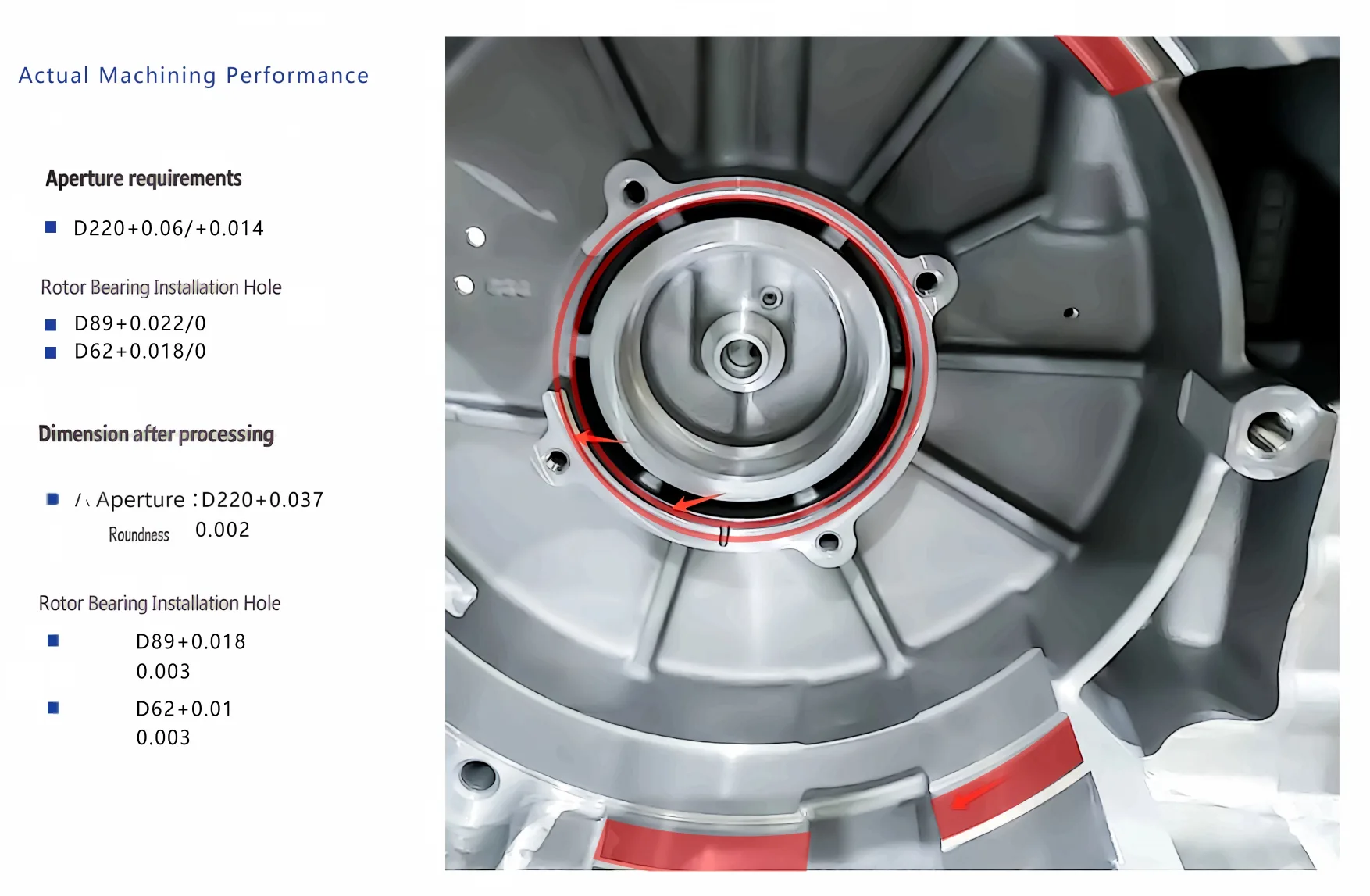
A major Tier-2 supplier in North America encountered severe quality bottlenecks when machining cast aluminum (A380, 10% Silicon) electric vehicle motor housings. The rotor bearing bore and stator locating bore required strict concentricity, perpendicularity, and a fine surface finish (Ra ≤ 0.4 μm) to minimize high-speed motor vibration and thermal friction.
• The Challenge: Traditional carbide tooling suffered severe Built-Up Edge (BUE) within 400 passes, causing surface finish spikes up to Ra 1.2 μm and high scrap rates on expensive cast housings.
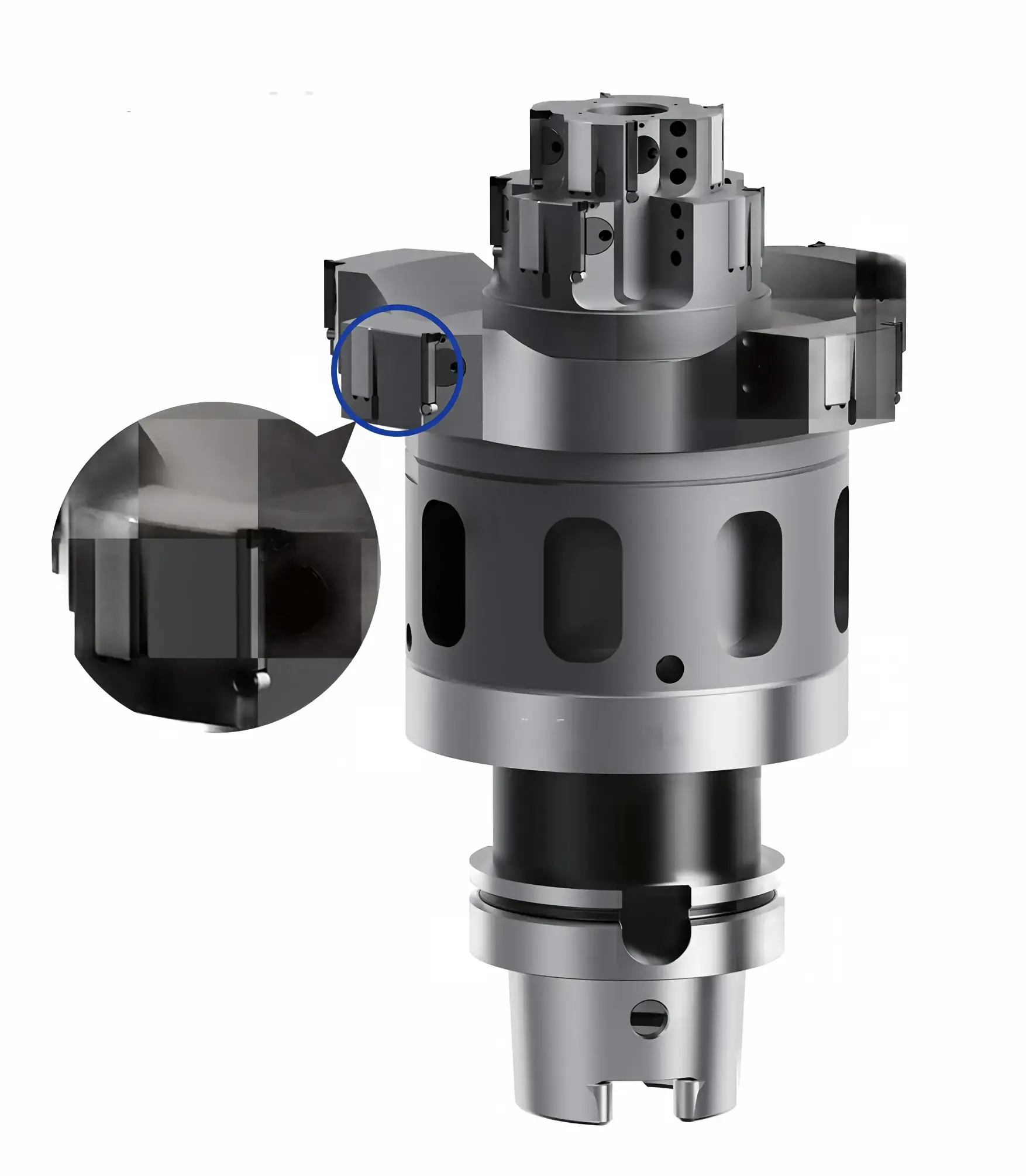
• The Solution: Implementation of a Custom 3-Step PCD Guide-Pad Reamer featuring mirror-polished flutes, internal high-pressure coolant channels, and multi-segment guide pads.
• The Results: Combined roughing, finish-reaming, and chamfering into a single stroke; jumped tool life from 400 holes to over 15,000 holes per regrind; achieved consistent Ra 0.28–0.35 μm surface finish; reduced overall tooling cost per part by 64%.
Conversion / Actionable CTA
Ready to solve tool adhesion, eliminate built-up edge, and lower your overall cost per hole? Whether you are an industrial tooling distributor seeking high-margin custom OEM solutions or a machine shop optimizing high-silicon aluminum production, our engineering team is here to assist.
• Request a Technical Consultation: Speak directly with our PCD application engineers to review your part drawings and tolerance specs.
• Get a Custom Tool Quote: Submit your hole specifications for a fast-turnaround non-standard reamer quotation.
• Download Engineering Guide: Download our complete 'PCD Machining Optimization Blueprint for High-Silicon Alloys'.
Frequently Asked Questions (FAQ)
Q: What is a PCD reamer, and what does PCD stand for?
PCD stands for Poly-Crystalline Diamond. A PCD reamer is a precision hole-finishing cutting tool that utilizes a synthetic diamond layer sintered onto a carbide matrix to achieve extreme wear resistance, tight geometric tolerances, and superior surface finishes in non-ferrous materials.
Q: How much does a PCD reamer typically cost?
Initial costs for standard PCD reamers range from $250 to $800+, while complex multi-step custom geometries can exceed $1,500. However, because PCD tools yield 10–20 times the tool life of carbide and can be reground multiple times, the net cost per finished hole is significantly lower.
Q: What materials and applications are best suited for PCD reamers?
PCD reamers excel in non-ferrous materials, including high-silicon aluminum alloys (cast and wrought), copper, brass, green ceramics, and abrasive fiber-reinforced composites (CFRP/GFRP). They are widely used in automotive engine blocks, EV motor housings, transmission cases, and aerospace structural parts.
Q: How do PCD reamers compare to carbide reamers in terms of performance and tool life?
PCD reamers offer up to 50 times the wear resistance of solid carbide in abrasive non-ferrous alloys. They operate at significantly higher cutting speeds (Vc), eliminate built-up edge through ultra-smooth surface prep, and maintain tight CPK dimensional stability across multi-thousand part production runs.
Q: What speeds, feeds, and setup practices optimize PCD reaming?
Cutting speeds typically range between 300 and 1,200 m/min, depending on alloy composition. Setup is critical: total spindle and holder runout (TIR) must be maintained under 5 microns (μm), preferably using hydraulic or shrink-fit holders alongside high-pressure through-tool coolant.
Q: Can PCD reamers be repaired or reground, and when is it worth it?
Yes. PCD reamers can be reground or retipped multiple times (typically 3 to 5 cycles) at a fraction of the cost of a new tool. Regrinding is economically viable whenever the carbide shank body remains structurally intact and free of fatigue or cracking.