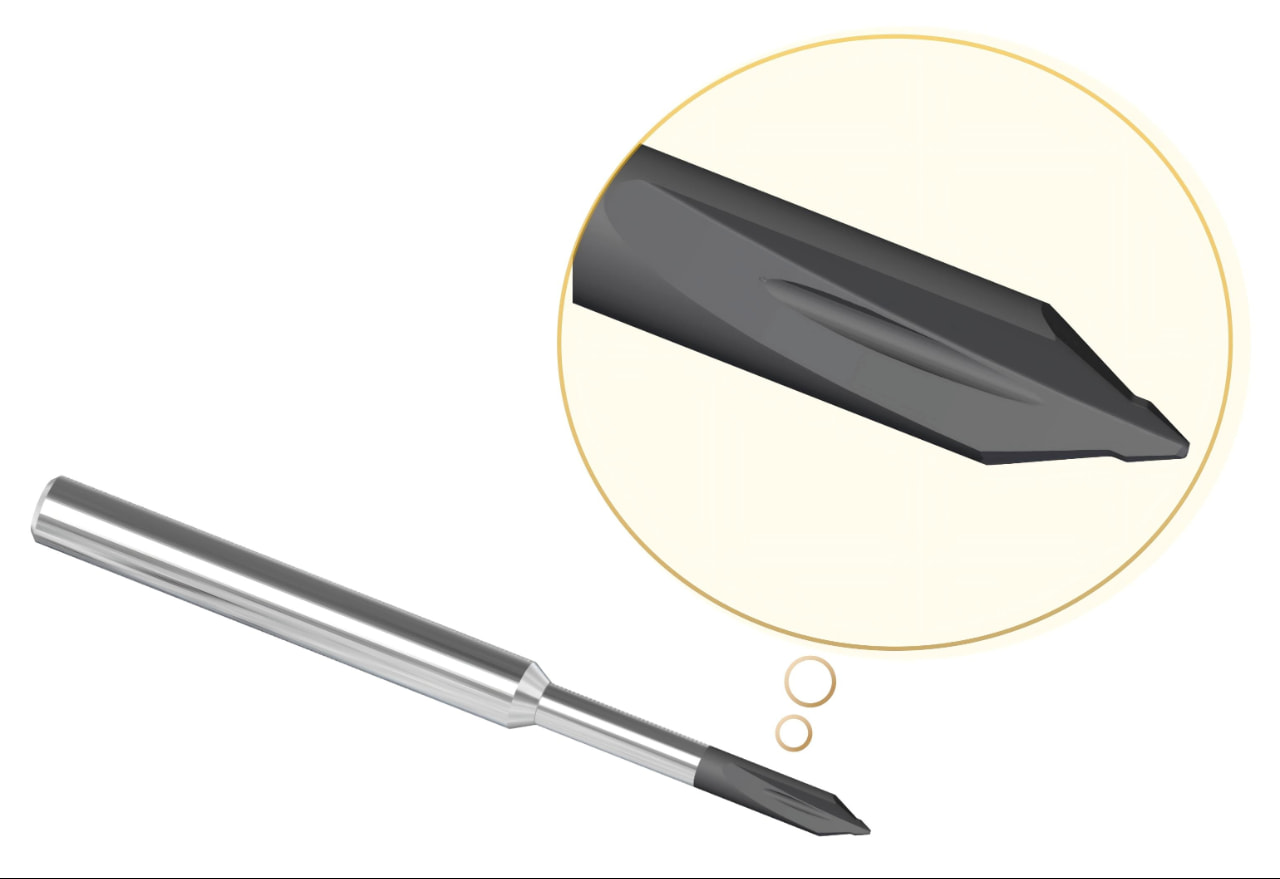
High-Performance Forming Cutters Reamers for Injector Body-Nozzle Assemblies
Solving Mass Production Challenges in H13 Tool Stee
.
· 1. End-User KPI Pressure: Automotive supply chains demand strict process capability (Cpk >= 1.33/1.67) and high Overall Equipment Effectiveness (OEE). In H13 tool steel injector body machining, a single broken tool or micro-chipping incident causes costly unplanned line downtime and scrap.
· 2. High Technical Support Overhead: Small-to-midsize distributors lack dedicated application engineers (AEs). Dimensional instability or surface roughness issues force distributors to constantly send AEs onsite to troubleshoot cutting parameters (reamer speeds and feeds), eroding their margins.
· 3. Tool Life Unpredictability: Automated CNC lathes (e.g., Wasino) rely on scheduled tool changes. A tool life of 200 parts with high variance causes unexpected breakage; a predictable 3,000-part tool life enables true lights-out/unmanned shifts.
· 4. Focus on Total Cost-Per-Part: Offering a 10% discount on tool price is negligible, but providing a solution that reduces the cost-per-part by 80%+ (via a 15x tool life increase) gives the distributor a defensible technical moat against low-cost competitors.
.
High-Performance Forming Cutters for Injector Body-Nozzle Assemblies: Solving Critical Mass-Production Challenges in H13 Steel
Learn how advanced custom carbide reamers help industrial tooling distributors solve micro-step hole machining challenges in H13 steel, boosting tool life 15x and delivering unmatched cost-per-part efficiency to automotive Tier-1 manufacturers.
The Mass-Production Dilemma: Why Standard Micro-Reamers Fail in Diesel Fuel Injector Machining
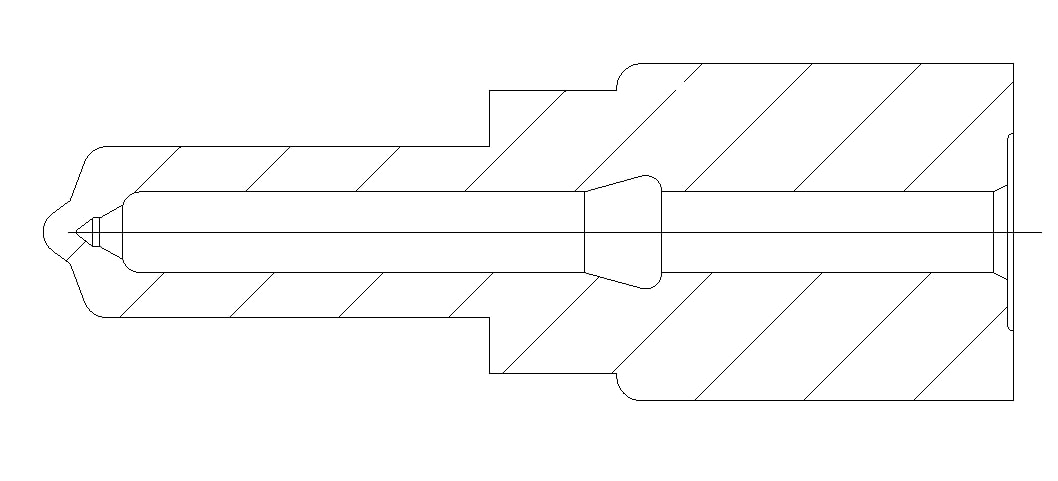
Tight Tolerances & Complex Step Geometries (D1.585 / D3.3 & 60°/59.3° Angles)
· Machining hardened H13 die steel presents severe cutting challenges due to its high toughness and work-hardening tendency. When finishing micro-step holes with strict tolerances, standard carbide reamers suffer rapid flank wear. Even slight dimensional degradation causes feature dimensions to drift out of tolerance, leading to rejected parts during mass production.
Mirror-Like Surface Finish Requirements (Zero Visible Micro-Striations)
· The high-pressure fuel sealing and atomization performance of diesel injector nozzles require exceptional internal bore finish. Standard reamer cutting edges often leave micro-chatter marks or pull material on a microscopic level. Meeting zero-visible-striation standards under optical inspection demands far more than basic grinding—it requires controlled edge preparation and micro-polishing.
High Aspect Ratio & Micro-Breakage Risks
· Deep-hole micro-reaming with long tool overhang introduces chatter and deflection. In automated Wasino lathe setups, tool breakage not only destroys the expensive H13 workpiece but also degrades machine OEE and risks spindle damage.
Engineering the Solution: 5 Proprietary Design Innovations for Extreme Stability
Optimized Relief Angle & Step Transition Radius for Dimensional Consistency
· Features an optimized primary and secondary relief angle to reduce flank friction and slow down wear velocity, preserving dimensional accuracy across 3,000 cycles. A scientific core thickness combined with optimized transition radii maximizes structural rigidity to withstand elevated cutting forces.
High-Polish Flutes & Precision Edge Passivation
· Flutes are ground with specialized diamond wheels and mirror-polished to ensure frictionless chip evacuation, preventing Built-Up Edge (BUE) formation. Edge hone values are precisely controlled alongside edge polishing to maintain sharpness while reinforcing edge strength, achieving a mirror-like, striation-free bore surface.
Custom Chisel Edge Design for Instability Absorption
· Specially re-engineered chisel geometry delivers superior self-centering stability. It absorbs micro-runout or vibration caused by fixture instability or spindle wear, preventing bell-mouthing or hole taper.
Sub-micron Carbide Substrate & PVD Coating Synergies
· Utilizes an ultra-fine sub-micron carbide grain substrate with high transverse rupture strength (TRS), paired with a heat-resistant, low-friction PVD coating engineered specifically for hardened die steels.
Real-World Case Study: 15x Tool Life Elevation in High-Volume Production
| Benchmark Technical Case Summary• Workpiece Material: H13 Die Steel (Hardened & Tempered)• Machining Operation: D1.585 / D3.3 Precision Step Hole Reaming (60° & 59.3° Step Angles)• Machine Tool: Wasino Precision CNC Lathe (Internal Coolant System)• Target Tool Life: 3,000 pieces (Customer Specification)• Applied Speeds & Feeds: Spindle Speed = 2,000 RPM | Feed Rate = 0.015 mm/rev• Legacy Tool Performance: 200 pieces / tool (Failed due to rapid wear and surface roughness degradation)• Custom Carbide Reamer Performance: 3,000 pieces / tool (15x Tool Life Increase, 100% Pass Rate) |
Production Environment & Machining Parameters
· The customer required precision finishing of complex step holes on an automated Wasino lathe line utilizing internal high-pressure coolant.
Applied Reamer Speeds and Feeds Strategy
· By running at 2,000 RPM and a feed rate of 0.015 mm/rev, heat generation at the micro-cutting zone was kept within optimal thermal thresholds. Using a precise reamer speeds and feeds calculator approach allows operators to balance chip load with surface finish without overheating the micro-tool edge.
The Benchmark Result: From 200 to 3,000 Pieces per Tool
· While competing standard tools failed after just 200 parts due to dimensional drift, our optimized custom forming reamer achieved 3,000 parts per tool—a 15-fold life extension. Tool change frequency was reduced by 93%, generating substantial cost-per-part savings for the end-user.
Strategic Value for Industrial Tool Distributors: Win More Tier-1/2 Accounts
Drastically Reduce 'Cost-Per-Hole' for Your End-Users
· Instead of competing on price per cutter, distributors can present an ROI-driven pitch: reducing tool change downtime by 93% and cutting part unit costs by over 80%.
Lower Field Technical Service Overhead
· Unmatched tool-to-tool consistency means fewer emergency technical support calls. Distributors can deploy these reamers without dedicating valuable AE hours to constant parameter tweaking.
Custom Tooling Manufacturing Support & Quick Turnaround
· We provide full engineering support for custom step reamers tool designs, backed by strict quality control and rapid prototyping to help distributors secure exclusive supply contracts.
Technical Guide: Optimizing Speeds and Feeds for High-Precision Reaming
H3: 5.1 Key Guidelines for Choosing Carbide Reamers in Hardened Steels
· When selecting solid carbide reamers for high-hardness materials like H13, always verify substrate grain size, flute geometry, and edge hone values against target tolerances and cooling conditions.
Accessing Our Reamer Speeds and Feeds Calculator
· Proper cutting parameter selection is critical to avoiding micro-chipping. Contact our technical team to access our dedicated reamer speeds and feeds calculator and recommended cutting parameter tables tailored for your alloy steel applications.
Conclusion & Call to Action (CTA)
· Summary: In high-precision automotive components like diesel injector bodies, high-performance forming reamers are not just cutting tools—they are critical levers for reducing Total Cost of Ownership (TCO).
· CTA: 'Partner with Us Today: Are you an industrial tooling distributor looking to upgrade your high-precision tooling portfolio? Contact our engineering team today to request trial samples or submit part drawings for a complimentary tool life and ROI assessment.'