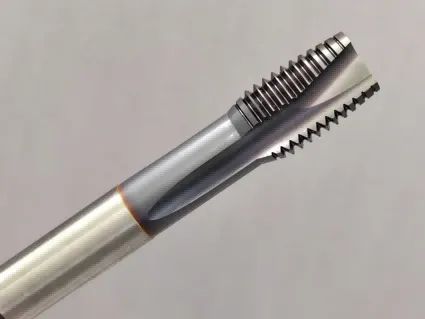
How to Launch Your Own Private Label thread milling cutters: A Guide for Cutting Tool Distributors
A Strategic B2B Blueprint for Industrial Tool Distributors to Maximize Margins, Reduce Scrap Rates, and Secure Customer Loyalty
For industrial cutting tool distributors across North America and Europe, maintaining profitability while preserving customer trust has never been more challenging. As premium tier-1 brands squeeze dealer margins down to 15–20% and e-commerce platforms create price transparency, distributors face constant pressure to differentiate. Expanding into a private label thread mill line offers an unrivaled opportunity to build brand equity, capture 40–60% gross margins, and secure long-term account retention.
However, launching a private label line carries inherent risk. If a tool fails in a customer's CNC machine, causes thread gauge failure, or breaks in a high-value workpiece, it is the distributor's brand on the line. Success requires partnering with an expert OEM carbide thread mill manufacturer that delivers flawless batch consistency, high-precision geometry, and deep technical support. This guide explores the engineering fundamentals, selection strategies, programming setups, and application solutions needed to launch a thriving private label thread milling program.
Thread Milling Fundamentals: How It Works & Why It Outperforms Tapping
Thread milling generates internal or external threads through 3-axis helical interpolation. The cutter rotates on its own axis while simultaneously traveling along a circular path (X-Y plane) and advancing linearly along the Z-axis by exactly one thread pitch per 360-degree revolution. Unlike taps that cut or form threads through direct physical engagement across the entire depth, a thread mill cuts incrementally with minimal tool contact.
For industrial distributors, educating machine shops on thread milling vs. tapping is the key to driving high-margin sales. The operational advantages directly address the most expensive pain points in CNC machining:
· Zero Part Scrap Risk: When a tap breaks, it wedges tightly into the hole, often ruining expensive castings, aerospace forgings, or medical implants. When a thread mill breaks, it loses cutting pressure and can be easily extracted without damaging the workpiece.
· Multi-Pitch & Diameter Versatility: A single thread mill can cut multiple thread diameters and left- or right-hand threads, as long as the pitch matches. This dramatically reduces the SKU inventory a distributor needs to stock.
· Full-Thread Depth Near Blind Hole Bottoms: Taps require complete chamfer leads (2-5 pitches) at the tip, making full-depth threading impossible near blind hole bottoms. Thread mills cut full profile threads to within a fraction of a pitch from the bottom.
· Precision Tolerance Control: Thread fit (e.g., 2B vs. 3B or 6H vs. 4h) cannot be altered with a tap. With a thread mill, operators easily adjust thread pitch diameter on the machine control using tool radius compensation.
Choosing the Right Thread Mill: Types, Geometries & Thread Standards
Building a successful private label line requires a strategic product mix. Offering the right combination of solid carbide and indexable tool structures ensures distributors can serve both high-mix job shops and high-volume production facilities.
| Tool Type | Best Application | Pros | Cons |
| Multi-Form (Standard) | General steel/aluminum machining, high-volume production | Fast cycle times; cuts full thread length in 1 revolution | Higher radial cutting force; higher risk of deflection in deep holes |
| Single-Form (Long Neck) | Deep holes, high-hardness steels (>55 HRC), exotic alloys | Minimal cutting force; single tool cuts multiple pitches | Slower cycle times (requires multiple Z-passes) |
| Drill-Thread-Chamfer (3-in-1) | Automotive components, high-efficiency aluminum/cast iron | Eliminates tool changes; drills, threads, and chamfers in 1 pass | Higher initial tool cost; requires specific hole depth-to-diameter ratio |
Distributors must also stock cutter geometries tailored to market-specific thread standards. While European buyers prioritize Metric (M) and British Standard Pipe (G/BSPT), North American machine shops require comprehensive stock of UN imperial threads (UNC, UNF, UNJ) and tapered pipe threads (NPT, NPTF). NPT tapered pipe thread mills represent an exceptionally high-margin niche, as pressure-tight pipe threads are notoriously difficult to cut cleanly with taps.
Programming & Setup: Overcoming the #1 Reason Customers Return Tools
Industry data shows that over 80% of thread mill returns and tool failure complaints stem from programming errors and excessive tool assembly runout—not manufacturing defects. For distributors, providing seamless technical setup support is the single best way to prevent customer churn.
When programming helical interpolation (G02/G03), CNC programmers often fail to calculate the correct linear feed rate at the tool center line (F_ctrl) versus the tool perimeter (F_perc). In internal thread milling, because the tool center moves along a smaller radius than the thread major diameter, the center-line feed rate must be scaled down using the following ratio:
| Internal Arc Radius Compensation Formula:F_ctrl = F_perc * (D_hole - D_tool) / D_holeWhere F_ctrl is the controller feed rate, F_perc is the peripheral feed per tooth, D_hole is thread major diameter, and D_tool is cutter diameter. |
In addition to feed rates, tool runout control is critical. If total assembly runout (spindle + holder + cutter) exceeds 3 μm (0.00012 in), cutting load becomes unbalanced across tool teeth. This leads to premature tooth chipping and causes threads to fail Go/No-Go plug gauge inspections (e.g., No-Go gauge enters or Go gauge binds).
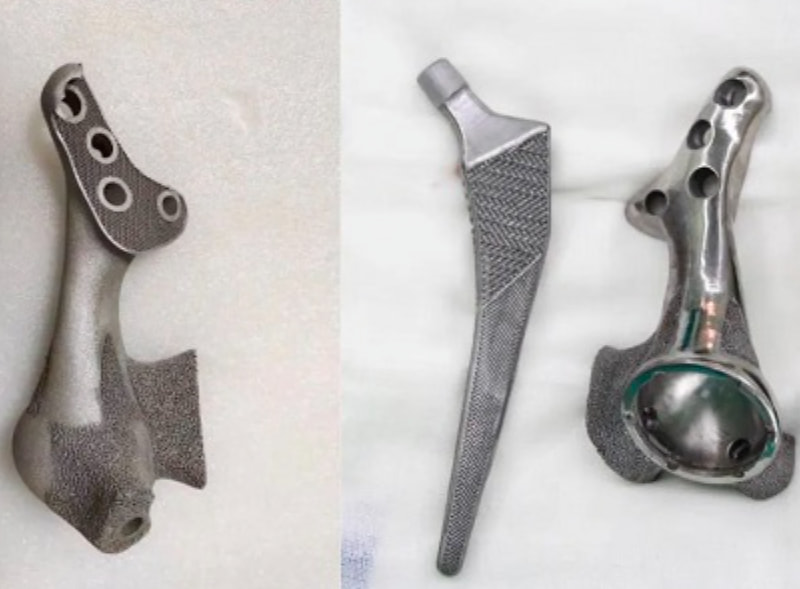
| FIELD CASE STUDY: Thread Milling Cobalt-Chrome-Molybdenum (CoCrMo) Medical ImplantsApplication: Thread hole machining on CoCrMo knee and hip joint prosthetics (M5 x 0.5 internal thread).Material Challenge: CoCrMo alloys exhibit an elastic modulus of 220–234 GPa and severe work-hardening tendencies, causing extreme abrasive wear and tap breakage.OEM Tool Design Solution: Developed a custom solid carbide thread mill with a gradient carbide substrate for core toughness, optimized negative rake angles with edge hone passivation, and an AXR nano-composite PVD coating (friction coefficient < 0.35). Total radial runout was held strictly under 2.5 μm.Performance Result: Tool life increased from 200 threaded holes (previous premium imported cutter) to 440 holes—a 120% increase in tool life while maintaining 100% Go/No-Go thread gauge compliance. |
Maximizing Tool Life: Coatings, Coolant Strategies & Defeating Work Hardening
To ensure private label thread mills outperform name-brand competitors, cutters must feature advanced coating architectures and optimized fluting designed for rapid chip evacuation.
Advanced PVD Coating Selection:
· AlTiN / AlCrN Coatings: Ideal for general steels, alloy steels, and stainless steels. Provides thermal stability up to 900°C and excellent oxidation resistance.
· nACo / Silicon-Based Nanocomposite Coatings: Designed for hardened steels (55–65 HRC), nickel-based superalloys (Inconel 718), and titanium alloys. Delivers ultra-high micro-hardness (up to 3800 HV) and low thermal conductivity.
· TiB2 / DLC Coatings: Essential for non-ferrous materials such as high-silicon aluminum, copper alloys, and composites to prevent Built-Up Edge (BUE).
Coolant and chip flushing strategies are equally vital. In blind hole applications, re-cutting chips is the primary cause of sudden tooth chipping. Utilizing internal coolant (through-tool coolant) forces high-pressure fluid directly through the flutes, rapidly ejecting micro-chips up the hole flutes. When cutting work-hardening alloys like stainless steel or CoCrMo, arc-in / arc-out tool entry paths prevent dwell marks and eliminate stress concentration.
The Private Label Advantage: Partnering with the Right OEM Manufacturer
Building a successful private label product line requires more than just buying unbranded tools—it requires a complete OEM supply ecosystem. When evaluating an OEM carbide thread mill manufacturer, tool distributors should require four core operational capabilities:
· Custom Laser Marking & Private Packaging: Precision fiber laser marking for your brand logo, part numbers, and QR codes directly on tool shanks, complemented by color-coded branded protective tubes and custom barcode labels.
· 100% Batch Consistency & Inspection Reports: Rigorous quality control utilizing 3D optical measurement systems, ensuring cutting edge runout < 3 μm and 100% thread profile compliance.
· Digital CAM Integration & 3D Models: Providing ISO 13399 compliant 3D STEP models and 2D DXF drawings to allow your customers to perform collision checks in Mastercam, Esprit, Fusion 360, and Vericut.
· Strict Territory Protection: Binding non-compete and territorial distribution agreements ensuring your OEM partner never bypasses you to sell directly to your end-user accounts.
Get Expert Technical Support & Launch Your Private Label Line
| Ready to Scale Your Cutting Tool Brand with High-Margin Thread Mills?Partner with an established OEM manufacturer trusted by global distributors. We provide complete private label packaging, custom tool design, 100% quality inspection, and full technical application support.• Download Our Free Thread Milling Feeds & Speeds Calculator (Excel/App)• Request a Free OEM Private Label Sample Kit & Distributor Price ListContact our application engineering team today to discuss your private label requirements. |
Frequently Asked Questions (FAQ)
Q1: What are the key benefits of thread milling compared to tapping?
Thread milling eliminates the risk of scrapped workpieces due to broken taps, allows one tool to cut multiple thread diameters and pitches, provides total control over thread tolerance (Go/No-Go fit), and creates clean threads close to the bottom of blind holes.
Q2: How do I select the correct thread mill for metric vs. UN imperial threads?
Selection depends on thread pitch and profile angle (60° for both Metric and UN, but with distinct thread crest/root limits). For standard production, select multi-form solid carbide mills matching the exact pitch. For versatile low-volume work, choose single-form tools that can cut multiple pitches across both UN and Metric standards.
Q3: What feeds and speeds should I use for thread milling stainless steel or aluminum?
For 304/316 stainless steel, start with cutting speeds (Vc) of 60–90 m/min and chip load (fz) of 0.02–0.05 mm/tooth using AlTiN/nACo coated tools. For 6061-T6 aluminum, run Vc at 200–400 m/min with fz of 0.05–0.10 mm/tooth using uncoated or DLC-coated cutters with internal coolant.
Q4: How do I program helical interpolation for an internal NPT thread mill?
NPT threads require a 1:16 taper along the Z-axis during helical interpolation. Most modern CNC controls (Fanuc, Siemens, Haas) support tapered thread milling macros or G02/G03 multi-axis moves. Center-line feed rate reduction must be applied to account for the internal arc radius.
Q5: Which coating is best for thread milling cutters in hardened steel (>55 HRC)?
Silicon-based nanocomposite coatings (such as nACo or AlCrN-based variants) offer the highest micro-hardness (3400–3800 HV) and thermal resistance (up to 1100°C), preventing crater wear and thermal cracking when dry-milling or air-blasting hardened die/mold steels.