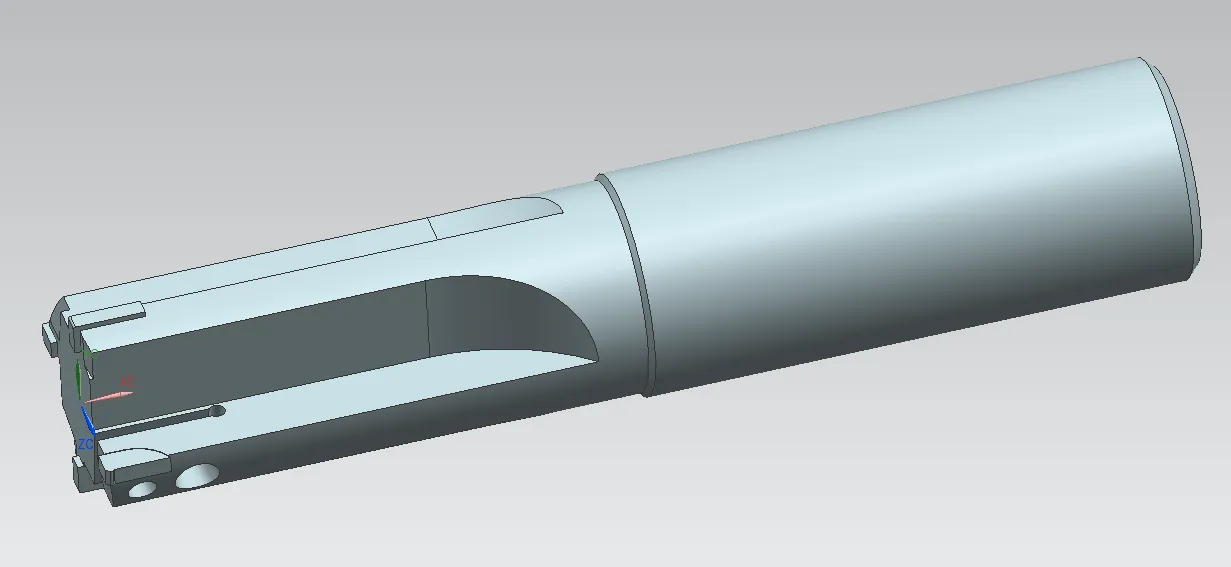
Overcoming Challenges in Machining Pump Bearing Holes for New Energy Vehicles: A PCD Precision Cutting Tool with Damaged Teeth
As a pivotal development direction in today's automotive industry, the operational principles of various components in new energy vehicles have garnered significant attention. Among these, the water pump—acting as a critical component of the vehicle's cooling system—plays a vital role in ensuring normal vehicle operation through its precise working mechanism and performance characteristics.
The working principle of a water pump in new energy vehicles relies on centrifugal force. When the motor drives the pump impeller to rotate, the blades propel water toward the impeller's edge; under centrifugal force, the water is ejected from the impeller and enters the outlet pipe, while a low-pressure zone forms at the impeller center, drawing water back into the impeller through the inlet pipe. This continuous cycle of suction and ejection enables efficient water circulation. In new energy vehicles, the pump is typically motor-driven, with the motor's rotational speed determining both flow rate and pressure. Generally, new energy vehicle pumps operate at high speeds to meet the demands of the cooling system.
Part to be processed: Water pump
• Material to be processed: AlSi9Gu3
• Machine tool equipment: Vertical machining center
• Cooling method: Internal cooling
• Processing location: Bearing hole
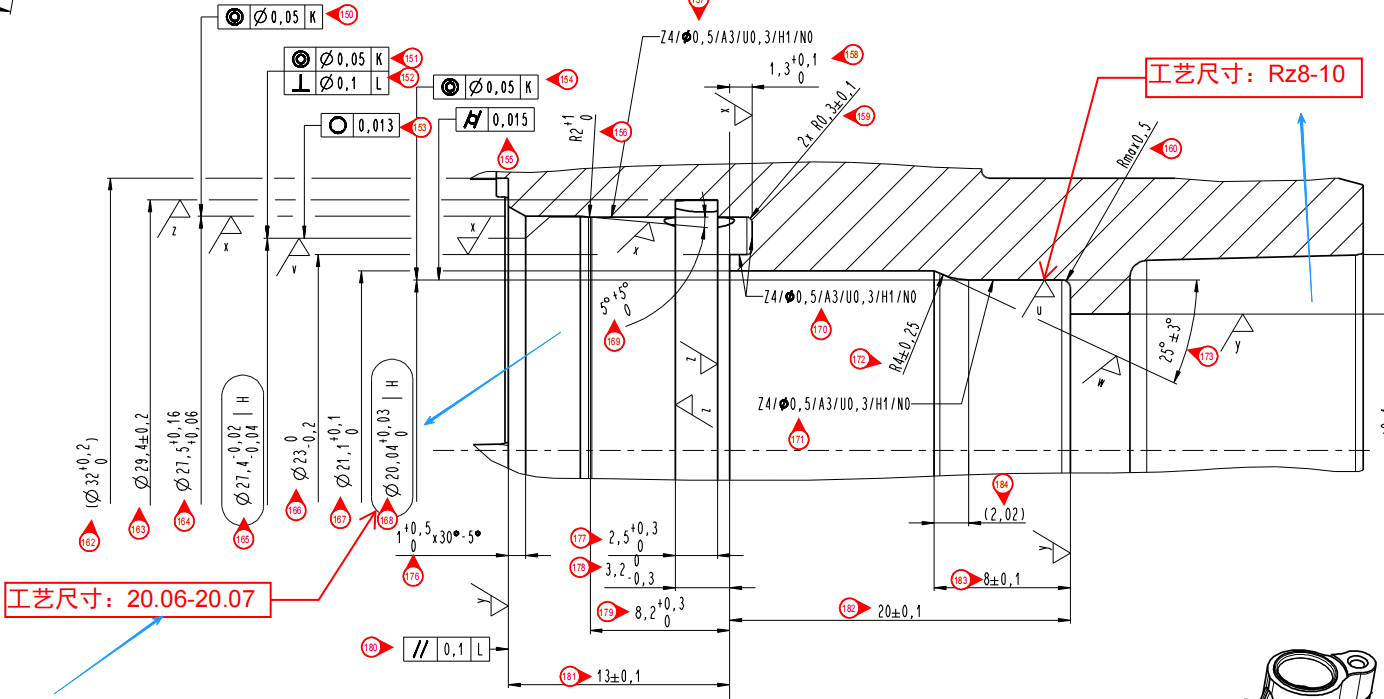
· Product Part Drawings:
Challenges in part machining
1. Due to the small hole diameter of the workpiece (∅20.04), the machine chuck-type precision boring unit is not suitable; therefore, a monolithic tool must be used for machining.
2. The hole tolerance is stringent,仅为 0.03; additionally, the hole must meet concentricity requirements of 0.05, cylindrical accuracy of 0.015, and a specific R-flange structure must be machined at the bottom.
3. The workpiece hole with a diameter of ∅20.04 mm not only requires stringent tolerance specifications but also demands a surface roughness between Rz8 and Rz10; conventional cutting tools struggle to meet both requirements simultaneously.
design feature :
1. To meet the surface roughness requirement for part holes (Rz8–Rz10), the reamer is designed with precision-tuned destructive teeth that effectively control cutting conditions and ensure superior surface finish quality.
2. Given the characteristics of parts with small hole diameter tolerances and stringent roundness requirements, the reamer employs a tooth structure design that disrupts the cutting edge, effectively distributing cutting forces, reducing machining errors, and ensuring stable hole dimensions and shape accuracy.
3. Compared to the single-flank boring tool used during customer sampling, this reamer significantly enhances cutting efficiency through multi-tooth coordination and a tooth-breaking design, while ensuring machining quality.
Final test parameters meet the customer's mass production process requirements
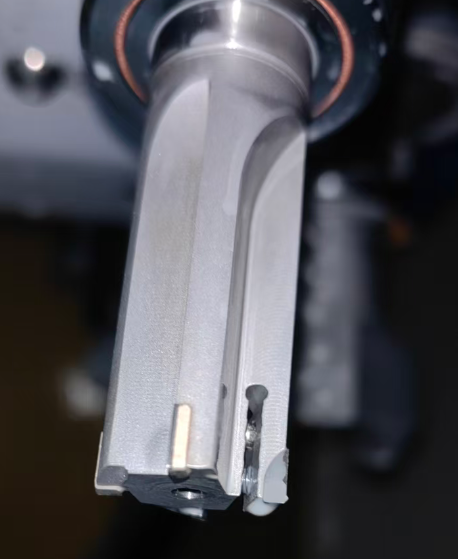
Tool diameter: D20.04
• Speed: S2000
• Feed: F900
Xinrui Zhi (Shenzhen) Precision Machinery Co., Ltd. has decades of expertise in the research, development, production, and service of precision tools. Products include standard tools, custom-made tools, and PCD tools. Services cover comprehensive turnkey solutions, tool management services, and tool grinding, helping you overcome technical challenges in machining while reducing costs and improving efficiency.
PCD Reamers#PCD Tool#PCD Drills#PCD Milling Cutters