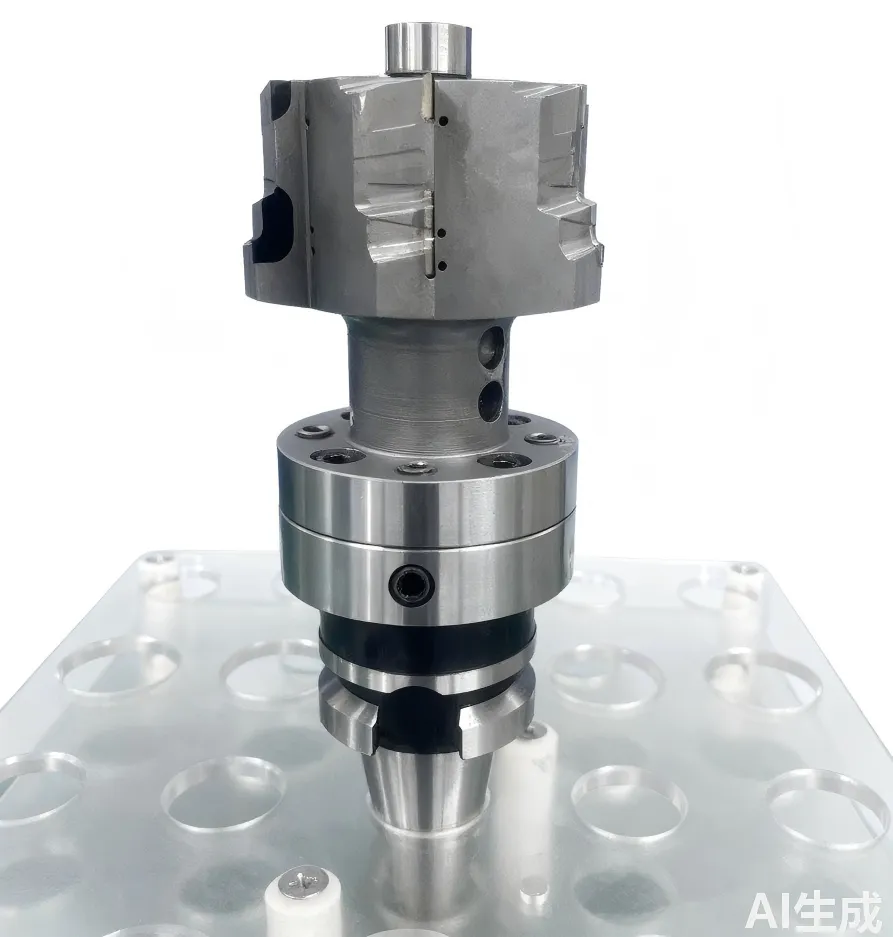
Customization capabilities of PCD end mills: ranging from standard products to customized solutions
Europe and America's advanced manufacturing sectors—particularly aerospace, new energy vehicles, and medical devices—impose exceptionally stringent requirements for component processing. Standard PCD cutters often fail to meet these specialized needs. The ability to deliver flexible, efficient customized solutions tailored to specific specifications is the key differentiator between ordinary suppliers and strategic partners. This underscores why "non-standard" customization is paramount.
Aerospace applications: Titanium alloys and carbon fiber composites (accounting for over 60% of usage) exhibit low interlayer strength and susceptibility to delamination, requiring specially optimized cutting edge geometry to prevent burrs and material damage.
New energy vehicles: Aluminum components such as motor housings and battery pack frames require extremely high precision in hole machining and surface finish, along with tools featuring exceptionally long service life to meet the demands of automated production lines.
What exactly can "non-standard" customization achieve?
True customization goes far beyond mere "production according to blueprints"; it manifests itself across three dimensions:
Material and edge optimization: Alloys require sharp chip evacuation grooves, while composite materials demand diamond-edged edges to prevent delamination—tailored designs based on material properties.
Single-step complex-hole forming: Designed for challenging applications involving stepped holes, conical holes, or special-shaped holes, the customized PCD-molded reamer integrates multiple machining steps into a single operation, ensuring dimensional accuracy and coaxiality while significantly improving efficiency.
End-to-end technical support: From operating condition analysis and design planning to trial cutting verification and after-sales grinding guidance, we provide a turnkey solution covering the entire process.
In the non-standard customization sector—particularly in areas such as rapid response, flexible communication, and personalized services—technically capable suppliers can offer distributors a rare opportunity for differentiated competition.
Enhanced customer loyalty: Once a customized solution is successfully implemented, the cost of customer replacement becomes extremely high, ensuring a stable partnership.
Enhanced bargaining power: The competition now centers not on unit prices, but on the value of solving technical challenges.
broader market potential: targeting high-end sectors such as aerospace and medical devices, while avoiding the cutthroat competition in standard product markets
Choosing a PCD reamer supplier with genuine non-standard customization capabilities means you'll provide customers not just tools, but a comprehensive solution package that delivers real competitive advantage.
case analysis :
Part to be processed: Automotive electric fuel pump
• Processed material: ADC12
• Machining equipment: Vertical machining center
• Cooling method: Internal cooling
• Processing location: Motor hole
Challenges in part machining
1. This product is a thin-walled component that tends to deform during clamping, making precision machining more challenging.
2. The roundness requirement for product hole diameters is stringent: for holes exceeding 60 mm, the roundness must be ≤0.015 mm. In thin-walled cases, besides clamping effects, temperature also significantly impacts product roundness.
3. After the tool completes hole machining, the outer wall of the product must undergo external cylindrical machining on a lathe, which will also affect the roundness of the hole.
design feature :
1. The roughness of the two holes on the component differs due to their specific roundness requirements and narrow diameter tolerances. As the machine tool is equipped with a BT30 spindle, the cutting tool must be adjustable while maintaining acceptable weight limits.
2. The tool features a flanged handle with six equally spaced cutting edges, ensuring excellent roundness and precision during machining.
3. The flange handle design allows for fine adjustment when the tool exhibits runout on the machine tool, preventing deviations in hole diameter and roundness during machining.
4. The current tool processing parameters used by the customer are relatively low, resulting in prolonged processing times (approximately S300 or F30); these have been optimized accordingly.
Cutting Parameters:
· Cutting tool diameter: D67 + D62
• Speed: S1000 r/min
• Feed rate: F800 mm/rMeet customer mass production requirements and establish stable partnerships
PCD Reamers#PCD Tool#PCD Drills#PCD Milling Cutters