Overcoming challenges in TC21 titanium alloy machining: Split-type tapered ball-end milling cutters help aerospace customers save ¥300,000 annually
In the aerospace manufacturing sector, efficient machining and cost control remain dual challenges faced by enterprises. Particularly for cavity milling of high-strength titanium alloy structural components such as TC21, rapid tool wear and elevated costs have consistently posed significant obstacles to process innovation.
Recently, Xinrui Zhi (Shenzhen) Precision Machinery Co., Ltd. (hereinafter referred to as "Xinrui Zhi Precision") successfully assisted an aerospace client in completing a major upgrade of its tooling solution through its innovative approach to tool system integration. By adopting a split-cone ball-end milling cutter solution, the company not only met stringent service life requirements but also reduced the cost per tool to one-quarter of the original amount, delivering significant cost savings and efficiency improvements for the client.
The workpiece under processing is a typical aerospace structural component fabricated from TC21 titanium alloy. This material is widely used in load-bearing components due to its high strength and excellent fatigue resistance; however, it exhibits low thermal conductivity, high chemical reactivity, and a low elastic modulus, making it a classic difficult-to-machine material.
Processing Content: Cavity milling
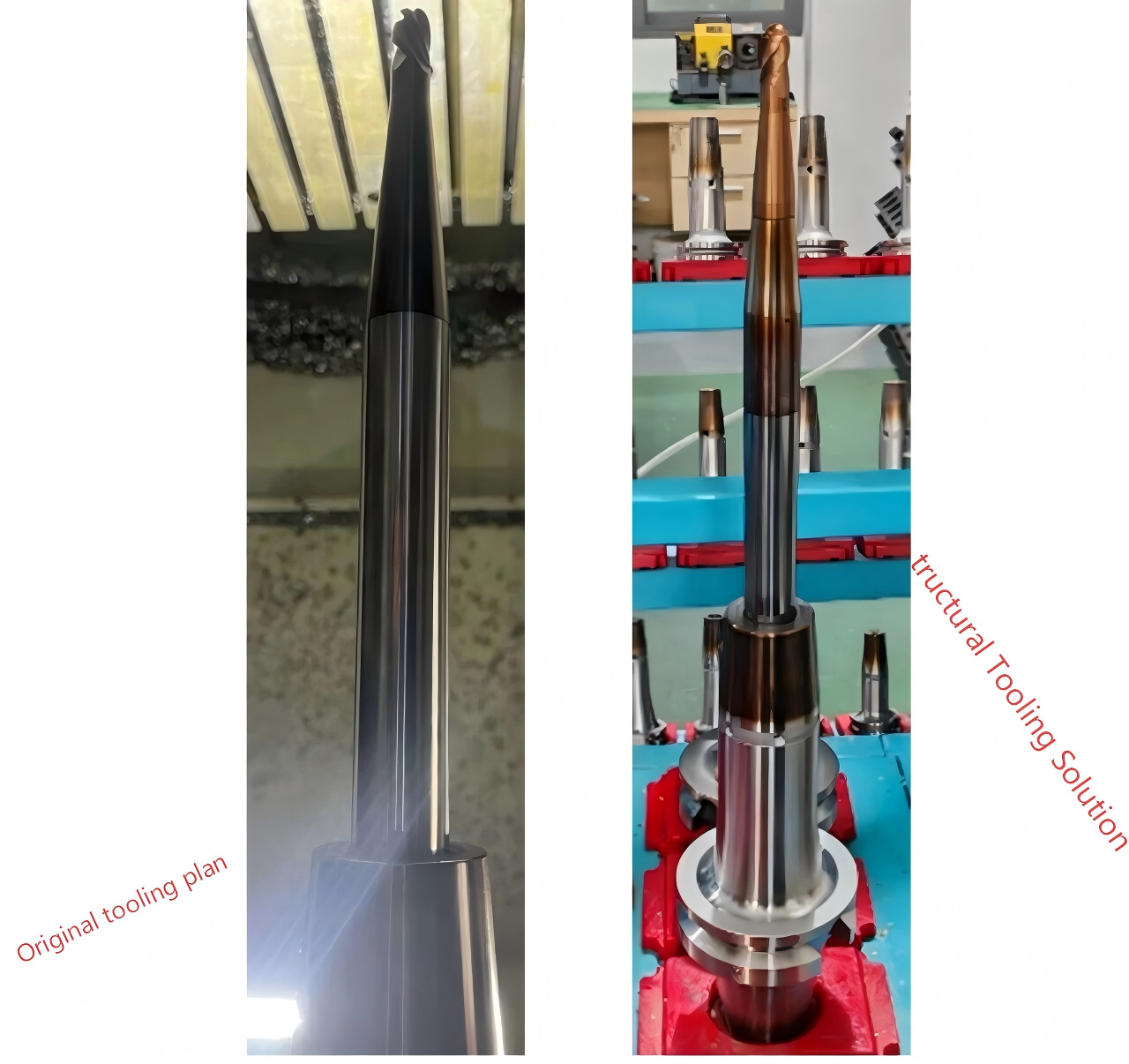
Original design: Overall cemented carbide tapered ball head milling cutter
Cooling method: External cooling of the emulsion (concentration 7%–9%)
Under the original machining scheme, although the overall cemented carbide tool could barely complete the processing task, its high cost posed a significant barrier to process cost reduction. The customer urgently required a new solution that would ensure machining stability while substantially lowering the overall tool cost.
To address customer pain points, Xinrui Zhi Precision did not merely provide a replacement tool but instead offered a comprehensive modular tool system solution. The core of this solution lies in its "modular" design, which separates the cutting head from the tool holder, achieving an optimal balance between rigidity and cost-effectiveness.
Xinrui Zhi Precision Tool Configuration Solution:
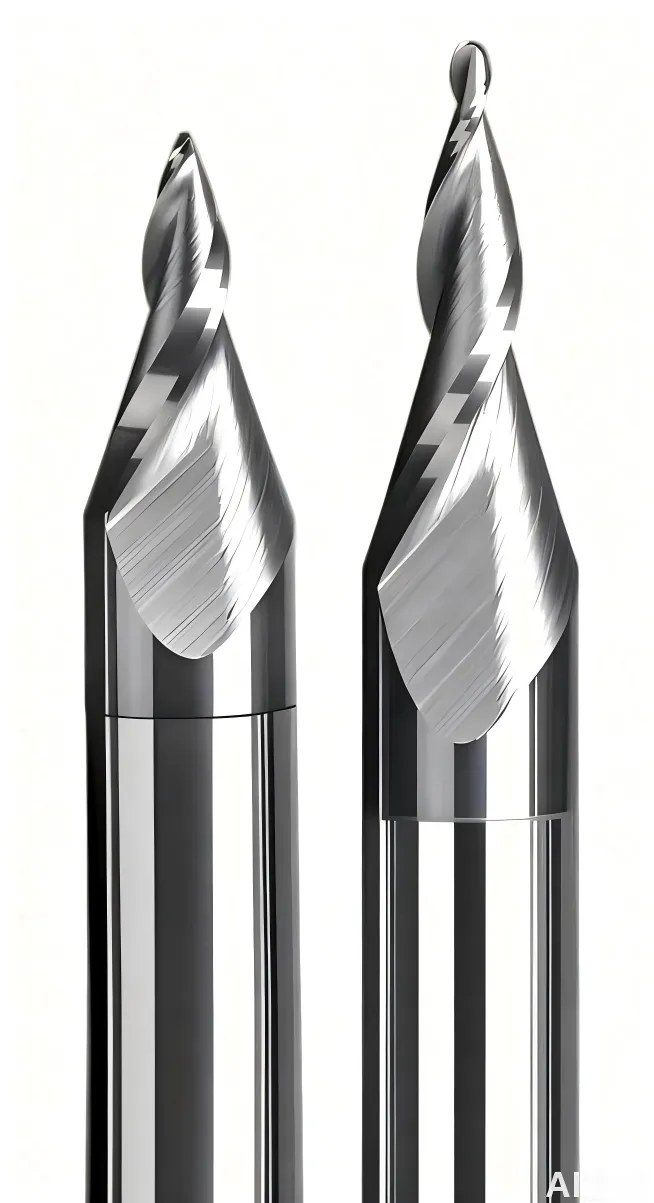
· Cutting Head: D12R6 hard alloy ball-end milling cutter (high-precision replaceable cutting head)
· Connection: Double-ended heat-shrink extension rod (high-rigidity connection)
· Cutting insert: Cemented carbide cutting insert (excellent vibration resistance)
The success of this solution in replacing traditional hard alloy tools lies fundamentally in its structural design's precise alignment with the machining characteristics of TC21 titanium alloy.
· Extrême rigidity for vibration suppression: Vibration is the most critical factor to avoid during titanium alloy machining. The combination of a hard alloy tool holder and a double-ended heat-shrinkable extension rod significantly enhances the overall rigidity of the tool system. The heat-shrinkable handle offers exceptional clamping accuracy and dynamic balance, effectively suppressing high-frequency vibrations during machining and ensuring superior surface quality of the cavity walls.
· Reducing tool replacement costs through reusable tool shanks: With traditional monolithic cemented carbide tools, the expensive tapered shank becomes obsolete upon edge failure. The modular design allows only the small D12R6 ball head at the front end to be replaced, enabling long-term reuse of high-precision cemented carbide shanks and extension rods. This constitutes the technical foundation for achieving a single tool cost of merely one-fourth that of the original unit.
· Geometric design of the TC21: The D12R6 ball-end insert features a groove profile and coating specifically optimized for titanium alloy machining. Under external cooling with an emulsion concentration of 7–9%, it effectively removes chips and reduces chip accumulation, ensuring tool life meets customer requirements.
· Through rigorous on-site cutting tests, Xinrui Zhi Precision's solution has delivered outstanding performance results.
· Performance compliance: The tool life fully meets the customer's single-batch machining requirements, with no chip breakage or abnormal wear, and the machined surface quality complies with aviation standards.
· Significant cost reduction: Thanks to the durable use of the expensive tool holder section, the cost per cutting tool (after cost allocation) is merely one-fourth that of a conventional cemented carbide tool.
· Annual savings: This single processing item alone delivers a direct tool cost reduction of up to ¥300,000 per year for customers.
PCD Reamers#PCD Tool#PCD Drills#PCD Milling Cutter#milling tooling