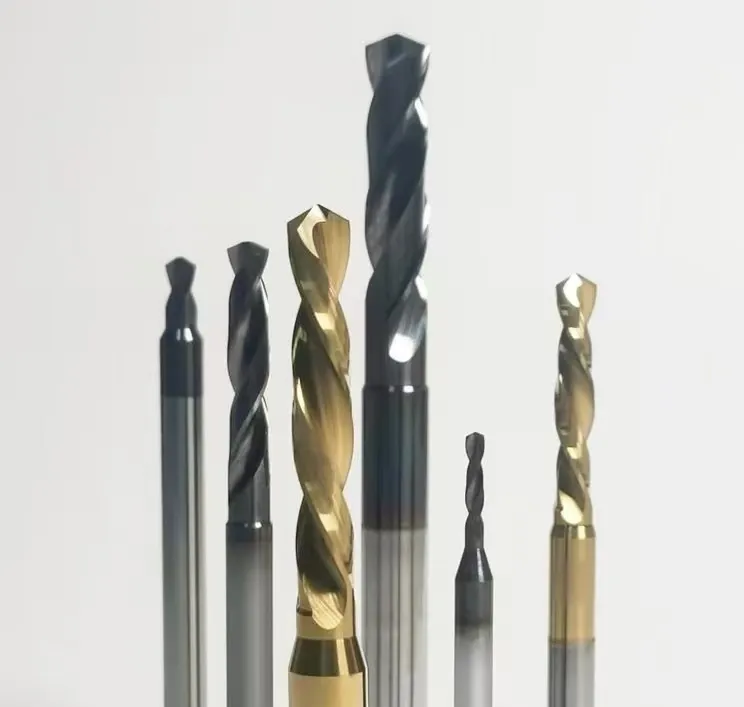
Why Unit Prices Are Deceptive: An Analysis of Production Costs and Profit Margins for Cooling Hard Alloy Two-Phase Drill Bits
For industrial tool distributors across Europe and North America, duplex stainless steels (such as 2205 and 2507) represent both a high-profit asset and significant supply chain risk. As industries like marine engineering, oil and gas, and chemicals increasingly adopt these high-strength, corrosion-resistant materials, your machining clients are facing severe processing bottlenecks.
They are seeking the ultimate solution from you: high-quality internally cooled, all-in-one hard alloy drill bits.
However, when seeking alternative OEMs or in-house manufacturing partners to ensure higher profits, many procurement managers fall into the "low-price trap." In the precision tool sector, if manufacturers cut corners during production, the resulting hidden costs will directly impact you through tool failures, workpiece scrap, and damage to distributor reputation.
This guide reveals the actual manufacturing costs of internally cooled cemented carbide drill bits specifically designed for duplex steel, and explains how to manage these costs to protect your profits.
1. For a quick overview of key points, here's the current status of the B2B cemented carbide drill bit supply chain:
2. Low-cost drill bits pose significant risks in the machining of duplex stainless steel, as this material hardens rapidly during processing. The use of drill bits manufactured from recycled cemented carbide or those lacking proper cutting edge treatment will inevitably lead to premature chip breakage, not only damaging customers' expensive workpieces but also undermining their trust in your brand.
3. The true cost is measured per hole cost (CPH), not per tool: a drilling rig costs $20 but requires $100 in ongoing maintenance. For end users, the total cost of drilling far exceeds that of purchasing a high-end rig ($40) but includes reliable drill bits ($400) per hole.
4. For distributors, the optimal solution is to achieve outstanding performance without incurring excessive OEM brand premiums. By collaborating directly with transparent and technically rigorous original equipment manufacturers (OEMs), you can deliver genuine OEM performance while securing additional profits—ranging from 30% to 50% of distributor profits.
5. Our actual pricing example: factory-direct B2B mold costs. We adhere to complete transparency principles. Instead of using vague forms like "Contact us for a quote," we directly disclose our factory's actual production prices, enabling you to objectively compare current procurement costs with those from direct sourcing.
6. The prices listed represent our high-performance cemented carbide drill bits compliant with DIN 6537 standards, featuring spiral internal cooling and specifically designed for machining difficult-to-machine materials such as duplex steel and titanium.
7. All prices for the standard internal cooling drill (Series: IC-DUP-6537) are based on standard production batches (minimum order quantity: 50 units per size), using micro-particle native tungsten substrate and high-quality multilayer AlTiN coating.
8. Custom Step Drill (Multi-Diameter Downhole Tool)
We can customize the geometry based on your CAD design. Prices vary depending on complexity and step transitions
9. Price Disclaimer: The above prices are for reference only. The final quoted price may vary slightly depending on the global tungsten substrate market index and specific customized coating requirements.
How do we define "cost"? When comparing quotes, it's essential to understand that cost isn't just a number on an invoice but a complex, multi-dimensional issue. To make informed purchasing decisions, you need to thoroughly analyze the factory's pricing structure.
Total Manufacturing Cost = Substrate Materials (40%) + Precision Grinding (30%) + Coating (15%) + Quality Control & Packaging (15%)
Your definition of "cost" may vary depending on your distribution business model and market positioning.
1: Raw material cost (base material): Accounts for approximately 40% of manufacturing costs. High-performance drilling with duplex steel requires the use of newly produced submicron-grade tungsten carbide. Some low-cost manufacturers substitute recycled tungsten carbide waste to reduce pricing, contributing an additional 15% to costs; this significantly increases the risk of catastrophic tool fracture.
2: Process and machining costs: Approximately 30% of the total cost comprises five-axis CNC tool grinding cycle time, specialized cutting edge honing, and slot polishing. While cutting corners in these steps may reduce production costs, it will leave micro-cracks that may fail under mechanical stress.
3: Quality control (batch consistency) cost: accounting for approximately 15% of total costs. True premium suppliers employ automated coordinate measuring machine (CMM) scanners to inspect each batch of products, ensuring compliance with H6 chuck tolerances. While this step may save a few dollars initially if omitted by OEM manufacturers, non-conforming batches that cause hydraulic tool holder failures can ultimately result in losses exceeding several thousand US dollars.
4. Technical realities affecting production costs
Why is the production cost of a qualified internally cooled duplex drill bit higher than that of an ordinary drill bit? Let's examine the four key technical factors driving these higher costs—and why they justify the expense.
A. Submicron tungsten carbide matrix
Biphasic steel exerts significant pressure on the cutting edge. We employed pure tungsten  carbide with submicron-sized grains and a cobalt content of 10% to 12%. This specific chemical composition achieves an optimal combination of exceptional hardness (for wear resistance) and high transverse fracture strength (TRS), thereby preventing fracture under load.
B. Spiral internal cooling channels
Standard straight coolant channels can be more easily and cost-effectively extruded into hard alloy rods. However, when the drill bit rotates, these straight  holes cannot efficiently deliver coolant to the cutting surface. For deep drilling of high-viscosity duplex steel and higher grades, we employ premium guide rods with spiral (twisted) internal cooling channels whose helix angle precisely matches that of the drill bit's cutting groove. This ensures high-pressure coolant directly reaches the shear zone, instantly cooling the workpiece surface and removing filamentous chips.
C. Cutting edge honing and mirror polishing
The unground cutting edge features fine serrations that become immediately ineffective upon contact with duplex steel. We performed secondary micro-harding on the drill bit to achieve precisely controlled cutting edge radii, followed by mirror-polishing of the chip evacuation grooves using specialized abrasives. This process reduces chip friction to near zero, enabling viscous duplex steel chips to exit the hole effortlessly without adhering to the tool surface.
D. Advanced nanostructured PVD coatings
Standard TiN or AlTiN coatings degrade rapidly when temperatures  exceed certain thresholds. Due to the extremely poor thermal conductivity of duplex steel, nearly all cutting heat is directly transferred to the drill tip. We employ specialized nanostructured multilayer PVD coatings (e.g., Super-TiAlN or AlCrN). These advanced coatings form a dense aluminum oxide protective layer that provides thermal insulation and can withstand operating temperatures up to 100°C.
5. Case Study: Saving High-Value Offshore Accounts
To illustrate how these technical details translate into real-world applications, we'll demonstrate how we helped a European distributor safeguard their most critical customers.
Situation
A German distributor has entered into a significant supply contract with an offshore petrochemical equipment manufacturer. The client is drilling hundreds of deep wells and requires 5D-hole 2205$ duplex stainless steel valves. To reduce costs, the distributor purchased a low-cost alternative internal-cooled drill bit from a general trading exporter.
question
These low-cost drill bits appeared flawless in the product catalog, but proved disastrous on customers' automated CNC production lines. Their cutting edges were poorly polished and unevenly honed, with chip accumulation inside the cutting surfaces ultimately causing drill bit fracture within valve bodies. The customer incurred thousands of euros in workpiece losses and threatened to terminate the entire distribution contract within 30 days.
Our Actions
The distributor contacted us in a state of panic. We immediately analyzed their CAD-designed drawings and dispatched a batch of test drill bits with customized features, incorporating a split geometric structure, spiral cooling channels, and a specialized AlCrN nanocoating. Additionally, we polished the grooves to a mirror finish.
Result
Our drills effectively remove bimodal steel chips, delivering enhanced tool life and superior performance compared to low-cost competitors—even surpassing the expensive German Grade 1 brands they initially used. This distributor not only retained overseas contracts but also integrated its own brand into its entire product portfolio.
6. Smart B2B Procurement: Strategies to Reduce Procurement Costs
Acquiring high-quality tools doesn't mean you have to pay excessively high prices. Here are some effective and practical business strategies you can use to reduce production and procurement costs when working with us:
Engage our engineering team early on (lean design).
Before finalizing the customized stepped drilling drawings for your customer, please send the sketch to our engineering team. We can typically recommend minor geometric adjustments—such as standardizing step angles or chamfer radii—to halve the machining cycle and immediately reduce your per-unit tooling costs.
Make full use of China's rich standard system
You don't need to design a fully customized handle or internal cooling rod profile yourself; we can use pre-made high-end, mass-produced standard hard alloy blanks available in the domestic market. This saves you costs including those for specialized tools and material preparation.
Establish the design plan early to avoid setup costs
High-performance grinding machines (e.g., Walter or Rollomatic) require extensive setup time for programming and calibration. Once production begins, avoid modifying custom specifications. Defining the design plan ensures continuous operation of individual batches, maximizing efficiency and eliminating setup costs.
7. Frequently Asked Questions (FAQ)
| question | answer |
| What is the minimum order quantity (MOQ) for standard and custom drill bits? | For internally cooled bits compliant with DIN 6537 standards, our minimum order quantity is 50 units per size. For custom multi-stage bits, we offer a minimum order quantity as low as 10 units per model to support your prototyping and testing phases. |
| How can the required h6 tolerance for the handle section of hydraulic and heat-shrink clamps be ensured? | Every drill bit we produce is ground using state-of-the-art CNC grinding machines and inspected with automated laser measurement systems. We conduct comprehensive testing, examining 100% of the shank components in each production batch to ensure strict compliance with the following requirements: (h6) tolerance range. |
| Can you use a laser to engrave our distributor's brand name on the tool? | Yes. We offer comprehensive OEM manufacturing services. We can laser engrave your company's logo, custom part numbers, and dimensional specifications directly onto the drill shank, and provide customized packaging that meets your brand requirements. |
| What is the typical delivery time for custom molds? | Once the CAD drawings are approved, the custom prototype will be produced and shipped within 14 business days. Standard batch inventory orders are typically shipped within 25 to 30 days. |
Protect your profit margin without compromising the brand.
We provide European and American distributors with high-quality, DIN-compliant hard alloy drill bits specifically designed for machining the hardest industrial materials. Utilizing world-class base materials, a precision spiral coolant system, and transparent factory pricing, we help you secure more orders and achieve higher profits.
Don't let poor manufacturing quality damage your reputation. Contact our B2B support team immediately to obtain a complete product catalog and a trial sample box of our high-quality bipolar steel drill bits.
Xinrui Zhi (Shenzhen) Precision Machinery Co., Ltd. has decades of expertise in the research, development, production, and service of precision tools. Products: standard tools, custom-made tools, PCD tools. Services: turnkey solutions, tool management services, tool grinding services. We help you overcome technical challenges in machining while reducing costs and improving efficiency.
PCD Reamers#PCD Tool#PCD Drills#PCD Milling Cutters#CNC#