
Choose the drill family before you choose a carbide series. On a CNC, HSS and HSS-Co stay in play when the machine or the holder is not set up for a carbide body, or the run is short. Solid carbide is the production step when the machine is rigid enough, the holder keeps runout down, and the hole is still a drilling job. A replaceable-tip drill or an indexable drill is a different construction: the shop changes the cutting end instead of the whole tool, usually on a larger hole. XRZ's own drill line is solid carbide. This page stops at the family. It does not set speeds, feeds, or a series.
Why the family comes before the series
The search starts when a metal hole on a CNC is unstable, or when a buyer has to decide whether the next drill is still HSS. Chipping, packed chips, and an oversized hole are not fixed by swapping a catalog line inside the same family if the machine, the material, the depth, the finish, or the batch never matched that family.
Metal is not a grade. The drawing has to carry the grade and the condition. This page uses that only to decide whether the shop should stay on HSS or HSS-Co, move to solid carbide, or look at a modular drill. It does not pick an XRZ series, a geometry, or a coating.
Five drill families for metal on a CNC
These five are different tools. They are not coatings of one drill, and they are not a ranking. Name the family first, then follow the product link for the family XRZ makes. Masonry, wood, hand-drill sets, and oilfield or medical drilling are outside this page.
HSS
High-speed steel is the family to keep when the CNC or the holder is not rigid enough for a carbide body, when the batch is short, or when the current HSS drill is still holding the hole the print asks for. Moving to carbide on that setup repeats the mismatch on a more brittle body. XRZ does not manufacture HSS drills.
HSS-Co
HSS-Co is cobalt high-speed steel. Use it when the cut is hotter or tougher on the edge than the HSS drill now in the spindle, and the shop is not ready to put the job on a rigid carbide setup. It is still an HSS-family drill, not a solid carbide production drill. No cobalt content is stated here. XRZ does not manufacture HSS-Co drills.
Solid carbide
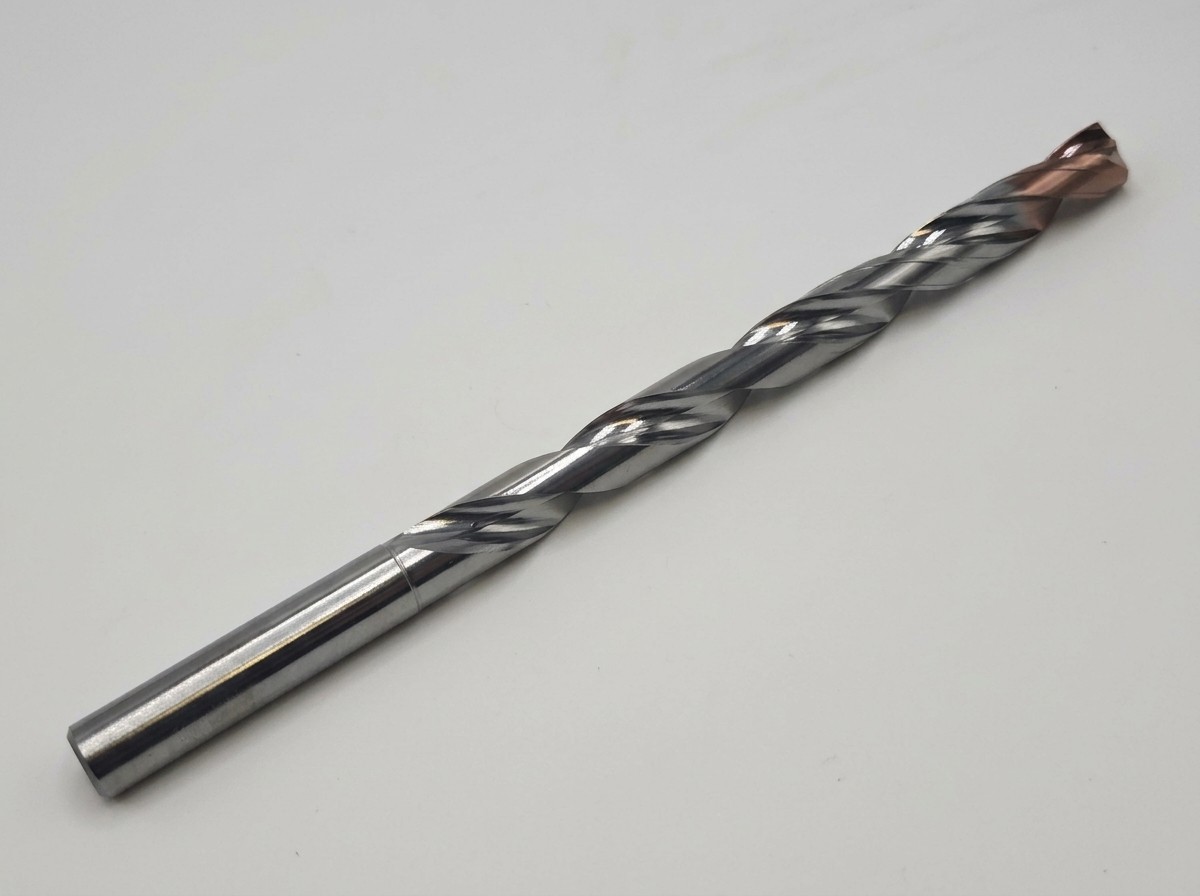
Solid carbide is the family this guide sends into production. XRZ makes that family. How the drill is built and held is on the carbide pages linked in this section, not in this comparison.
This is the family XRZ manufactures. A through-coolant drill and a drill for hardened steel are still solid carbide. They are not extra families on this page. Hardness, when the part is hardened, goes on the drawing with the grade. Geometry and coating are set when that print is read, not from a cutoff on this page.
See solid carbide drills and the carbide drill bits range. Coolant-through tools are through-coolant carbide drills. Hardened-steel work, once the family is solid carbide, is carbide drills for hardened steel.
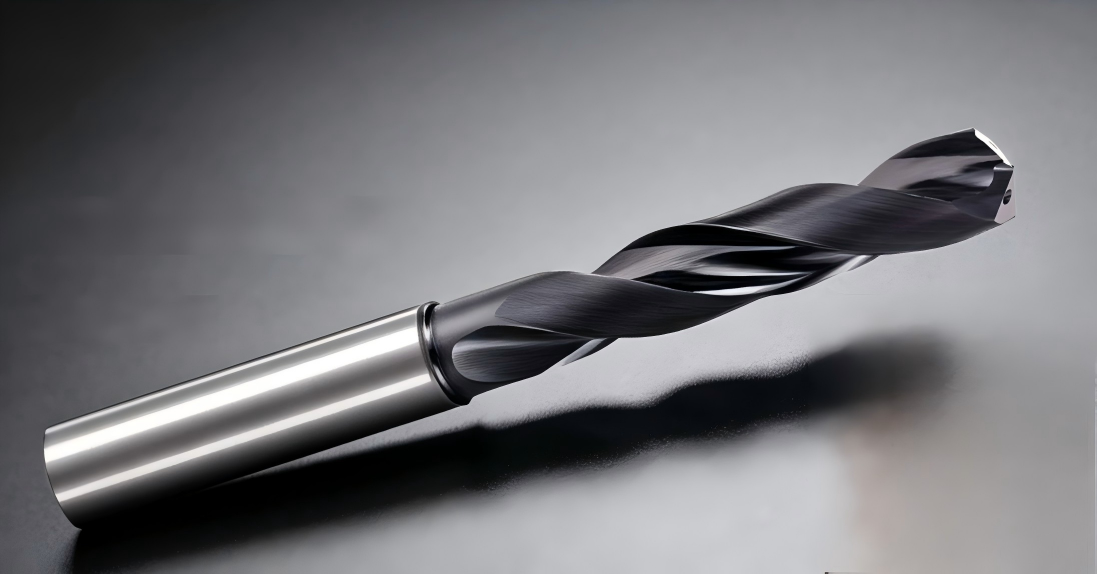
Replaceable-tip drills
A replaceable-tip drill puts a changeable cutting end on a reusable body. The shop replaces the tip and keeps the body. The name does not set accuracy or rigidity. Consider it when changing the cutting end, rather than the whole tool, matches how the drill is kept in service. XRZ does not sell replaceable-tip drills. If the job is actually a solid carbide drill, leave this family and use the carbide pages above.
Indexable drill systems
An indexable system is the family to name when the shop changes an insert and keeps the body. It is not a solid carbide drill, and it is not an HSS drill. XRZ does not manufacture indexable drills. If the hole is still a solid-carbide job, use the product links above. Replaceable-tip and indexable systems are the modular drills in the meta description: the cutting end is what gets changed.
Five checks that pick the family
Run the five checks in order. Stop at the first one that rules a family out. Do not use this table for speeds, feeds, or a series code.
- Machine and holder.
- Workpiece material, as written on the drawing.
- Hole depth and whether chips can leave.
- Finish: whether the drill is the last tool.
- Production volume.
| Check | Stay or move | What decides it |
|---|---|---|
| Machine and holder | Stay on HSS or HSS-Co if the machine or the holder cannot support a carbide body. Move toward solid carbide only when the machine is rigid enough and runout is held down. | A carbide body on a loose holder loads one edge and rubs the other. Rigidity is a condition of the setup, not a brand of drill. |
| Workpiece material | If the HSS edge is the problem on a hotter or tougher cut, review HSS-Co before a full move to carbide. If the setup can run carbide, the family can move. The series is not chosen here. | Put the grade and the condition on the drawing. The word metal does not pick a flute or a coating. |
| Hole depth and chip flow | A longer drill of the same family does not fix packed chips. If depth and chip flow dominate, and the family is already solid carbide, leave this page for the deep-hole drill. | Judge depth by reach and by whether chips leave the flute. Coolant delivery is set with the drill that is chosen, not as a separate family here. No depth ratio is set on this page. |
| Finish | If the drill cannot hold the size or the wall the print asks for, no drill family is the last tool. | The next step is the hole route, not a second drill family. That route is linked in the next section. |
| Production volume | Short and mixed work can stay on HSS or HSS-Co. Repeating holes on a capable CNC are where solid carbide, or a modular system on a large hole, is reviewed. | Ask what an accepted hole costs on the current drill. This page does not state a saving, a tool life, or a batch size. |
What XRZ supplies, and what it does not
XRZ's drill line is solid carbide, made to the drawing. HSS, HSS-Co, replaceable-tip, and indexable systems can be the right family for a shop. They are not XRZ products. PCD reamers are a separate finishing tool, not a drill-bit type on this page.
If the drilled hole is not the finished hole, the next decision is drill versus reamer. Use reamer versus drill bit for precision holes. The order of drill, enlarge, ream, and bore is on the hole machining process route. When that finished hole is in aluminum or another non-ferrous metal, the finishing tool is a PCD reamer. A carbide reamer for other metals is quoted from the drawing.
Where this page hands the job off
Once the family is solid carbide, stop using this page for the next level of detail.
- Construction on a CNC, including solid, tipped, and indexable carbide as a carbide question: carbide drill bits for CNC metalworking.
- Detailed solid-carbide selection: how to choose carbide drill bits for CNC.
- Which XRZ series fits the workpiece: choose a carbide drill series by material.
- Speeds and feeds, only after the drill is known: carbide drill speeds and feeds.
- A broken solid carbide drill: why solid carbide drills break. Name the stage. A new family does not remove the cause.
- Depth and chip flow already dominate on a solid carbide drill: deep-hole carbide drills.
What to send with the family decision
Send the drawing, the material grade and condition, the hole and its tolerance, the depth, the entry, and the bottom form. Say whether the drill is the last tool. Add the machine, the holder, and how coolant reaches the edge. Say which family is in the spindle today and what it does: chipping, packing chips, wandering, or opening the hole large. If the part is hardened, put the grade and the hardness on that same drawing. Missing items stay on a confirmation list. They are not guessed into a drill.
Frequently Asked Questions
Are HSS, solid carbide, and indexable drills interchangeable on the same CNC program?
No. The body, the way the edge is replaced, and what the machine must hold are different. A program that suited HSS is not a carbide program, and an indexable drill is not a solid carbide drill.
Does XRZ manufacture HSS, replaceable-tip, or indexable drills?
No. XRZ's drill line is solid carbide. Use this page to choose the family. If the family is solid carbide, continue on the carbide drill pages. If it is HSS, HSS-Co, replaceable-tip, or indexable, this page stops.
When is HSS-Co still the right family?
When the edge on plain HSS is not holding up on a hotter or tougher cut, and the machine or the holder is not set up for a solid carbide body. HSS-Co does not become carbide because cobalt is in the name.
When should every drill family be left for a finishing tool?
When the print asks for a size or a wall the drill cannot hold. The drill family is then the wrong last tool. Finish is a separate decision from HSS versus carbide.