
Product Detail
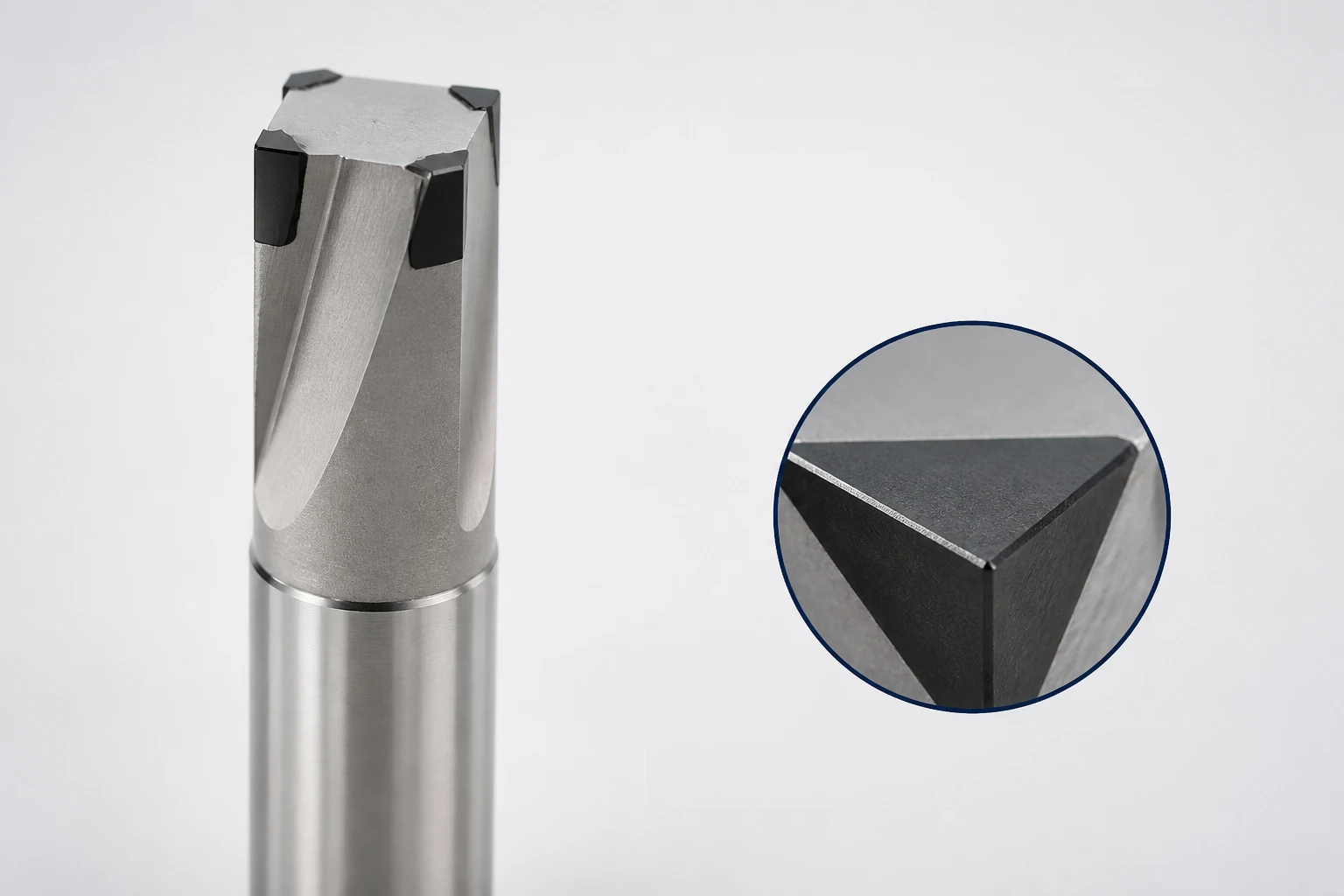
PCD Square End Mill
PCD square end mills for pocket walls, shoulders and sharp internal corners in high-silicon aluminum, built to the part drawing.
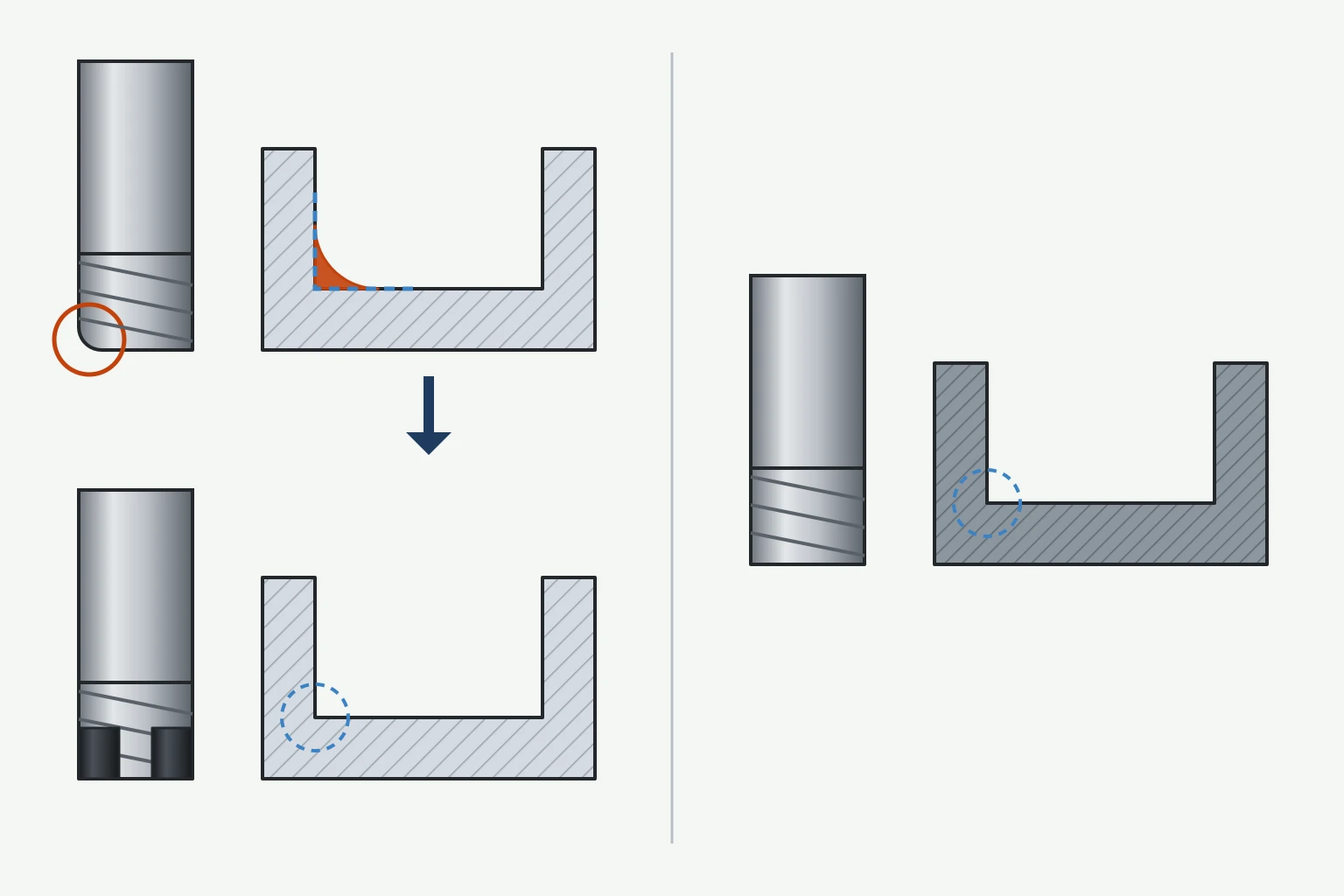
The pocket walls measured square on the first parts of the shift. By the end, the edge between wall and floor has grown a radius, the walls are drifting out of tolerance, and the operator is changing the carbide end mill early just to keep parts inside the drawing.
In high-silicon cast aluminum, that is abrasion eating the carbide corner. A PCD square end mill resists that abrasion and holds its corner further into the batch. Each tool is built to your drawing.
End mills are a side line for us; our main range is PCD reamers and solid carbide drills.
Signs it is time to move off carbide
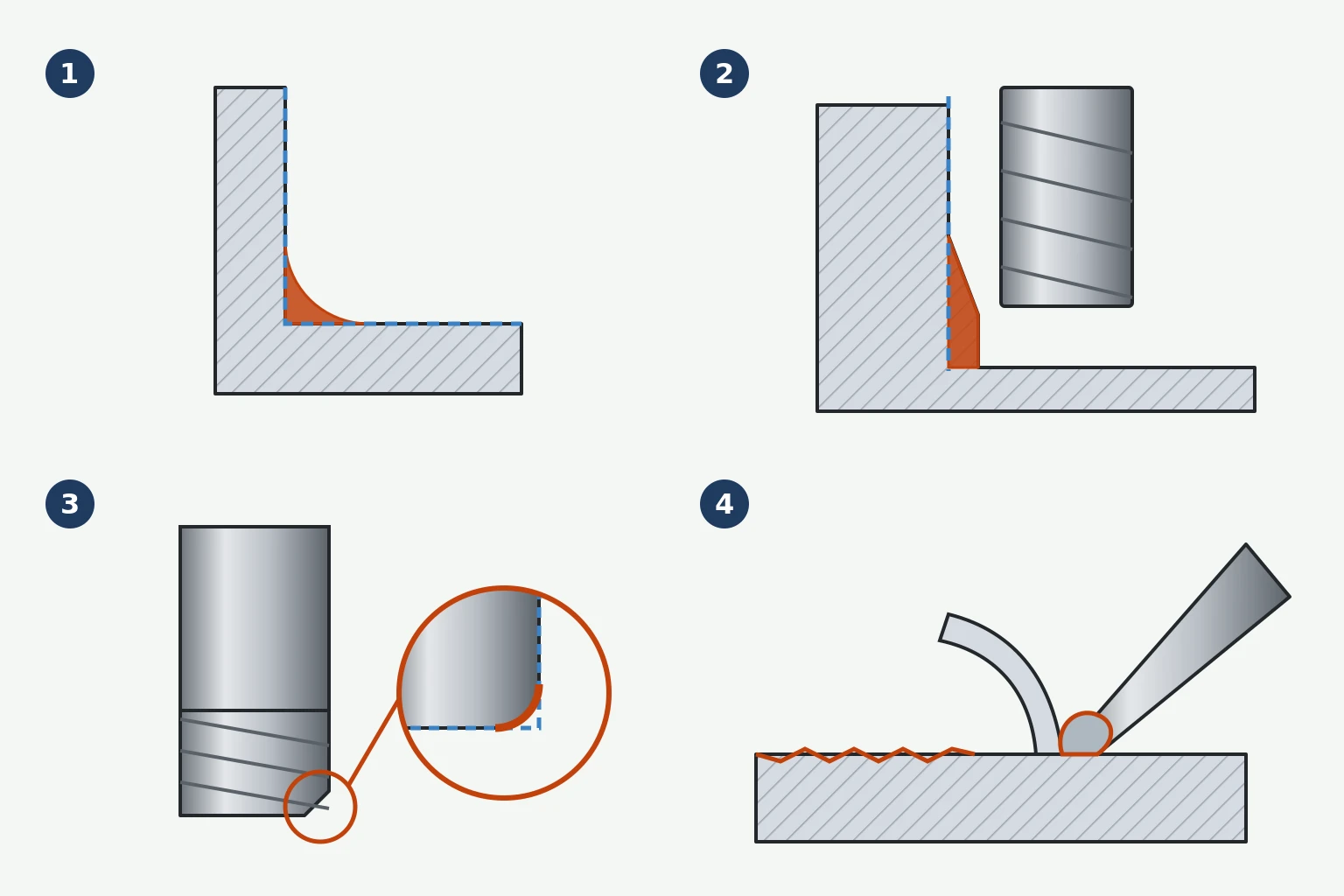
On a square end mill, the outer point where the side and end cutting edges join is the most exposed spot on the tool. In abrasive aluminum it does the most work against the hard grains, so it wears before the rest of the edge does. On the parts, that shows up as:
- a radius growing where the drawing calls for a sharp internal corner
- walls that start square and taper or step at the bottom later in the batch
- tools replaced because of that one spot, while the finish elsewhere is still acceptable
- in softer aluminum, metal smeared onto the carbide, which tears the wall finish and changes the width being cut
If the first three sound familiar, deal with the wear before you change the program.
Why diamond holds the corner
Silicon particles in cast aluminum act like grit, and carbide gives way to them at the corner first. Polycrystalline diamond is harder than that grit and resists it better. Aluminum also has little tendency to stick to PCD, which cuts down built-up material in the softer alloys.
That advantage stops at iron. On steel and cast iron PCD degrades rapidly, because iron reacts with the carbon in it at cutting heat. PCD square tools are for aluminum and other non-ferrous metals only; steel and cast-iron shoulders belong on our carbide square end mill.
Segment build and its limits
PCD is supplied as a thin diamond layer bonded to a carbide backing. It is cut into segments, brazed into pockets on a carbide body and then brought to the finished edge. We cut PCD edges on a VOLLMER QWD760 PCD wire EDM and check finished tools on ZOLLER inspection equipment. That build sets limits a solid carbide tool does not have:
- Edges per diameter. Each cutting edge needs its own segment and pocket, so a slim tool carries fewer edges than solid carbide of the same diameter.
- Length of cut. The edge is only as long as the segment. A deep wall has to be checked against what the segment can cover.
- Corner form. Ground sharp, or with a small break where the print accepts one.
That is why we quote from the feature on your part.
When carbide is still the better buy
Plenty of aluminum work is fine on carbide. The diamond tool is the larger investment, and on a short run carbide may not wear enough for PCD to repay it. Where a well-ground carbide tool already lasts the whole order, there is nothing for PCD to fix. And if the wall problem is chatter on thin sections rather than edge wear, a helical flute does more than a harder cutting material; see the PCD helical end mill.
Information for a PCD square quote
- Aluminum grade and its Si content, as stated on the print or mill certificate
- Tool diameter, flute length and reach to the deepest wall
- Corner callout: sharp, or the maximum break
- Wall and floor tolerances
- Batch size and how often the part is reordered
- Machine, toolholder, and coolant or MQL
- A photo of the worn carbide tool, if you have one
The other PCD milling series are listed on our PCD milling cutters page. For contoured 3D surfaces in the same alloy, look at the PCD ball nose end mill. Send the drawing, with a note on how the carbide tools are failing, through the custom cutting tool RFQ, and we send back a proposed design for your review.
PCD square end mill FAQ
Can a PCD end mill cut steel?
No. Steel and cast-iron parts are milled with carbide end mills, which we also make. Choose PCD for aluminum.
When is PCD worth it over carbide for aluminum?
When the alloy is abrasive, such as high-silicon castings, and the run is long enough that carbide tools wear out partway through it. For short runs, or alloys where carbide already lasts, carbide is the more economical choice.
Does a PCD end mill need a corner break?
Not always. A sharp corner is possible, but it is the most fragile point of the edge, so tell us if your drawing allows a small break.
What do you need to quote a PCD end mill?
The part drawing and the alloy, plus the depth of the walls you mill and how the corner is dimensioned. Your expected volume and machine help us settle the design.