
EV Housing Coaxial Bore Machining — Alignment, Tools, RFQ
Each diameter on the housing gauged alone—and the stack still failed coaxiality. Separate tools, separate setups, and no shared axis plan turned a multi-diameter print into scrap after unclamp.
This page owns EV housing coaxial / multi-diameter bore machining: what the feature means, short stack-up risks, drill/ream/combo path, and RFQ with datums marked. Single bearing-bore finishing stays on EV Motor Housing and Aluminum Housing Bearing Bore. Housing holes & faces map: Aluminum EV Housings. XRZ quotes from your print with coaxial callouts marked (sample validation · Custom Cutting Tool RFQ).
What coaxial / multi-diameter means on EV housings
| Feature pattern | Why it is one problem |
|---|---|
| Stepped diameters on one axis | Each land inherits pilot and runout from the prior |
| Related bores with coaxial / concentric callouts | Shared datum plan before tool family freeze |
| Bearing + register + seal diameter family | Do not quote each land as a standalone “bearing bore” only |
When the print is a single fit bearing bore without coaxial stack notes, use the bearing pages—not this encyclopedia.
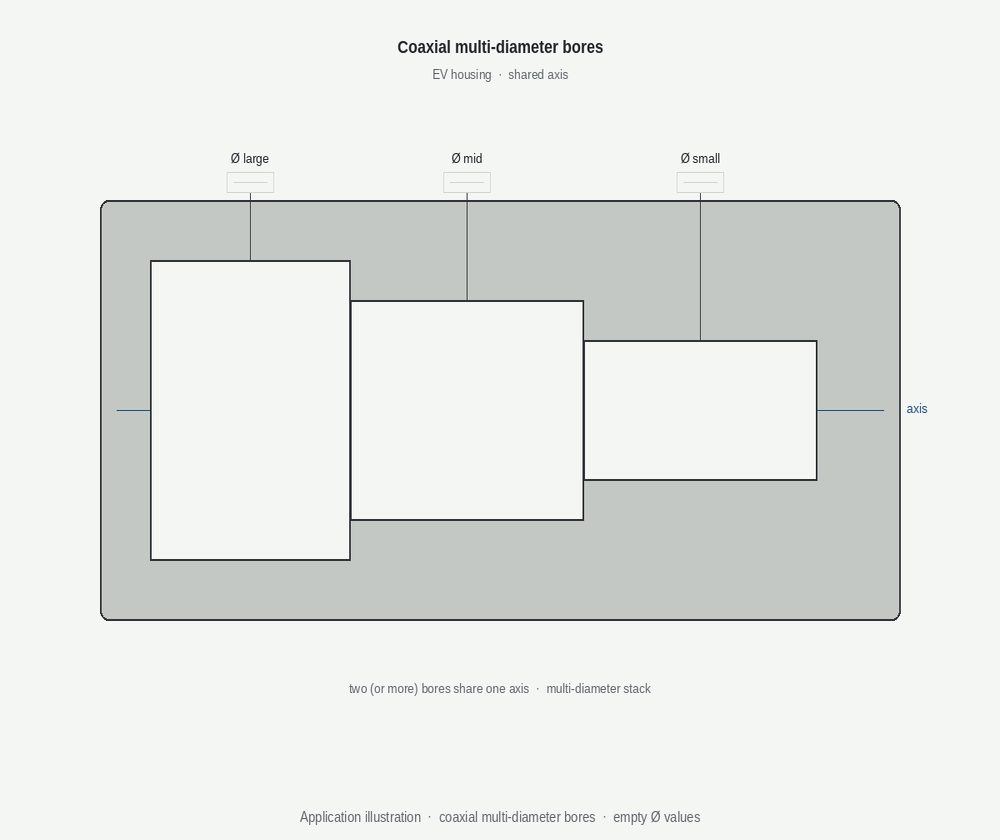
Stack-up risks (short, verifiable)
| Risk | What usually drives it |
|---|---|
| Diameter OK, coaxiality out | Separate setups / no shared axis plan |
| Step shoulder walk | Allowance frozen per land without stack review |
| Combo overreach | Collapsing steps before capability justifies it |
| Ream chasing crooked pilot | Pre-hole quality ignored — soft pre-hole quality |
Ream-vs-boring decision depth is not restated here (no live dedicated Knowledge URL at publish check)—mark boring requirements on the RFQ if your route needs them; do not invent a full boring pillar on this page.
Tool path: drill · ream · combo
- Create-hole / pilot — Solid Carbide Drill matched to Al and coolant.
- Measure incoming bands on each land before freezing finish geometry.
- Finish — Custom PCD Reamer (often step/form when multi-diameter lands justify).
- Combination drill-ream — Combination Drill-Reamer only when cycle time and capability justify collapsing steps—soft decision tree.
Boundary vs bearing pages
| Page | Owns |
|---|---|
| EV Motor Housing (#9) | Motor housing bearing finishing |
| Aluminum Housing Bearing Bore (#17) | Generic Al bearing finishing |
| Aluminum EV Housings (#3) | Holes & faces map |
| This page (#18) | Coaxial / multi-diameter alignment stack |
Milling supporting only when a face lands on the same print.
RFQ (datums & related diameters)
| Must send | Why |
|---|---|
| Housing print + revision; coaxial / multi-diameter features marked | Separates stack from standalone holes |
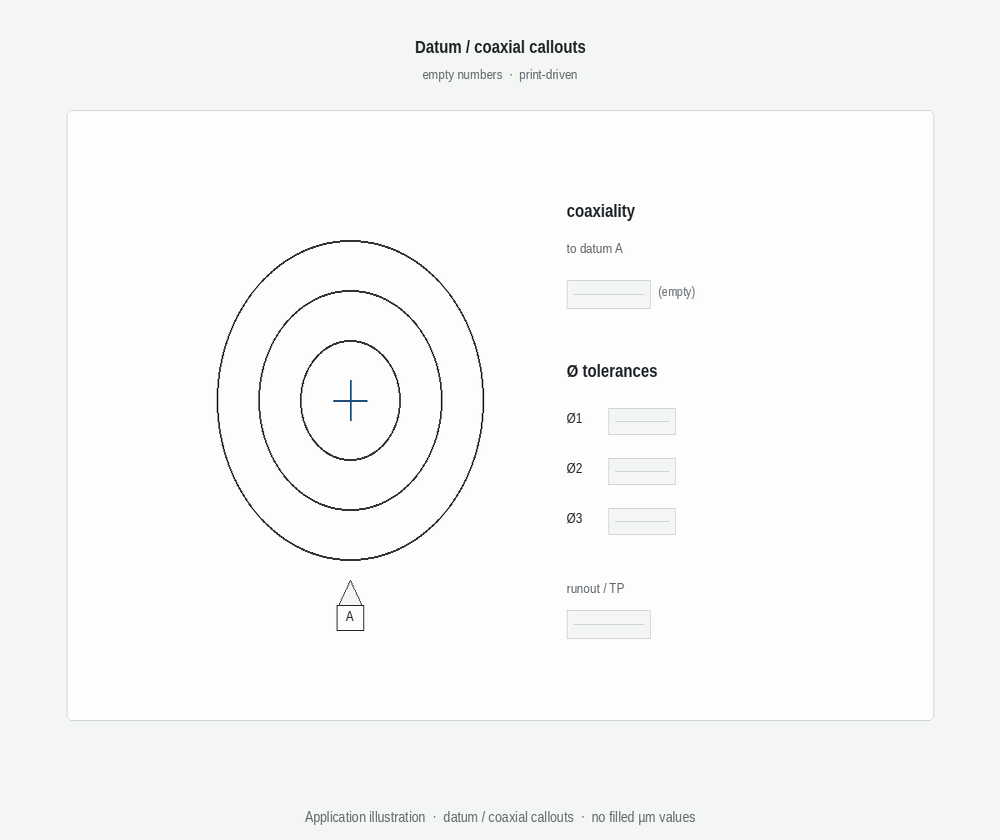
| Datums and coaxial/concentric callouts as on print | Freezes alignment scope |
| Hole chart per land: Ø, depth, tol | Freezes drill vs ream vs combo scope |
| Pre-hole method + allowance per finish land | Incoming bands before geometry freeze |
| Holder, stickout, measured runout, coolant | Trial realism |
| Volume band + sample yes/no + written acceptance (incl. coaxial checks) | First-article before production talk |
Checklist: PCD Reamer RFQ Checklist.
Tool match pointers (short cards)
| Need | Open |
|---|---|
| Multi-land finish | Custom PCD Reamer |
| Create-hole / pilot | Solid Carbide Drill |
| Step collapse when justified | Combination Drill-Reamer |
When is a bore “coaxial” enough to need a special stack?
When the print carries coaxial/concentric callouts across related diameters, or multi-diameter lands share one functional axis. A single standalone bearing bore without stack notes usually stays on the bearing pages.
Does coaxial work always need a combination tool?
No. Combination tools earn a station when capability and cycle time justify collapsing steps. Many stacks stay drill → measure → dedicated PCD ream/step ream. Soft: Drill-then-ream vs PCD combination.
How is this different from bearing bore finishing?
Bearing pages own single fit-bore finishing paths. This page owns alignment across coaxial / multi-diameter features. Use both when the housing has a bearing land inside a coaxial family—map alignment here, finish details on #9/#17 as needed.
What datums should I mark on the drawing?
Mark the print datums that control coaxial/concentric callouts, related diameters in the stack, and which characteristics are in sample acceptance. Upload via Custom Cutting Tool RFQ.
Send the housing print—we’ll map coaxial / multi-diameter stacks
Mark coaxial features and datums. We quote from alignment callouts and machine constraints.