
How to Choose a Hole Process Route: Drill, Expand, Ream, or Bore
Buying a sharper reamer will not fix a hole that was never routed for the IT band on the print—plants often burn tools and scrap before they redraw the process sequence.
This hub maps a hole machining process route: when to stop at drill, when to expand or prepare, when to finish by ream or bore, and when deep-hole strategy branches off. It is not a drill-vs-reamer tool essay (Reamer vs Drill Bit), not a combo decision tree (Drill→Ream vs Combination), and not an allowance calculator (Allowance & Pre-Hole Size). Tool-family selection stays on Precision Holemaking Selection Guide.
Short answer. Low-precision holes often stop at drill (or drill + light clean-up). Mid-band IT commonly needs drill → expand/mill prepare → finish. High-precision size/finish usually means drill → prepare → ream, or drill → rough/finish bore. Reaming sizes and finishes a pre-located hole—it does not correct position error. Deep holes branch to peck/coolant strategy (deep-hole drilling). Send drawing + IT + material + batch for an XRZ RFQ on reamer / carbide drill / combo boundary.
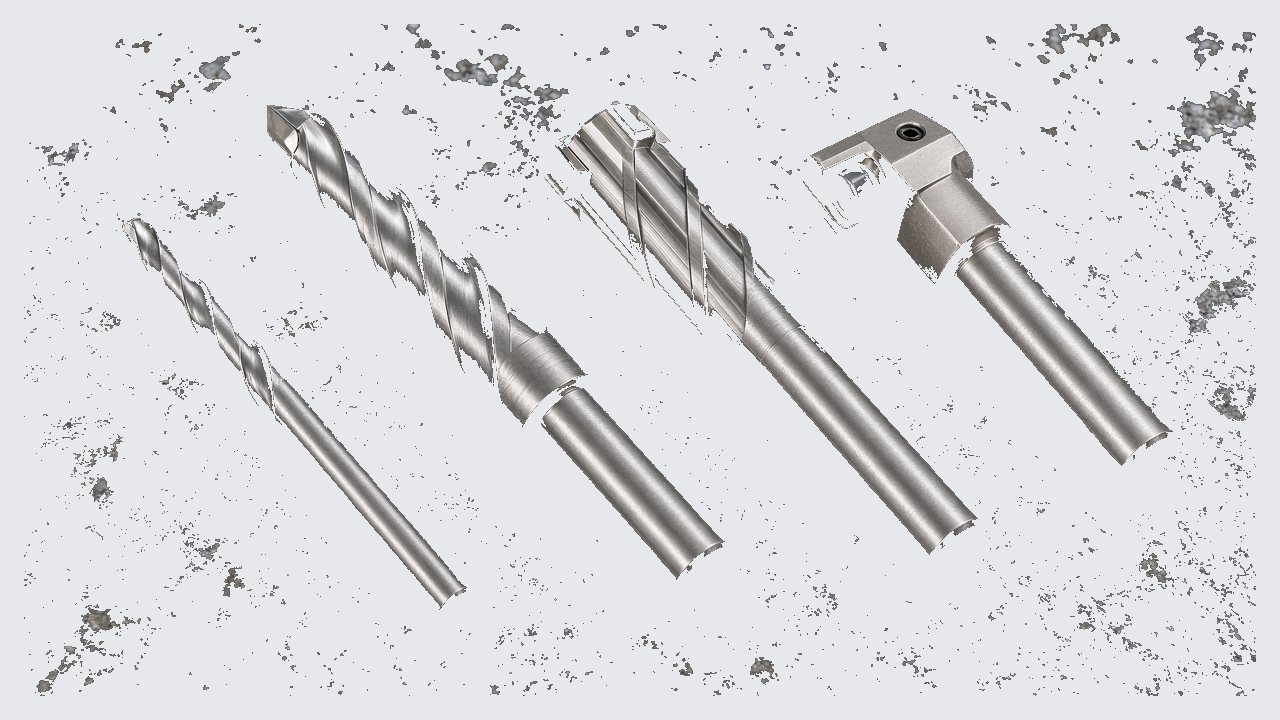
Five methods on one map
| Method | What it mainly owns | Typical win condition |
|---|---|---|
| Drill | Create hole, rough size/location | Low IT, open tolerance, create-first scrap modes |
| Expand / prepare | Stock band + wall clean-up before finish | Bring allowance into a ream/bore window — allowance, pre-hole quality |
| Ream | Fixed-size finish (Ø, form, finish) | Stable volume; location already OK |
| Bore (incl. fine boring) | Adjustable Ø; can participate in position strategies | Mix lots, Ø changeovers, position risk — deep compare: Reaming vs Boring |
| Helical / interpolate mill | Flexible create or prepare on machining centers | Soft support only — milling on holemaking line; not a PCD-ream substitute for every finish bore |
Use the map as a route heuristic—not a catalog of tools to buy.
Route by tolerance band (ISO IT language)
Use IT as a planning band, not a guarantee:
| Band (heuristic) | Common route shape | Notes |
|---|---|---|
| Rough / open (often IT11–13 class) | Drill → stop or light clean | Finish ream rarely pays if the print does not need it |
| Mid (often IT9–10 class) | Drill → prepare → ream or bore | Choose by batch, position, and Ø flexibility — see N2 |
| Tight size/finish (often IT6–8 / H7-class cues) | Drill → controlled prepare → ream or bore | Ream needs stock + location; bore needs setup and adjustment discipline |
These bands are industry heuristics for route talk—not XRZ measured capability tables and not copied textbook Vc/f.
Batch, diameter, and why routes diverge
- High volume, stable Ø, location already good → finish ream often wins on size-repeat throughput (PCD reamers on qualified non-ferrous/abrasive aluminum programs are a common path—cue tool map, do not invent life %).
- Mix, frequent Ø revision, or position risk → bore (then finish) often stays rational.
- Create-hole failures (pack, breakout, smear) → fix the drill route first (drill RFQ checklist, solid carbide drill).
- Combo only when create+finish integration is the real question — soft gate: decision tree / combination drill-reamer; N1 does not expand combo encyclopedia.
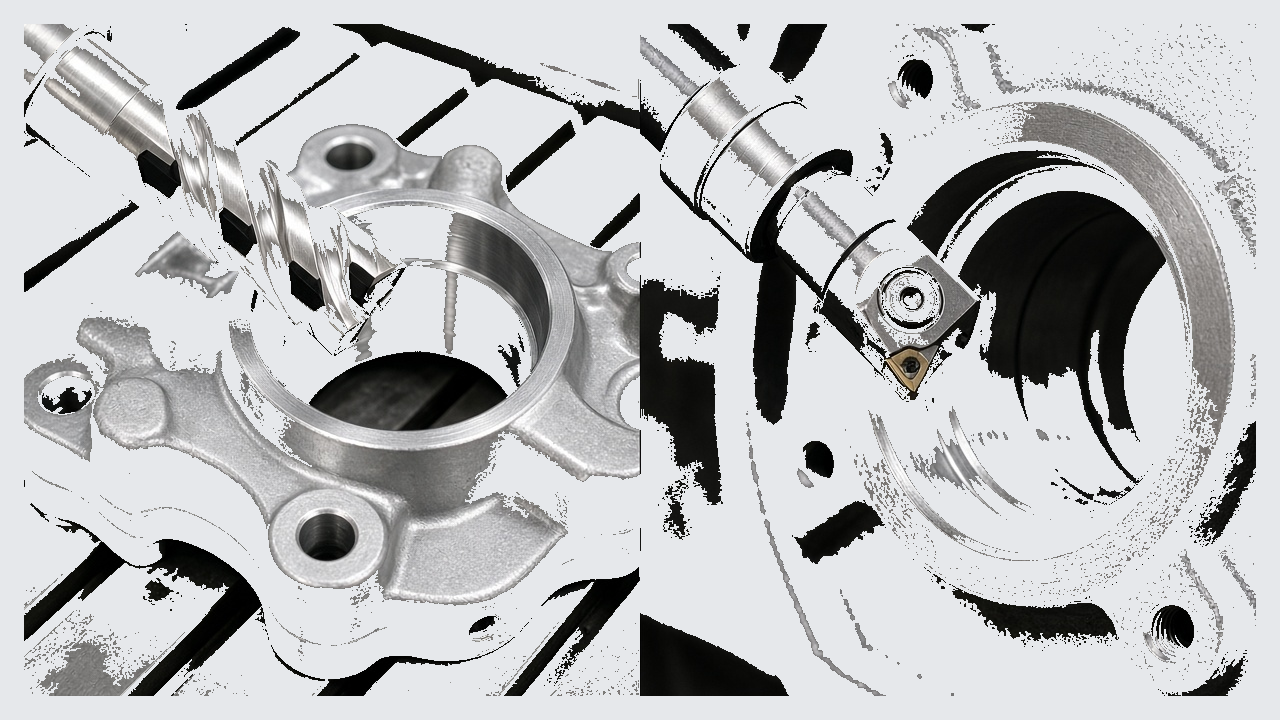
Deep-hole branch (pointer only)
When L/D, peck, and chip escape dominate, leave this hub and use Deep-Hole Carbide Drilling. Do not turn this page into a gundrill product line.
What XRZ quotes from a drawing → Cost → RFQ
From a route decision, XRZ typically quotes:
- Finish Custom PCD Reamer when size/finish and volume justify a fixed-size finish tool
- Create Solid Carbide Drill when the scrap mode is still create-hole
- Soft Combination only after the tree says create+finish belongs in one body
Economics: Cost per Accepted Hole — shared baseline, no Nx multipliers. Fields: PCD Reamer RFQ Checklist and/or Solid Carbide Drill RFQ Checklist → Custom Cutting Tool RFQ.
Frequently Asked Questions
Can reaming fix position or location error?
No. A reamer finishes a hole that is already located. Correct true position upstream (create, fixture, boring strategy)—do not buy finish edges to erase location scrap.
Drill→ream or bore for H7 / IT7-class holes?
Short rule: if location is stable and Ø is fixed for volume, ream is often the finish path; if position or frequent Ø change dominates, bore (then finish) stays in play. Deep compare: Reaming vs Boring for Precision Holes.
When is expand (or prepare) needed before ream?
When stock is outside a controllable finish window or the wall is dirty/lobed. Size the band with Allowance & Pre-Hole Size and qualify the wall with Pre-Hole Quality—this hub does not open a second allowance article (N3 deferred).
What data should we send XRZ for a hole-route RFQ?
Drawing, IT/tolerance, material, batch/volume, create-hole method, scrap mode, and whether the decision is still ream vs bore. Use reamer RFQ checklist / drill RFQ checklist → RFQ.
Next step
Pick the route, then send the drawing with IT, material, and batch.
- Route context: Precision Holemaking Selection Guide · Reaming vs Boring
- Tools XRZ quotes: Custom PCD Reamer · Solid Carbide Drill · soft Combination Drill-Reamer
- RFQ pack: PCD Reamer RFQ Checklist · Solid Carbide Drill RFQ Checklist → Custom Cutting Tool RFQ