
Reaming vs Boring for Precision Holes: Which Route Fits
An H7-class bore quoted as “just ream it” often comes back with location scrap or endless Ø dialing—because the plant picked a fixed-size finish tool for a position or mix problem.
This page compares reaming vs boring for precision holes: fixed-size ream versus adjustable boring on what each controls, when position matters, and how batch changes the call. Full process map stays on Hole Process Route: Drill, Expand, Ream, or Bore. Drill-vs-ream tool roles stay on Reamer vs Drill Bit. No manufacturer ranking and no life %.
Short answer. Reaming finishes a prepared hole to a fixed size with high repeatability in volume; it does not correct true position—location must already be right. Boring (single-point / fine boring) can dial diameter and often helps when position or mix flexibility matters more than pure size-repeat throughput. Aluminum/auto finish bores often favor a PCD reamer after a stable create hole; cast/steel boxes with position risk or frequent Ø change often favor bore then finish. Send IT, position tolerance, material, batch, and create-hole method for an XRZ RFQ.
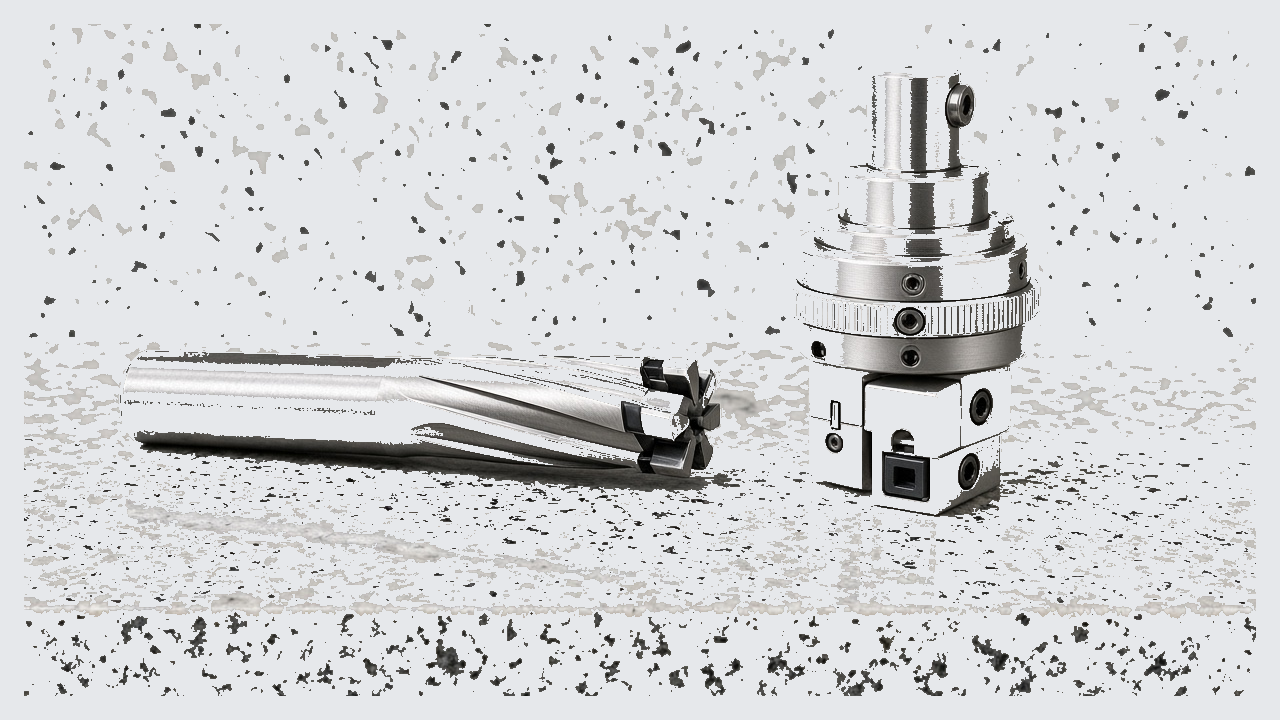
Fixed-size reamer vs adjustable boring — what each controls
| Control | Finish reaming | Boring / fine boring |
|---|---|---|
| Diameter | Fixed by tool (plus process stack) | Adjustable / dialable |
| Form & finish | Strong when stock + edge are controlled | Strong when setup and pass plan are controlled |
| True position | Inherits create/locate — does not “pull” location | Can participate in correction strategies when programmed and fixtured for it |
| Changeover | Fast once validated for a frozen Ø | Flexible when Ø or print revisions keep moving |
| Volume repeat | Often preferred for stable programs | Often preferred for mix or adjustable lines |
This is an engineering framework (inference), not a claim that one always wins.
Position and location
If the scrap mode is true position / pattern location, a sharper PCD edge will not erase it. Fix create, fixture, or a boring strategy that owns location—then finish. Reaming remains a size/finish tool on a pre-located hole.
Volume repeatability vs mix / changeover
Stable automotive/aluminum finish bores with frozen Ø and qualified create holes commonly evaluate Custom PCD Reamer after process bridge and tool-map cues (Al bore tool map; drill→ream vs combo tree). Mixed ferrous boxes, frequent Ø revisions, or position-first programs often keep boring (soft product exit: Fine Boring Tool) in the route—without turning this Knowledge page into a boring-bar catalog.
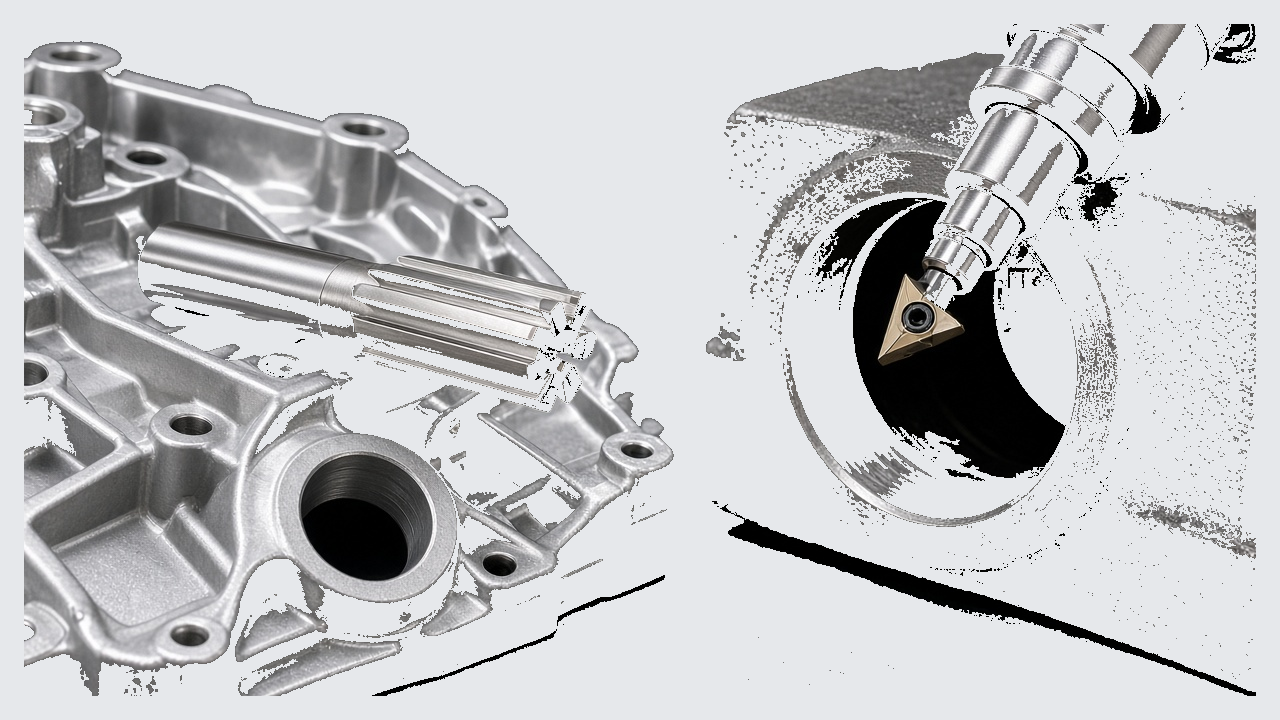
Material / industry cues (labeled inference)
- Aluminum / auto finish bores: PCD ream after a controlled create hole is a common industry path—still gate on Si%/abrasion, setup, and cost (cost per accepted hole).
- Cast iron / steel housings with position risk: bore-then-finish often stays rational; do not force PCD ream into ferrous cutting.
These are cues, not “PCD always beats boring.”
Stock for finish ream vs finish bore + Cost → RFQ
Finish ream needs a controllable stock band and a clean enough wall—size it with Allowance & Pre-Hole Size; do not paste a fake mm table here as XRZ measured data. Finish bore stock and pass plans follow the boring setup; keep them on the shared trial baseline.
Compare routes on Cost per Good Part, not invoice price alone: Cost per Accepted Hole. Then send fields via PCD Reamer RFQ Checklist → Custom Cutting Tool RFQ. If the route is still open, say so on the RFQ (ream vs bore undecided) with IT, position tolerance, material, batch, and create-hole method.
Soft selection: Precision Holemaking Selection Guide · hub Hole Process Route.
Frequently Asked Questions
Does reaming correct location error?
No. Location must be right before finish reaming. Use upstream create/fixture or a boring strategy when position is the scrap mode.
When does boring beat a PCD reamer?
When position correction, frequent Ø change, mix flexibility, or ferrous constraints dominate—and a shared cost baseline still favors boring. Soft product path: Fine Boring Tool. PCD ream wins more often when size-repeat volume on a qualified non-ferrous finish bore is the job.
How much stock for finish ream vs finish bore?
Use a band heuristic tied to diameter, material, and pre-hole method—not a universal mm table on this page. Start with Allowance & Pre-Hole Size; freeze the same measurement method on both trial candidates.
What should we send XRZ if we are still choosing ream vs bore?
Drawing, IT and position tolerances, material, batch, create-hole method, scrap mode, and “route undecided: ream vs bore.” Checklist: PCD Reamer RFQ Checklist → RFQ.
Next step
If the scrap is size-repeat on a located hole, evaluate a PCD reamer. If it is position or mix, keep boring in the route and say so on the RFQ.
- Route map: Hole Process Route · Precision Holemaking Selection Guide
- Product: Custom PCD Reamer · soft Fine Boring Tool
- RFQ: PCD Reamer RFQ Checklist → Custom Cutting Tool RFQ