
Quick answer
Define cutter form and engagement first, then separate radial from axial pass strategies, compare roughing and finishing passes, and only add a spring pass when a measured symptom justifies it. Do not treat a spring pass as a default, and do not confuse pass stacks with compensation offsets or feed conversion. Check the accepted thread and cutting edge, then keep the validated pass record. This page owns engagement and pass judgment, not the programming checklist, not a feed calculator, and not a chatter diagnosis essay.
Process and CAM engineers often stack extra orbits because a first article failed gauge, or they add a spring pass by habit without naming the symptom. Load climbs, finish stalls, or edges chip while the traveler still says "one more pass." This Knowledge page owns how to define cutter form and engagement, separate radial and axial strategies, compare roughing and finishing passes, assess a spring pass against the measured symptom, check the accepted thread and cutting edge, and keep the validated pass record before product inquiry. Start with the thread milling guide for cluster navigation, then use the thread mill selection guide when the candidate family is still open. Geometry contrasts between single-form and multi-form tools stay on the single-form vs multi-form thread mills guide. Callout reading stays on the metric and UN thread mill callouts guide. Hole, entry, and centre-path clearance geometry stays on the thread mill diameter vs hole clearance guide. Aluminum mill-versus-tap tradeoffs stay on the sibling thread milling vs tapping aluminum guide. Use the live thread milling programming guide for the machine-agnostic verification checklist. Product geometry and inquiry live on the thread mill product page.
Jump: Define engagement · Radial vs axial · Rough vs finish · Spring pass · Accept and edge · Pass record · Confirm · FAQ · Sources
Define cutter form and engagement
Lock what "engagement" means on this traveler before anyone adds another orbit. On this page, engagement is the planned contact between the thread-mill form and the workpiece during one pass stack: radial stock removed per orbit (or per radial step), axial depth covered per stack, and how many active form teeth share that cut. It is not a compensation radius field, not a feed calculator output, and not a chatter diagnosis.
- Cutter form family: single-form versus multi-form language belongs on the single-form vs multi-form thread mills guide; here you only record which form you are engaging and how many axial teeth can share depth.
- Radial engagement: stock removed toward major or minor diameter per radial step; leave blank if the plant still mixes diameter with compensation offsets.
- Axial engagement: depth band covered per axial stack; keep floor and full-thread depth questions on Soft HOLD notes until the dedicated blind-hole depth page is live.
- Active edges in cut: how many form teeth share the cut under the planned stack; do not substitute remembered tooth count for measured engagement.
- Source stamp: traveler revision, Soft HOLD, or [NEEDS VERIFICATION] when engagement fields are incomplete.
Public threading literacy such as this threading knowledge overview and this thread milling process overview helps name helical generation without publishing an HENTRY pass table. Units literacy such as this units and measurement guidance and metrology portals such as this public metrology laboratory entry and this international metrology portal keep diameter and depth language tied to public sources. Callout literacy stays on the metric and UN thread mill callouts guide when the print system is still open.
Start here: if radial and axial engagement are not named separately, do not treat "add another pass" as a controlled strategy.
Separate radial and axial strategies
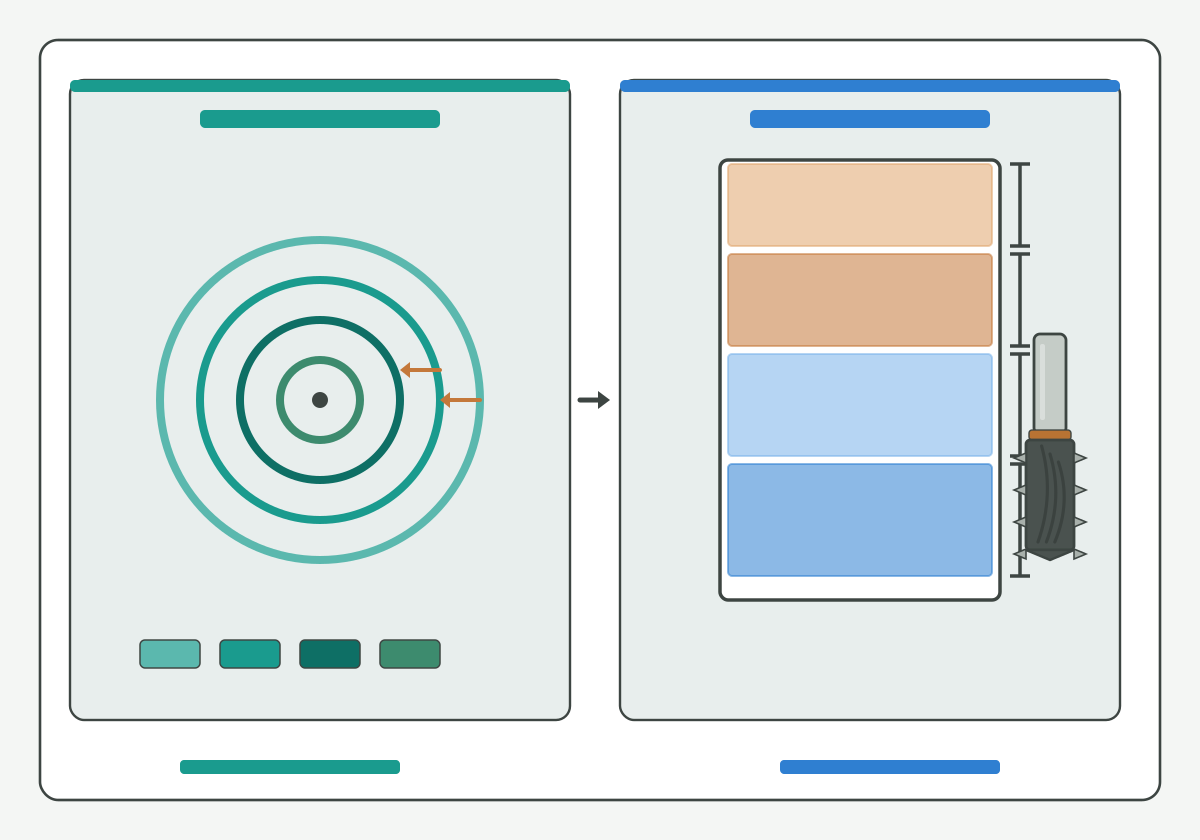
Illustration schematic: radial concentric pass rings versus axial stacked depth bands - teaching layout only; not a catalog claim, ranked case photo, or life claim.
Radial and axial strategies answer different load questions. Mixing them into one unlabeled "multi-pass" cell hides which lever you moved when the gauge fails.
- Radial strategy: concentric or stepped orbits that remove stock toward finished thread diameter; use when radial load, form deflection, or major/minor stock is the limiter.
- Axial strategy: stacked depth bands that cover full thread length in segments; use when axial reach, flute packing, or depth-band stability is the limiter.
- Combined stacks: allowed only when both levers are named on the traveler; do not invent a percentage split without plant data.
- Clearance gate: orbit and entry clearance that change what radial steps are possible stay on the thread mill diameter vs hole clearance guide.
Milling process literacy such as this milling process overview supports orbit language. Thread-milling product literacy such as this thread milling resource overview, this thread milling cutter overview, and this thread milling article overview helps name family language without migrating brand pass tables. Use the live thread mill cutter compensation guide for radius, diameter offset, and CAM bias essays; keep only engagement and stack naming here.
Start here: label each added orbit as radial, axial, or named combined before you change feed or compensation.
Compare roughing and finishing passes
Roughing and finishing passes are different traveler jobs. A rough pass removes most stock under controlled engagement. A finish pass targets accepted form, gauge class, and surface under lighter engagement. Collapsing both into one unlabeled cycle makes spring-pass decisions guesswork.
- Rough fields: radial/axial stock target, engagement limit, coolant note, Soft HOLD if approved cutting data is missing.
- Finish fields: remaining stock, finish engagement, gauge class target, and whether compensation is locked elsewhere.
- Forbidden collapse: do not treat a remembered finish orbit as a rough stock remover, and do not treat an ordinary pocket-mill multi-pass habit as thread-mill truth.
- Data boundary: Use live thread mill speeds and feeds and thread milling feed calculator. Keep only pass-role labels here.
Machining data literacy such as this machining data literacy portal and tapping literacy such as this tapping knowledge overview support naming process families without migrating brand start cards. Tool-family literacy such as this threading tools overview, this thread milling tools overview, and this threading product family overview remains neutral discovery. Standards portals such as this codes and standards portal and this national standards overview keep callout language honest.
Hypothetical teaching table (not a verified HC customer case; [NEEDS VERIFICATION] for any plant use):
| Step | Role | Engagement note | Decision |
|---|---|---|---|
| 1 | Rough | Larger radial or axial stock under named limit | Continue if edge and chip look stable |
| 2 | Finish | Small remaining stock for form and gauge | Accept or measure symptom |
| 3 | Optional spring | Only if a measured symptom remains | Do not add by default |
Those rows exist only to exercise rough→finish→optional spring judgment on this page. They are not an HENTRY recommended pass card and carry no life or percentage claim.
Assess a spring pass against the symptom
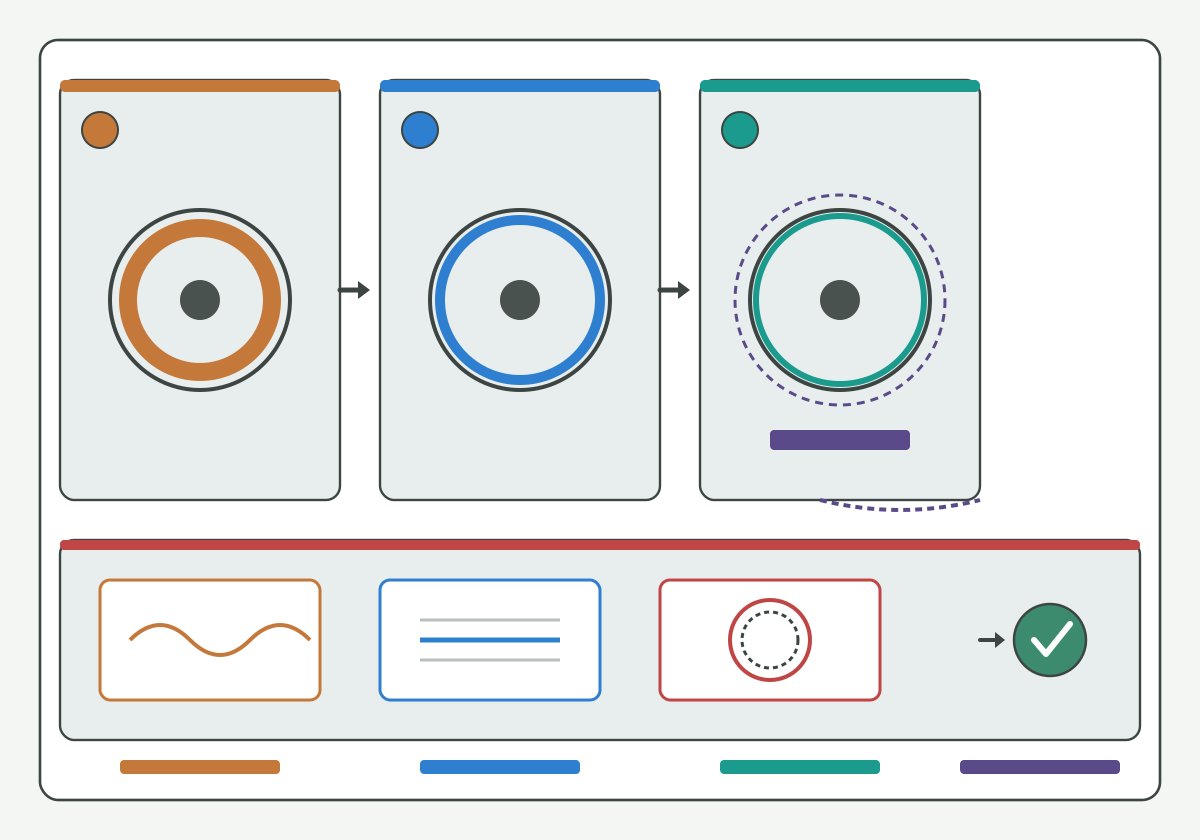
Illustration schematic: rough to finish to optional spring pass with a symptom decision check - teaching layout only; not a default spring-pass promise or customer proof.
A spring pass is a light repeat cut used to clean residual deflection or a named finish symptom. It is not a universal fix, not a substitute for wrong engagement, and not a compensation essay.
- When a spring pass can fit: gauge still tight or form still short after a controlled finish, with a written symptom (for example residual deflection or incomplete crest cleanup) and stable edges.
- When it does not fit: missing rough/finish split, unlabeled engagement, chatter or chipping without diagnosis, or compensation fields still open. Soft note (guide forthcoming, no empty hard link): chatter and finish-damage diagnosis will sit on a dedicated Knowledge page. Use the live thread mill cutter compensation guide for compensation field essays.
- Record required: symptom, before/after gauge or form note, engagement of the spring cut, and Soft HOLD if evidence is incomplete.
- Forbidden default: do not add a spring pass on every traveler "because threads usually need one."
Toolholding literacy such as this tool-holder interface overview and this toolholding tips overview helps name runout and projection checks that still change residual deflection. Coolant path literacy such as this coolant concentration measurement method supports fluid-control language when chips pack in a tight orbit, without inventing an HENTRY pressure guarantee. Thread milling products overview literacy such as this thread milling products overview and cutting-tool resources such as this cutting-tool resources hub stay discovery aids only. Peer-reviewed machining research literacy such as this peer-reviewed machining research journal overview and process research literacy such as this machining process and tool development research overview support naming deflection and engagement as process variables, not slogans.
Start here: no written symptom, no spring pass.
Check the accepted thread and cutting edge
Before you lock the pass stack, check both the accepted thread and the cutting edge. A stack that "looks finished" but leaves a broken crest or a chipped tooth is not validated.
- Accepted thread checks: gauge or form acceptance fields your plant already uses; leave blank rather than invent class results.
- Edge checks: tip, crest, and flute condition after the last named pass; Soft HOLD if inspection method is missing.
- Depth/floor note: Use the live blind-hole thread milling depth page for full-thread depth and floor envelope detail; keep only acceptance and edge fields here when depth is not the open question.
- Clearance rematch: if acceptance fails because of entry choke or centre-path interference, return to the thread mill diameter vs hole clearance guide instead of adding unlabeled orbits.
Geometry-inspection literacy such as this tool geometry inspection equipment overview helps name how shops confirm form and edge envelopes. Regrind and inspection literacy such as this regrind inspection and economic review overview supports edge-review language without inventing life multipliers. Weights and measures literacy such as this weights and measures public entry keeps measurement language public. Threading resources hubs such as this threading resources hub and threading article literacy such as this threading article overview stay neutral discovery.
Start here: if edge condition is unknown, Soft HOLD the pass record even if the gauge passed once.
Keep the validated pass record
A validated pass record lets the next shift repeat the stack without guessing. Allow the record without a final commercial model number when Soft HOLD geometry is still open.
- Identity fields: callout, material family, cutter form family, Soft HOLD tool ID if SKU is open.
- Stack fields: radial vs axial labeling, rough vs finish roles, spring-pass yes/no with symptom text.
- Acceptance fields: gauge/form result, edge condition, Soft HOLD or [NEEDS VERIFICATION] flags.
- Boundary stamps: "not an unapproved life or percentage claim"; "not a compensation essay"; link only live siblings for checklist and geometry.
After the pass record is written, continue on the live thread milling programming guide for verification checklists. Hard-link live: thread mill speeds and feeds · thread milling feed calculator · thread mill cutter compensation · blind-hole thread milling depth · thread milling programming guide. Soft note (guides forthcoming, no empty hard links): controller setup screens and chatter diagnosis pages will sit on dedicated Knowledge pages when published. Carbide blank literacy such as this carbide rod blank portfolio overview remains a materials discovery aid only.
Start here: if the traveler cannot name rough, finish, and optional spring separately, do not call the stack validated.
Confirm the matched tool and validation inputs
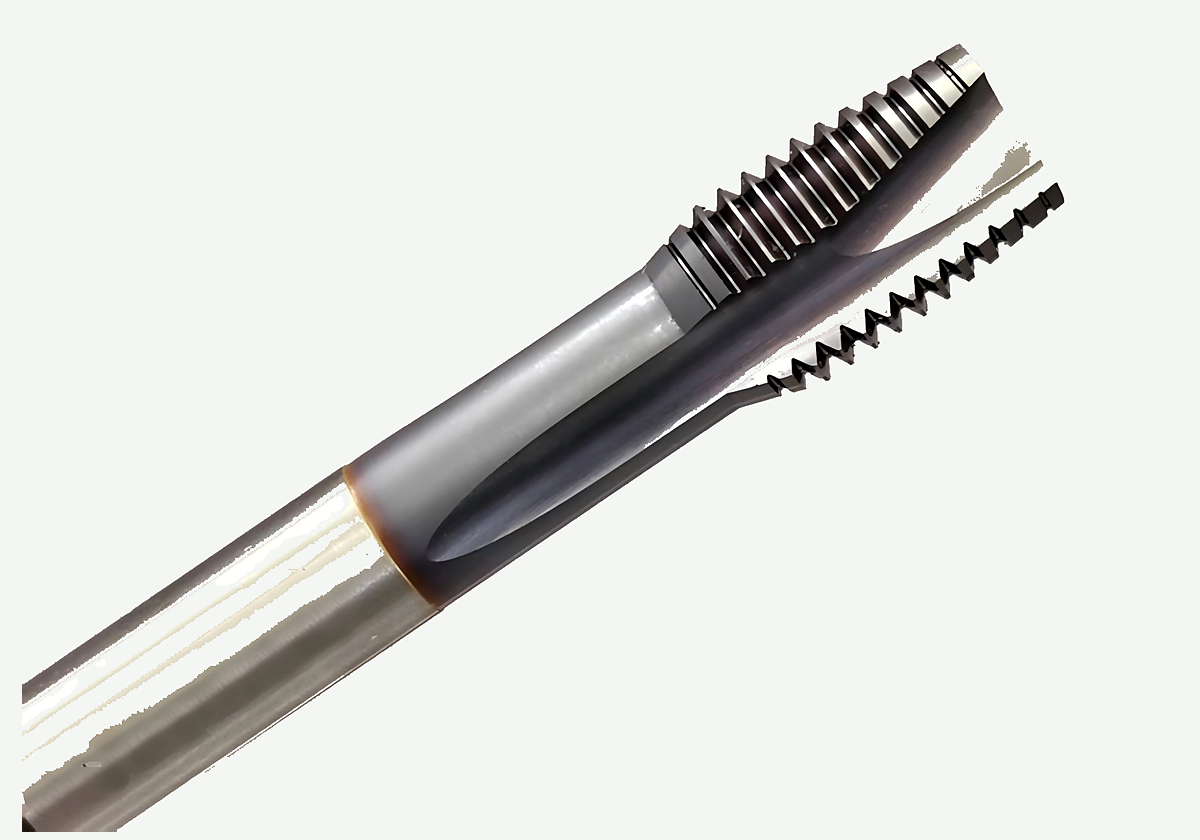
Product photo on paper background for enterprise support - geometry reference only; not a price, life, or ranked case claim.
When engagement, radial/axial stacks, rough/finish roles, and any spring-pass symptom are written, review the matched tool and validation inputs on the thread mill product page. Bring callout, material, form family, pass-record fields, Soft HOLD flags, and first-article notes. Do not ask for a public price on Knowledge pages. Optional drawing or RFQ handoff stays on the custom cutting tool RFQ page when the plant needs a controlled intake path.
CTA: Review the matched tool and validation inputs on the thread mill product page after the pass record is written. Geometry selection detail remains on the single-form vs multi-form thread mills guide and the thread mill selection guide; this page stops at engagement and pass judgment.
FAQ
When do I need multiple thread-milling passes?
When named radial or axial engagement limits, rough-versus-finish stock splits, or machine/tool limits prevent a safe single pass. Multiple passes are a controlled stack, not a habit of adding unlabeled orbits after every gauge fail.
When should I use a spring pass?
Only when a measured symptom remains after a controlled finish pass and edges are still stable. A spring pass is optional cleanup, not a default on every traveler, and not a substitute for missing engagement labels or open compensation fields.
How do I choose radial versus axial strategies?
Use radial steps when diameter stock, form deflection, or major/minor stock is the limiter. Use axial stacks when depth-band reach, packing, or axial stability is the limiter. Name combined stacks only when both levers are written on the traveler.
If compensation changed, do I still change the pass stack?
Maybe. Compensation fields and pass stacks are different traveler jobs. Re-check engagement and rough/finish roles after a compensation change, but do not treat a radius or diameter offset edit as a finished pass-strategy decision. Keep Soft HOLD notes until a dedicated compensation page is live.
Does this page diagnose chatter or chipping?
No. This page owns engagement and pass judgment. Chatter, finish damage, and edge-break diagnosis belong on a dedicated page when published. Until then, Soft HOLD those symptoms and do not invent a spring-pass cure.
Sources and related
- coolant concentration measurement method
- carbide rod blank portfolio overview
- codes and standards portal
- toolholding tips overview
- international metrology portal
- peer-reviewed machining research journal overview
- national standards overview
- thread milling cutter overview
- threading resources hub
- thread milling resource overview
- thread milling products overview
- tool-holder interface overview
- regrind inspection and economic review overview
- machining process and tool development research overview
- machining data literacy portal
- public metrology laboratory entry
- units and measurement guidance
- weights and measures public entry
- milling process overview
- tapping knowledge overview
- threading knowledge overview
- thread milling process overview
- thread milling article overview
- threading article overview
- threading product family overview
- thread milling tools overview
- threading tools overview
- tool geometry inspection equipment overview
- cutting-tool resources hub
Related live pages: thread milling guide · thread mill selection guide · single-form vs multi-form thread mills · metric and UN thread mill callouts · thread mill diameter vs hole clearance · thread milling vs tapping aluminum · thread milling programming guide · thread mill product page. Also see live thread mill speeds and feeds, thread milling feed calculator, thread mill cutter compensation, and blind-hole thread milling depth. Soft note only (no empty hard links): controller setup and chatter diagnosis Knowledge pages are forthcoming.