
Product Detail
Turning Tools for CNC Lathes
Find turning tool categories for your workpiece features and review the insert, holder, and application information needed for selection.
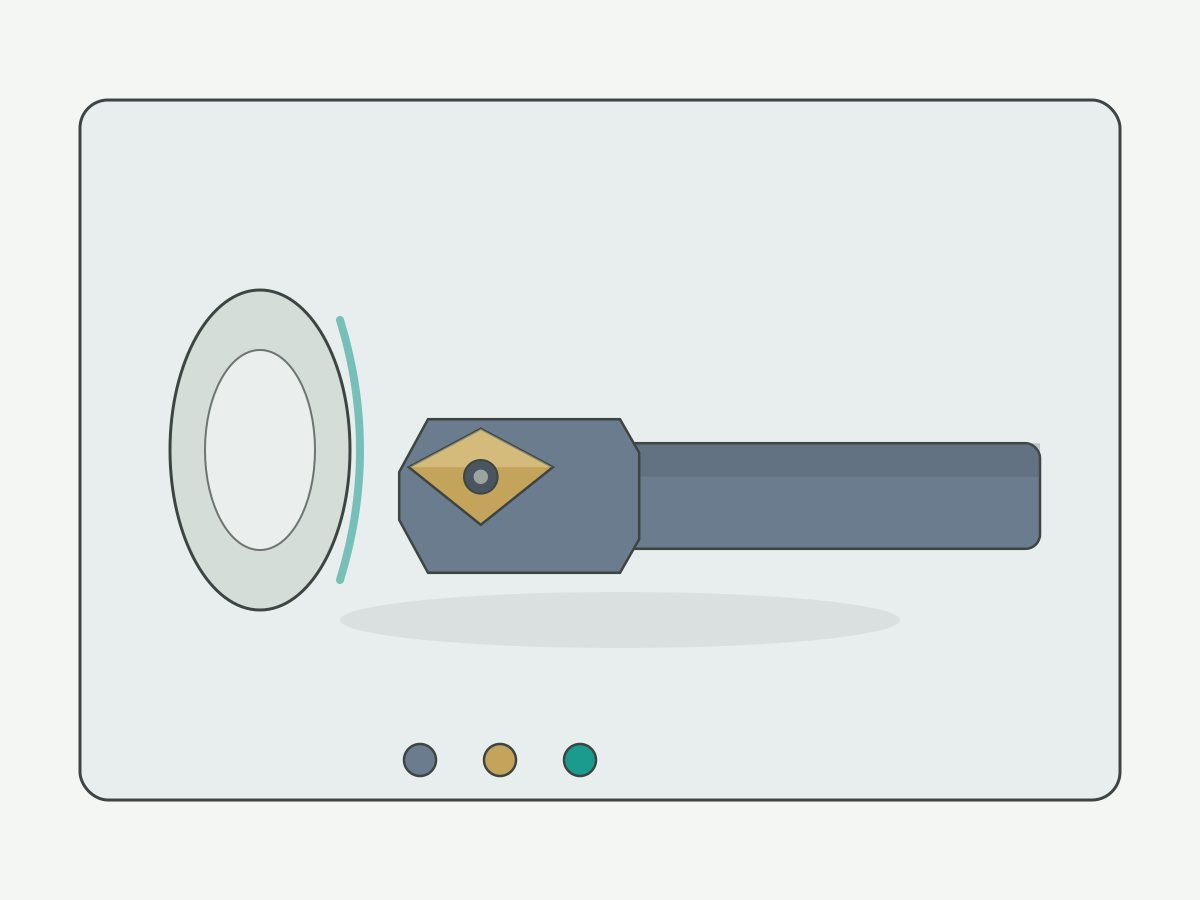
Turning tools · CNC lathes
Turning Tools for CNC Lathes
Find turning tool categories for your workpiece features and review the insert, holder, and application information needed for selection.
- Map OD, ID, and face features to the right tool family
- Check insert and holder pairing — not insert shape alone
- Send workpiece, interface, and drawing data for engineering review
Start from the workpiece feature: OD, ID, or face
Turning tool selection starts with where the cut is made. Use the feature map below, then open the matching category. Teaching overviews of lathe tool types belong on a separate Knowledge page; this page routes you to product families.
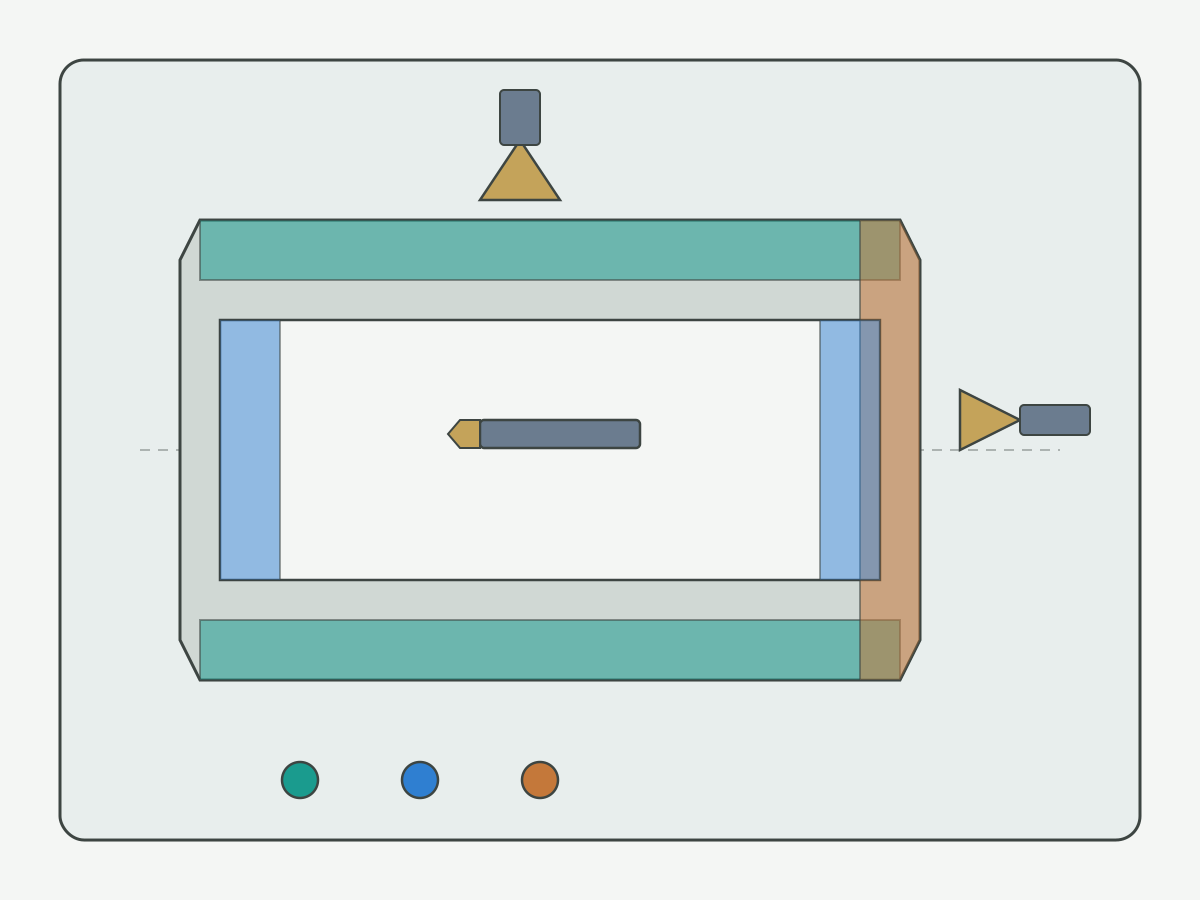
- OD — external turning Outer diameter roughing and finishing; check approach angle, insert shape, and holder clearance.
- ID — boring / internal turning Bore diameter, overhang, and bar rigidity dominate; do not size from insert shape alone.
- Face turning End face and shoulder work; confirm tool orientation and machine travel limits.
- Grooving / parting Separate family — see the Day2 grooving & parting page when live; until then, include groove location and width in your RFQ.
Turning tool categories
Cards describe selection routes HENTRY uses for CNC lathe tooling. Confirmed stock series and catalog codes are added only after product approval — until then, quote from your drawing.
External & face turning holders
Holders for outer-diameter and face cuts. Selection depends on shank or turret interface, approach angle, and insert pocket — not marketing “universal” labels.
Request OD / face reviewBoring bars & internal holders
Internal turning needs bore diameter, bar diameter, overhang, and damping assumptions. Rigid setups still need clearance and chip exit checked against the print.
Request ID reviewCutting inserts for CNC turning
Carbide is the primary insert path on this site. PCD and CBN families are separate when supply is confirmed. Compare families and holder compatibility on the insert page.
Open cutting insertsGrooving & parting tools
External, internal, and face grooves need location, width, depth, and reach. Parting is a separate decision from shallow grooving.
Review our grooving and parting tools product information and share your application requirements.
Grooving & parting toolsPCD / CBN insert routes
Non-ferrous high-volume or hardened ferrous finishing may need PCD or CBN. Do not treat those as drop-in replacements for general carbide without material and duty review.
Start at cutting insertsDrawing-based turning packages
When the print needs a non-catalog holder, step insert, or combined feature, send the drawing for engineering selection. Quotation after complete drawing info typically takes 1–2 working days.
Send turning drawingMaterial and insert: first-pass only
Separate workpiece material from cutting-tool material. This table is a first-pass filter. Grades, chipbreakers, and interrupted-cut rules belong on the insert page and engineering review — not as blanket “suitable” ticks.
What to decide here vs later
Here: which insert family to open (carbide / PCD / CBN path) and which feature card applies.
Later (N004 / engineering): ISO shape code, size, grade, edge prep, and holder pocket compatibility.
If you only have a workpiece print, HENTRY can still do a preliminary review — expect follow-up questions on holder interface and duty cycle.
| Workpiece direction | First-pass insert family | Confirm before quoting | Next step |
|---|---|---|---|
| General steels / cast irons | Carbide turning inserts | Continuous vs interrupted; coolant; duty | Cutting inserts |
| Stainless / difficult-to-machine alloys | Carbide (application review) | Heat, work-hardening, chip control | Cutting inserts + RFQ |
| Aluminum / non-ferrous high volume | Carbide or PCD route | Volume, abrasive wear, edge build-up | Inserts hub → PCD route when confirmed |
| Hardened ferrous finishing | CBN / PCBN route (if supplied) | Hardness band, interrupted cut, machine rigidity | Inserts hub → CBN route when confirmed |
Blank grade cells are intentional. Unconfirmed grades are not shown as “standard range.” Selection continues to your drawing and application data.
Holder interface and rigidity
An insert shape does not prove holder compatibility. Procurement should supply the machine interface, pocket style, available space, and expected overhang.
| Input | Why it matters | If unknown |
|---|---|---|
| Shank / turret interface | Defines which holders can mount | Photo of current tool + machine model · 按图纸 / machine docs |
| Insert pocket / clamping | Screw, lever, or wedge must match insert hole and thickness | Existing insert designation or clear photo |
| Overhang / bore reach (ID) | Controls chatter risk and size repeatability | State max reach needed from print |
| Machine envelope | Turret collision, tailstock, and tool change clearance | Note interference concerns on the RFQ |
Specs, samples, and RFQ path
When a full public catalog is not yet published for a family, HENTRY uses an engineering selection path. Do not expect invented stock lists or list prices on this page.
- Known holder + insert code: send the code for cross-check and supply confirmation.
- Only a workpiece print: send material, feature (OD/ID/face/groove), tolerance, and machine interface for preliminary selection.
- Quotation timing: after complete drawing information is received, quotation typically takes 1–2 working days (quotation only — not production lead time).
Selection guide
One row per task. Standard ranges, custom ranges, and engineering-review items stay separate. Empty numeric cells mean “confirm from drawing,” not zero.
| Process | Location | Tool category | Insert / holder pairing | Limits / confirm | Next page |
|---|---|---|---|---|---|
| External turning | OD | External turning holder | Carbide insert + matching pocket | Approach angle, clearance, duty | Cutting inserts / RFQ |
| Facing | Face / shoulder | Face-capable holder | Insert shape + orientation | Travel limits, collision | RFQ |
| Boring | ID | Boring bar / internal holder | Bar size + insert | Min bore, overhang, damping | RFQ · 按图纸 |
| Grooving | OD / ID / face groove | Grooving system | Groove width / depth matched insert | Reach, chip evacuation | Grooving page (Day2 planned) |
| Parting | Cutoff | Parting blade / system | Blade height + insert | Diameter, remaining core, stability | Grooving page (Day2 planned) |
| Special insert material | As print | PCD or CBN route | Family confirmed by supply | Material + duty gates | Cutting inserts |
Turning tools FAQ
Answers state decision conditions and next steps. They do not replace application approval.
Can HENTRY shortlist tools from a workpiece drawing only?
Yes for a preliminary review. Send material, OD/ID/face feature, key tolerances, and — if known — machine interface. Expect follow-up on holder pocket, overhang, and duty cycle before a firm recommendation.
Are inserts and holders sold as matched sets?
They must be compatible, but they are not automatically a fixed kit. Confirm pocket style, insert thickness, clamping, and orientation. Use the cutting inserts page for family selection, then RFQ for pairing.
Where do I select grooving or parting tools?
Grooving and parting are a separate family from general OD/ID turning. The dedicated grooving & parting page is planned for Day2. Until it is live, include groove location, width, depth, and reach in your RFQ from this page.
Why is there no public price or full stock list?
HENTRY quotes from application data and approved supply scope. Unconfirmed catalog rows are not published as standard range. Request selection with your drawing; quotation typically follows within 1–2 working days after complete drawing information.
Request Turning Tool Selection
Page N002 · Product Turning Tools for CNC Lathes. Required: email, product or task, requirement description. Optional: drawing upload, company, material, sizes, machine, quantity. “Model uncertain” is allowed.
Footer / legal entity: Guangdong Hentry Tool Technology Co., Ltd Brand on page: HENTRY.