
This page compares climb milling and conventional milling for CNC process engineers, programmers, and tooling buyers who must pick a feed sense relative to cutter rotation before they open an end-mill RFQ. It locks two cutting directions, chip-thickness and force patterns, machine backlash and fixturing limits, surface and entry conditions, then a selection and verification checklist. Cutter-type navigation stays on the live milling tools hub. Peripheral (side) milling process detail lives on the live peripheral milling guide. Face-milling exclusives, coating matrices, size tables, full SFM libraries, chatter diagnosis trees, and surface-finish exclusives belong on their own pages when those pages are live. This page is milling support relative to holemaking; it is not a milling site hub rewrite.
Start from the live hub when you still need cutter-family framing: milling tools guide. For side-edge engagement geometry, use the live peripheral milling guide. Live solid carbide end-mill families stay on carbide end mills.
Quick answer
- Name the two directions: climb (down) milling feeds with cutter rotation so chip thickness starts thick and thins; conventional (up) milling feeds against rotation so chip thickness starts thin and grows.
- Gate on machine and fixture first: prefer climb when backlash is controlled, the fixture supports the cut direction, and entry is planned; prefer conventional when backlash is large, the setup is light, or the entry must load the edge gradually.
- Lock chip, force, and surface intent: climb often reduces rubbing at entry into the cut but can pull the table into the cutter if the axis has free play; conventional loads the edge more gently at start but can leave a different finish and heat pattern.
- Next step: run the verification checklist, then request a matched end-mill proposal from live product notes and RFQ. This page is not a full coating, size, or SFM library.
Selection path (stop when a field is missing):
| Step | What you lock | If missing |
|---|---|---|
| 1 Feature and pass | Wall, shoulder, pocket, or face pass; rough versus finish intent | Stop; recover the drawing revision |
| 2 Machine backlash | Axis compensation state, known free play, servo stiffness notes | Do not default to climb on an unmeasured soft axis |
| 3 Fixture and clamp | Support against the expected side-load direction | Stop; add support or change sense |
| 4 Entry and exit | Lead-in, roll-in, or ramp plan; thin-wall risk | Keep open risks flagged |
| 5 Chip and force intent | Climb versus conventional for this pass; consistency with sister ops | Record the sense before the first chip |
| 6 Confirm | End-mill direction + RFQ package | Open RFQ with incomplete SKU if needed |
Jump: Directions · Chip and forces · Example · Backlash and fixture · Surface and entry · Verify · RFQ · Confirm · FAQ
Two cutting directions: climb vs conventional
Climb milling and conventional milling are opposite senses of feed relative to cutter rotation. They are process choices for the same cutter family, not two different tool SKUs. Record the sense on the setup sheet and keep it consistent between trial and production.
- Climb (down) milling: the cutter rotates in the same sense as the feed at the contact zone. The tooth meets a thicker chip at entry into the material and leaves a thinner chip at exit.
- Conventional (up) milling: the cutter rotates against the feed at the contact zone. The tooth rubs or takes a thin chip at entry and builds thickness toward exit.
- Same periphery, different load path: for a side or peripheral cut, both senses still use the side edge; only the chip-thickness timeline and side-load direction flip. Peripheral engagement geometry stays on the live peripheral milling guide.
- What this page is not: a rewrite of the live milling tools guide type catalogue, a face-milling exclusive, or a holemaking OWN page.
Public milling process literacy such as this milling knowledge overview and this how to mill overview describes feed-sense principles. Treat those pages as motion literacy, not as HC cutting data. Machine-tool vocabulary such as this manufacturing society portal supports naming climb and conventional without inventing shop slang as a standard.
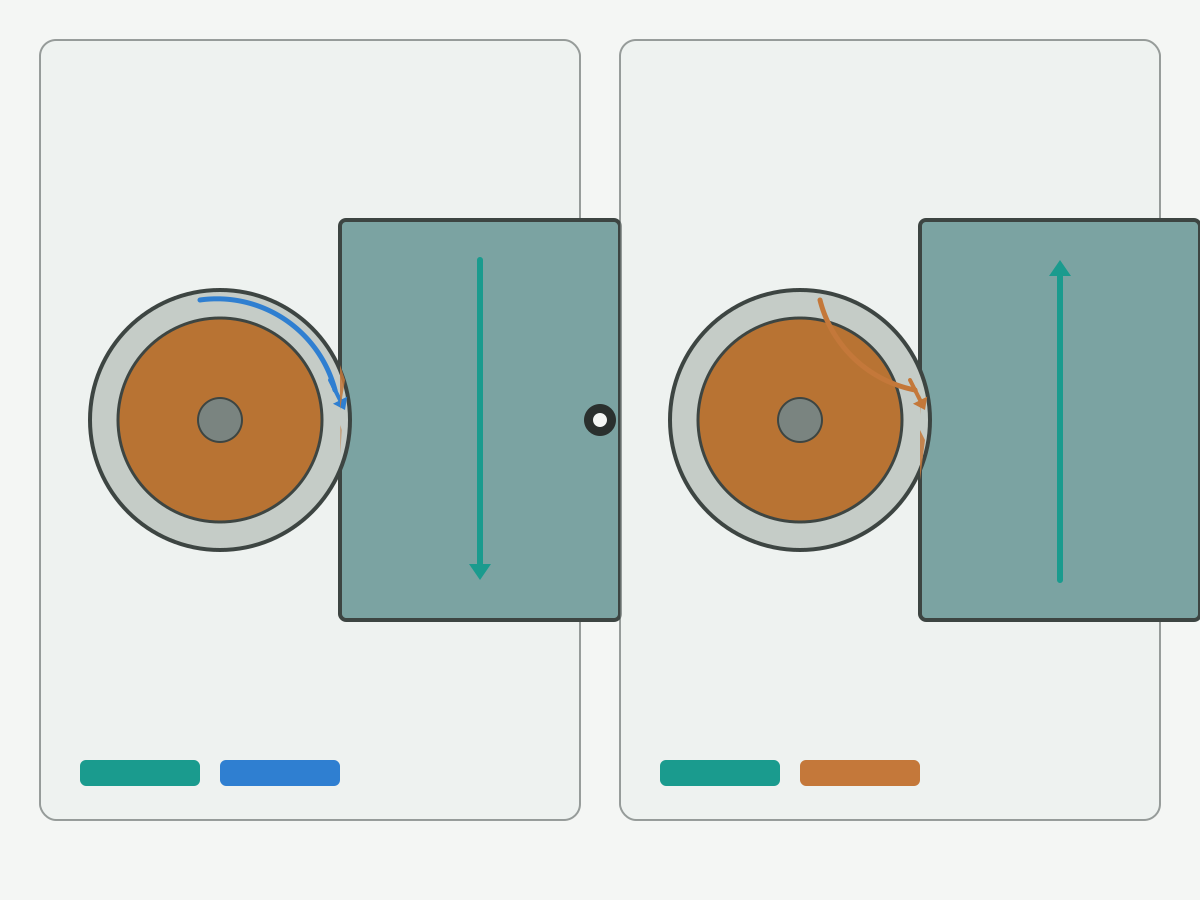
Schematic illustration: not a machine-ready toolpath or catalogue ranking. Confirm feed sense, ae, ap, and stick-out on your drawing and cutter data.
Chip thickness and cutting forces
Chip thickness over the tooth path drives force peaks, heat location, and how the edge loads at entry. Use conditional language only; do not invent unverified absolute force values, life percentages, or universal “always climb” rules.
- Climb chip path: thicker chip at entry can mean a sharper load step into the cut and less rubbing at the start of the tooth path when the machine and fixture hold position.
- Conventional chip path: thin chip at entry can mean more rubbing before the tooth is fully buried, then a thicker chip toward exit. That pattern can be gentler on a soft axis or a light clamp, at the cost of different heat and finish behavior.
- Side load direction: climb tends to pull the table or workpiece into the cutter; conventional tends to push away. Fixture support must oppose the expected direction.
- ae / ap coupling: radial and axial engagement still set how much edge is in cut. Feed sense does not replace ae/ap and stick-out checks on the peripheral guide. Cutting-data literacy such as this machining formulas overview helps teams name ae, ap, and fz symbols without publishing a universal chart.
- Out of OWN here: full SFM libraries, coating matrices, and diameter tables. Leave numeric speed-feed blanks until cutter data and a controlled trial fill them.
Third-party milling application literacy such as this engineering calculators portal and this cutting data notes portal adds context; neither is an HC trial result. Coolant reach still matters when heat concentrates differently by sense; fluids literacy such as this coolant know-how overview supports the boundary discussion without inventing a fluid brand requirement.
Teaching example: rigid CNC vs older mill with free play (instructional)
Instructional / hypothetical example only. This is not a verified HC customer case and invents no life, scrap rate, cycle-time, price, or ROI claims.
Imagine two shops cutting the same aluminum shoulder with the same end-mill diameter family. Walk selection in this order and stop when an input is missing:
- Confirm the drawing revision, wall height, and whether climb or conventional is already specified on the setup sheet.
- Shop A: modern CNC with backlash compensation enabled, short stick-out, and a fixture that supports the wall against pull-in. Propose climb for the finish pass after a controlled entry plan; keep roughing sense recorded separately if different.
- Shop B: older mill with measurable free play on the feed axis and a light clamp. Prefer conventional until backlash is measured and fixture support is upgraded; do not copy Shop A’s climb choice by brand loyalty.
- Both shops: record ae/ap as symbols first; fill numbers only from cutter data and a controlled first-off.
- Agree the measure method for wall size and finish before the first chip, then open RFQ if the SKU is still open.
Information gain: machine and fixture state can flip the “better” sense for the same print. Two incomplete candidates beat one invented universal winner.
Machine backlash and fixturing
Backlash and fixture support are the usual go / no-go gates for climb milling. Treat them as checklist fields, not as marketing claims about any machine brand.
| Condition | Climb is more plausible when… | Conventional is more plausible when… | Stop / escalate when… |
|---|---|---|---|
| Axis free play | Compensation is on and free play is within shop limits | Free play is large or unknown | Nobody will measure or state the axis state |
| Servo / stiffness | Feed axis holds position under the expected pull | Axis is soft or historically drifts under load | Past sister parts show unexplained size jumps |
| Fixture support | Clamp and rests oppose pull-into-cutter loads | Clamp only resists push-away loads, or support is one-sided | Thin wall has no backing and nobody will add it |
| Holder and stick-out | Short projection and sound holder interfaces | Long stick-out already at vibration risk | Holder pull-out or imbalance is unresolved |
| Program consistency | All related passes share a documented sense | Mixed senses exist without a reason on the sheet | Operators disagree and no owner will decide |
Toolholding literacy such as this toolholding overview and this tool holder technology overview belongs on the setup checklist. Standards and metrology literacy such as this codes and standards portal and this public metrology laboratory entry support how you name acceptance; they do not invent your print’s tolerance. National standards literacy such as this national standards overview supports drawing inheritance naming only.
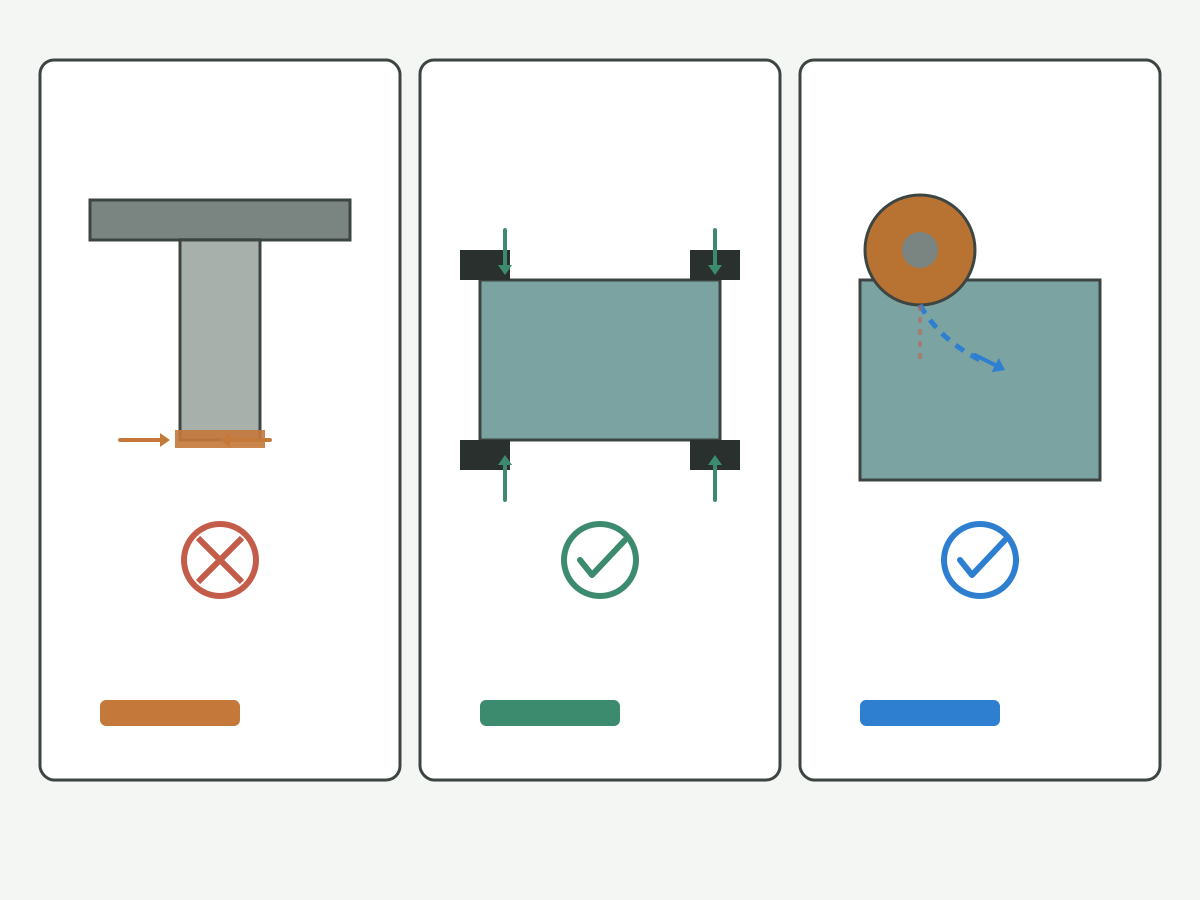
Schematic backlash, fixture, and entry checks: symbols and conditions only. Fill measurements from your machine and fixture notes.
Surface finish and entry conditions
Feed sense changes how the edge meets the material at entry and how marks can look on the wall or floor. This section is a condition map, not an unconditional finish ranking. Full surface-finish exclusives and chatter diagnosis trees belong on specialist pages when live.
- Entry: climb often wants a planned roll-in, arc, or ramp so the tooth does not slam a full thick chip into a sharp corner. Conventional can tolerate a more gradual load at the cost of rubbing if feed is too low.
- Exit and thin walls: climb can pull stock into the cutter near an unsupported edge; add backing or change sense before blaming the carbide grade.
- Finish appearance: either sense can leave acceptable finish when ae, runout, and edge condition are controlled. Do not claim a universal finish winner.
- Heat and discoloration: rubbing-heavy conventional entries can show heat marks when coolant does not reach the cut; check delivery before changing coating family.
- Related OWN elsewhere: peripheral wall geometry on the live peripheral guide; face-dominant planar work on a future face-milling exclusive; chatter trees and finish exclusives when those pages publish.
Practice portals such as this cutting tools practice overview and CNC milling literacy such as this CNC milling overview support reading symptoms; they are not HC shop results. Research society literacy such as this CIRP research portal frames process research boundaries only.
Selection and verification checklist
Use this checklist before the first chip. It is not an unconditional brand ranking and invents no scrap percentages.
| Check | Pass when… | Fail / hold when… | RFQ note |
|---|---|---|---|
| Feed sense named | Climb or conventional is written for this pass | Sense is “whatever the CAM defaulted” | State sense in the enquiry |
| Backlash / compensation | Axis state is known and acceptable for climb if chosen | Free play unknown and climb is assumed | Flag machine class |
| Fixture vs load direction | Support opposes expected pull or push | Thin wall or one-sided clamp only | Describe support |
| Entry / exit plan | Lead-in and thin-edge plan exist | Sharp plunge into full width with climb | Attach path sketch if available |
| ae / ap / stick-out | Symbols or measured bands recorded | Only “take a heavy cut” verbal intent | Leave life claims blank |
| Consistency | Trial and production share the same sense | Operators switch sense mid-lot | Lock the sheet owner |
Browse live constructions here: carbide end mills. Metrology discipline literacy such as this weights and measures overview supports how you record acceptance; it does not invent your gauge plan.
Procurement checklist (RFQ inputs)
Send what you know. Final SKU is optional when the drawing and constraints are complete.
- Drawing and feature: revision, wall or shoulder dimensions, corner notes, acceptance method for size and finish.
- Material: grade, condition, hardness band if known.
- Feed sense intent: climb versus conventional for rough and finish passes; reason tied to backlash and fixture notes.
- Machine and holder: spindle interface, holder family, projection band, backlash or compensation notes, coolant path.
- Engagement: target ae/ap as symbols or measured bands; entry and exit plan.
- Candidate notes: diameter, flute count, corner style, coating family if known, or “open proposal.”
- Defect risks already seen: pull-in marks, rubbing heat, vibration, size drift flags from trials or sister parts.
- Production intent: quantity intent and repeat need (qualitative is enough; no invented ROI).
Open the request form when the package is ready: custom cutting tool RFQ.
Confirm the specification with engineering support
Before production ramp, confirm the feed-sense decision and trial plan with engineering. Hand the package to a product and RFQ path that can return a matched cutter, not a generic catalogue guess. HENTRY / HC supports drawing-based solid carbide end-mill proposals and engineering review. No price, MOQ, or unverified lead time is stated on this page.
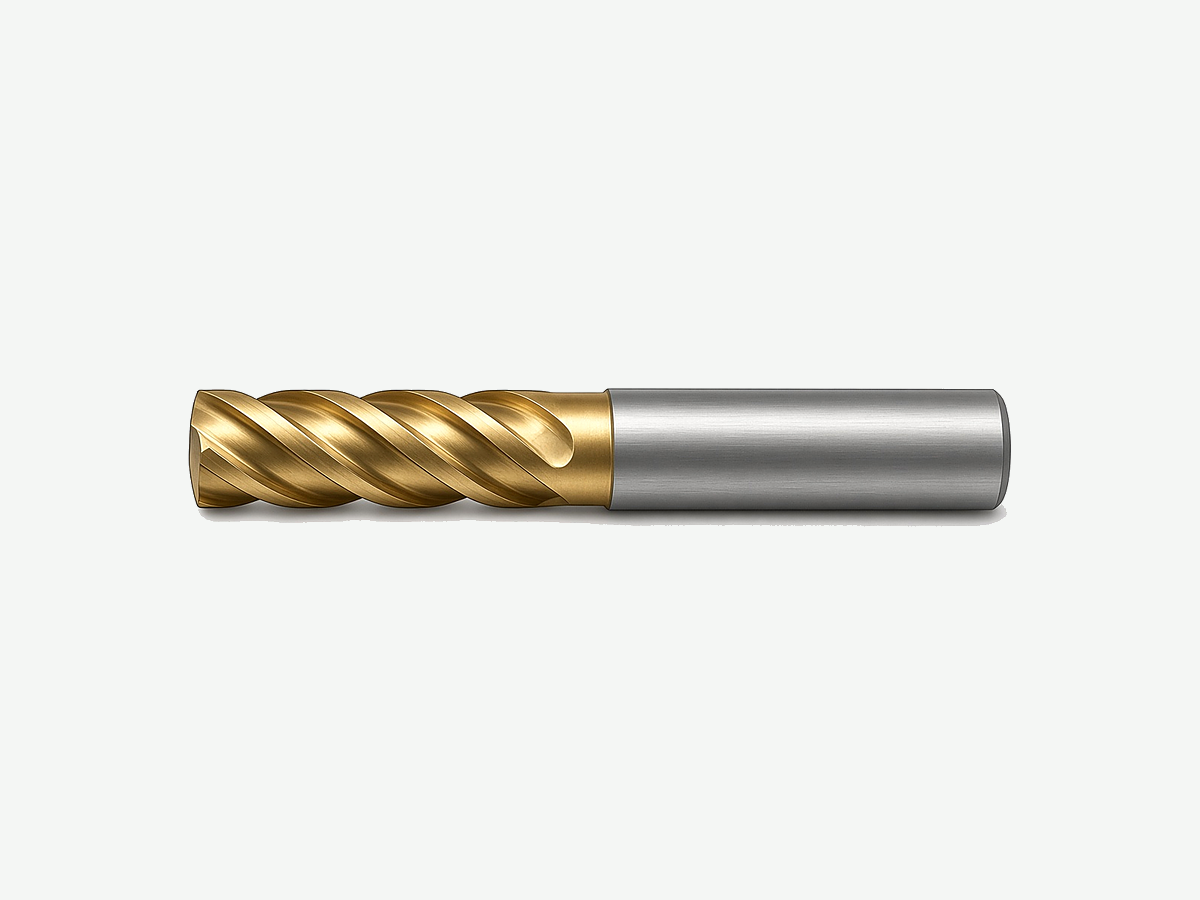
Specification fields to confirm
- Proposed tool model or drawing.
- Diameter, flute count, corner style, and effective length versus feature depth.
- Material group and edge or coating configuration notes.
- Climb versus conventional sense agreed for first-off and production.
- ae / ap, projection band, and entry plan agreed for first-off.
- Inspection and sample acceptance expectations.
- Identifiers needed for repeat orders.
Trial plan (minimum)
- Same drawing revision and acceptance criteria as the checklist.
- First-off record before any compensation edit.
- Stop and escalate when size drifts, marks look abnormal, or the edge is damaged.
- Do not claim the route “won” without those controls.
Review listed constructions here: explore carbide end mills. Research and practice portals such as this CIRP research portal (also cited above for process research framing) and ISO public information such as this international standards overview support industry literacy only.
Request a matched end-mill proposal
Suggested enquiry subject: Climb vs conventional milling - [feature] - [material] - [machine/fixture notes]
Climb vs Conventional Milling FAQ
What is the difference between climb and conventional milling?
Climb milling feeds with cutter rotation so chip thickness starts thicker and thins toward exit. Conventional milling feeds against rotation so chip thickness starts thinner and grows toward exit. Both can use the same end-mill family; the process choice is feed sense relative to rotation, recorded on the setup sheet.
When should I prefer climb milling?
Climb is more plausible when axis backlash is controlled, the fixture supports pull-in loads, stick-out is short enough, and entry is planned. It is not unconditionally “better” or “faster.” If free play or support is unknown, do not default to climb.
When should I prefer conventional milling?
Conventional is more plausible on machines with large or unknown free play, light clamps, or when a gradual edge load at entry is required. It can increase rubbing risk if feed is too low. Treat it as a conditional choice, not a permanent shop rule.
Does climb milling always give a better surface finish?
No. Finish depends on ae, runout, edge condition, entry plan, and material. Either sense can meet print when those inputs are controlled. Do not invent a universal finish ranking or unverified percentage improvement.
How do backlash and fixturing affect the choice?
Climb tends to pull the table or workpiece into the cutter; conventional tends to push away. If compensation is off or the fixture cannot oppose pull-in, prefer conventional or upgrade the setup before changing carbide grade.
Which inputs should I send in an RFQ for this decision?
Send drawing revision, feature notes, material and condition, climb versus conventional intent for each pass, backlash or compensation notes, fixture support, ae/ap and projection, entry plan, candidate end-mill notes if known, and acceptance method. Final SKU is optional when constraints are complete.
Does this page replace the peripheral milling or milling tools guides?
No. Peripheral engagement geometry lives on the live peripheral milling guide. Cutter-type navigation stays on the live milling tools guide. This page owns feed-sense comparison, chip and force patterns, backlash and fixture gates, surface and entry conditions, and the verify-to-RFQ checklist only.
When does this page not apply?
It does not apply when you need invented life percentages, prices, ROI, or unverified case counts; when you need a full face-milling exclusive, coating encyclopedia, or SFM library; or when machine backlash and fixture state are missing and nobody will stop to measure them. Fix the inputs first.
Sources and related guides
Outbound references support milling feed-sense literacy, machining formula symbols, toolholding and coolant boundaries, standards and metrology portals, cutting-data literacy, CNC milling practice, and manufacturing research portals cited in the body. Manufacturer-specific cutting data remain tied to their own products. The rigid-CNC versus older-mill walkthrough is an HC editorial teaching aid, not a measured customer result. Sources checked for this draft on 22 October 2026 (Asia/Shanghai).
- Milling knowledge overview (third-party education page; linked in body)
- How to mill overview (third-party education page; linked in body)
- Machining formulas overview (third-party education page; linked in body)
- Toolholding overview (third-party education page; linked in body)
- Tool holder technology overview (third-party education page; linked in body)
- Coolant know-how overview (third-party education page; linked in body)
- Engineering calculators portal (third-party tooling education; linked in body)
- Cutting data notes portal (third-party tooling education; linked in body)
- Codes and standards portal (public standards entry; linked in body)
- Public metrology laboratory entry (public metrology entry; linked in body)
- Weights and measures overview (public metrology entry; linked in body)
- National standards overview (public standards entry; linked in body)
- International standards overview (public standards entry; linked in body)
- Manufacturing society portal (public manufacturing literacy; linked in body)
- CIRP research portal (third-party research society; linked in body)
- Cutting tools practice overview (third-party education page; linked in body)
- CNC milling overview (third-party education page; linked in body)
Related live guides: milling tools guide · peripheral milling · carbide end mills · custom cutting tool RFQ. Face-milling exclusives, end-mill coating matrices, size tables, speeds-and-feeds libraries, chatter diagnosis, and surface-finish exclusives will be linked here after they publish (soft-note only until live).