
A through-hole leaves a rolled exit burr that the next fixture will catch. A cross-hole intersection holds a burr the micrometer cannot reach. The print says break edge, while the magazine holds a countersink, a chamfer mill, and a brush that has never been validated on this diameter.
Name where the burr sits (entry, exit, back side, or cross-hole) and which bore the spindle can enter. Match the callout: edge break, chamfer, or controlled countersink. Reachable hole-edge work on HENTRY pages routes to a chamfer mill, a countersink, or a PCD chamfer or spotface on aluminum. Brushes stay process options. Stabilize the drill or ream exit first. For limited access or high volume, send the print.
Name the Burr: Entry, Exit, Back, and Cross-Hole
Start with location. The same word "deburr" covers four different jobs, and each job changes which cutter can reach the root.
| Location | First check | Typical next path |
|---|---|---|
| Entry | Lead-in condition and start of cut at the hole mouth. | Chamfer mill or a counted edge on the print. |
| Exit / breakout | Backup, feed at breakthrough, and upstream drill or ream stability. | Fix the exit with the drill or ream process first; add an edge tool only if the callout still requires it. |
| Back burr (far side) | Whether the spindle can reach from the opposite face or through the bore. | Access-limited. Quote a reachable edge tool when the opposite side is open; send the print when it is not. |
| Cross-hole | Which bore the tool enters, and the intersection angle at the burr root. | Access plus angle. Plan custom or process when a catalog tool cannot reach the root. |
Exit breakout after carbide drilling is covered in carbide drill exit breakout and burr control. Aluminum exit control after reaming is covered in aluminum exit burr control when reaming. Stabilize that upstream step before you add a second edge tool for the same hole.
Edge Break, Chamfer, and Burr Removal Are Not the Same Spec
Read the callout before you pick a cutter. An edge break removes the sharp corner and keeps a small land or width inside tolerance. A chamfer is a measured bevel with size and angle on the print. A countersink seat holds a fastener head, so angle and major diameter are inspected against the fastener standard. "Deburr" alone is a process goal. It does not tell you which of those three features the inspector will accept.
When the drawing already separates seat from edge break, use the sister page on countersink versus chamfer mill for plunge versus interpolate. This page stays on hole-edge access: where the burr sits, which bore you can enter, and which HENTRY quote path matches a reachable feature.
Countersink, Chamfer Mill, Back-Deburring Tool, and Brush
Match the need to a published HENTRY path first. Treat brushes, abrasive media, and dedicated back-burr brushes as process options. They are common in the industry. They are not HENTRY stock SKUs on product pages.
| Need | HENTRY path | Open note |
|---|---|---|
| Small edge break or chamfer on a reachable mouth | chamfer mill for edge break | Interpolate size; confirm tip clearance inside the hole. |
| Flush fastener seat or controlled countersink | countersink for flush seats | Plunge angle from the fastener standard; do not treat as a universal deburr cutter. |
| Aluminum or non-ferrous hole-mouth chamfer or spotface | PCD chamfer and spotface tools | Aluminum and non-ferrous only. Ferrous mouths stay on carbide paths above. |
| Brush, abrasive media, or dedicated back-burr / cross-hole brush | Process option only | Not an HENTRY stock SKU. Discuss in RFQ when access or finish needs a media step. |
| Multi-feature edge, limited access, or high repeat volume | Custom combination to print | Close with the RFQ checklist below. |
Enter from the Main Bore or the Cross Hole?
For intersecting holes, pick the entry bore before you pick the cutter family. Use the questions below on the print and the fixture.
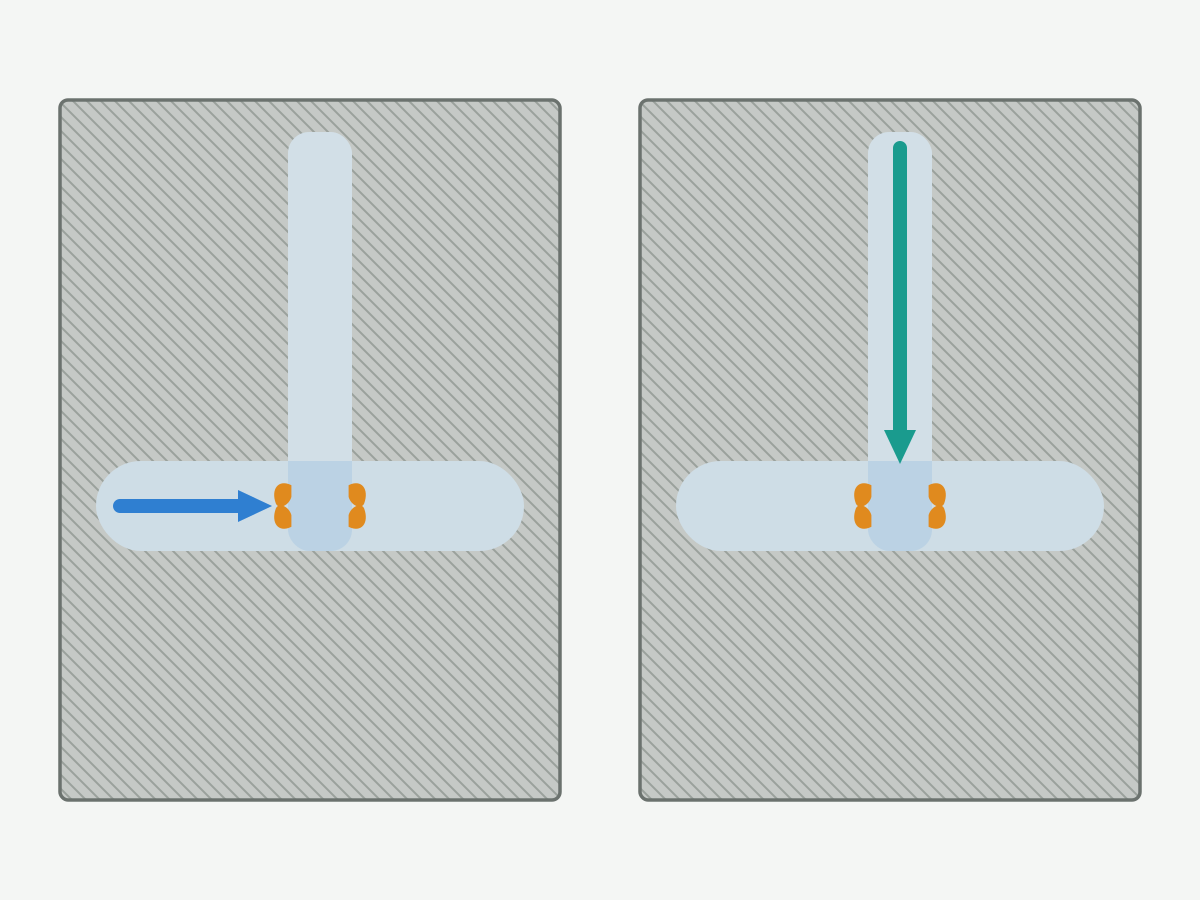
- Which hole axis lets the tool enter and retract without collision?
- Does the intersection angle let the cutting edge reach the burr root?
- Does the bore diameter leave room for tool diameter plus stiffness?
- Does planned volume support a custom or combination edge tool?
Enter from the main bore when that axis is larger, stiffer, or already open to the spindle, and the intersection is reachable from that side. Enter from the cross hole when the burr root faces that bore, the cross diameter accepts the tool, and the main bore is blocked or too long for a stable stick-out. When neither path reaches the root safely, stop claiming a catalog brush fix and send the section view for a custom or process review.
Factors to list on the RFQ: main and cross diameters, intersection angle, which face is fixtured, material, and whether the feature repeats across the part. Do not invent angle or diameter cutoffs here. Those limits come from your drawing and the tool that can clear the intersection.
Material, Root Thickness, and Allowed Chamfer
Material changes how the burr forms and how the edge tool loads. Sticky aluminum tends to smear and roll. Steels and stainless can leave a tougher root after breakout. Cast iron often leaves a short chip edge that still needs a controlled land if the print calls for one.
Root thickness and allowed chamfer stay on the drawing. Do not guess a maximum chamfer from a blog rule. If the wall is thin, a large edge break can eat into the sealing land or the mating face. If the print caps the chamfer width, choose a tool and path that hold that width, then validate on the first articles.
For aluminum mouths where carbide edge wear or built-up edge already limits chamfer size, review the PCD aluminum path above after alloy and volume are known. Keep ferrous mouths on the carbide chamfer mill or countersink routes.
CNC Path and Axis Requirements
A 3-axis machine can finish many hole mouths when the spindle can align with the bore and the tool tip clears the hole. Intersecting features often need a tilted approach, a second setup, or a multi-axis path so the edge reaches the burr root without raking the opposite wall.
Check stick-out, holder clearance, and whether the program plunges or interpolates. A countersink wants a stable Z reference for seat diameter. A chamfer mill wants tip clearance inside the hole and a circular path sized to the callout. Do not assume HENTRY publishes a machine-capability list for your spindle. Send the available axes, the fixture face, and the section view with the RFQ.
When a Custom Combination Edge Tool Makes Sense
A separate chamfer or countersink pass is enough when the mouth is open, the callout is simple, and tool-change time is acceptable. A custom combination edge tool earns review when several features share one axis, when access is limited, or when repeat volume makes an extra tool change costly.
Typical triggers: drill plus edge break on one body, ream plus entry chamfer on aluminum, or a form that reaches a back or cross-hole edge the magazine tools cannot. Keep the shared cutting window realistic. One body that tries to drill, ream, and finish every edge at once can fail if chip paths or axial positions conflict. Application checks follow HENTRY's sample validation process when a trial is required.
Hole Deburring RFQ Checklist
Send enough geometry that access and callout can be checked together. Mark unknown fields as unknown. Do not invent missing sizes.
| Input | Minimum useful detail |
|---|---|
| Burr location | Entry, exit, back, cross-hole, or mixed; photo or section mark-up if available. |
| Callout | Edge break, chamfer size/angle, or countersink angle and major diameter; fastener standard if the edge is a seat. |
| Hole stack | Main and cross diameters, depth, through or blind, intersection angle, which bore the spindle can enter. |
| Material | Exact grade; note aluminum or non-ferrous when a PCD mouth is under review. |
| Machine and access | Axes available, fixture face, stick-out limit, coolant route. |
| Volume and sequence | Batch or annual volume; whether drill/ream exit is already stable; whether a combination body is desired. |
CNC Hole Deburring FAQ
Is edge break the same as deburring?
No. Deburring is the process goal of removing a sharp or raised edge. An edge break is a drawing callout with a size or land the inspector can check. Match the tool to the callout, then confirm the burr location is reachable.
When do I pick a countersink instead of a chamfer mill?
Pick a countersink when the hole needs a fastener seat with a fixed included angle and a controlled major diameter. Pick a chamfer mill when the job is an edge break or a chamfer size that you want to interpolate and compensate. Seat vs edge break is the first split.
Can I always enter from the cross hole to clean the intersection?
No. Enter from the cross hole only when that bore accepts the tool diameter, the intersection angle lets the edge reach the burr root, and the spindle can retract safely. Otherwise enter from the main bore, or send the section for a custom or process review.
Does HENTRY stock dedicated back-deburring brushes?
No. Brushes, abrasive media, and dedicated back-burr or cross-hole brushes are process options. HENTRY quote paths for reachable hole edges are chamfer mill, countersink, PCD chamfer or spotface on aluminum and non-ferrous, and custom tools to print.
What drawing data should I send for a hole-edge RFQ?
Send burr location, the edge callout, main and cross diameters, intersection angle, material, available axes and fixture face, volume, and whether the upstream drill or ream exit is already stable. Mark unknowns clearly.
Send the Print
Attach the section view, the hole-edge callout, and the access notes from the checklist. HENTRY reviews reachable chamfer mill, countersink, or PCD aluminum mouth routes first, then a custom combination when access or volume requires it.