
This page helps CNC process engineers, programmers, and tooling buyers choose between a fly cutter and a face mill by structure and cutting method, machine power and fixturing, stock removal versus surface finish intent, and qualitative tool cost and maintenance boundaries, then open a matched RFQ. It teaches when a single-point fly cutter fits low-power finishing and large flat surfaces, when a multi-insert face mill (including shell-mill style bodies) fits higher stock removal and production facing, and how to fill a conditional selection table before buying. Sister OWN stays on the live milling tools, peripheral milling, climb versus conventional, and 2-versus-4 flute guides. This page is fly-cutter versus face-mill OWN; it is not a 2-versus-4 flute encyclopedia, coatings encyclopedia, size chart book, full SFM library, climb long guide, peripheral process book, face-milling process chapter, or holemaking OWN, and it does not invent an unconditional ranking, price, or life claim.
Start from the live hub when you still need cutter-family framing: milling tools guide. For side-edge engagement context (not facing OWN), use the live peripheral milling guide. For feed-sense gates that also appear on facing passes, use the live climb vs conventional milling guide. When a small face or wall is better served by an end mill rather than a facing body, use the live 2 flute vs 4 flute end mills guide and, when tip geometry is open, the live carbide end mills family. Live indexable facing and shell constructions stay on indexable face milling cutters and shell mills. A face-milling process chapter and face-mill versus shell versus end-mill taxonomy will be linked after they publish (soft-note until live).
Quick answer
- Prefer a fly cutter when finish, light stock, and machine power dominate: single-point (or few-point) fly cutters take a light cut across a large flat, leave a characteristic swirl pattern that many shops accept or polish, and load the spindle and fixture more gently than a wide multi-insert face mill. They suit lighter spindles and low-volume flat finishing when stock per pass is modest.
- Prefer a face mill when stock removal rate, insert economy, and production facing dominate: multi-insert face mills and shell-mill bodies share cutting among many edges, support heavier ap and wider ae when the machine and fixture can take the load, and make insert indexing a maintenance routine instead of reshaping a single fly-cutter tip. They suit production facing and heavier stock when power and rigidity are available.
- Do not treat either tool as free power or free finish: a large-diameter face mill on an underpowered or loosely fixtured machine can chatter and stall even when the catalogue diameter looks right. A fly cutter on heavy stock can burn time without a finish advantage. Name power, fixture stiffness, stock, and finish acceptance before copying a neighbour's tool.
- Next step: lock material, flat size, stock per pass, finish acceptance, spindle power / torque band, fixture and stick-out notes, then open RFQ with fly-cutter versus face-mill intent open if needed. Speeds-and-feeds arithmetic is not this page's primary library. This page is not a 2-versus-4 flute encyclopedia, coatings encyclopedia, size chart book, full SFM library, climb long guide, peripheral process book, face-milling process chapter, or holemaking OWN.
Selection path (stop when a field is missing):
| Step | What you lock | If missing |
|---|---|---|
| 1 Material and flat intent | Grade family, condition, flat size, finish acceptance (Ra band or visual swirl policy) | Stop; recover the drawing and acceptance note |
| 2 Stock and cut width | Stock per pass, number of passes, planned ae across the face | Do not pick tool type from habit alone |
| 3 Machine power and fixturing | Spindle power / torque band, table rigidity, clamp plan, stick-out | Keep both options open; do not upsize diameter blindly |
| 4 Structure intent | Fly cutter (single/few point) vs multi-insert face mill / shell body, or "open pending trial" | Flag if only a drawer SKU is known |
| 5 Maintenance posture | Resharpen / reset fly tip vs index inserts; spare insert policy | Do not invent price or life percentages |
| 6 Trial and RFQ | Trial-cut record + matched RFQ package | Open RFQ with incomplete SKU if needed |
Jump: Structure and cutting · Power and fixturing · Finish and stock · Cost and maintenance · Selection table · RFQ · Confirm · FAQ
Structure and cutting method
A fly cutter and a face mill both generate a flat by rotating cutting edges across a face, but they split the work differently. Name structure and cutting method on the setup sheet before debating catalogue diameter slogans.
- Fly cutter structure: typically one cutting tip (sometimes two opposed tips) held in a body that sweeps a large effective diameter. Chip formation is intermittent per revolution; the tip takes a light cut and leaves a characteristic swirl. Geometry is simple to adjust; the trade is lower edge count and lower stock-removal capacity for a given load budget.
- Face mill / shell-mill structure: a multi-insert body (often arbor-mounted as a shell mill) carries many inserts around the circumference and face. Several edges share the cut; chip load per tooth can stay controlled while metal removal rate rises when power and fixture allow. Live constructions sit on indexable face milling cutters and shell mills.
- Cutting method contrast: fly cutters favour light ap, large swept diameter relative to engaged width, and finish-focused facing. Face mills favour shared engagement, higher table feed at a given fz when z is large, and production stock removal within the body's envelope.
- What this page is not: a rewrite of the live 2 flute vs 4 flute end mills guide, a peripheral process book (see live peripheral milling), a climb long guide (see live climb vs conventional milling), a full SFM library, a face-milling process chapter, or holemaking OWN.
Public milling literacy such as this milling knowledge overview and this machining formulas overview helps teams name face milling, insert engagement, and chip load without a universal catalogue ranking. Manufacturing society vocabulary such as this manufacturing society portal supports naming facing without inventing slang as a standard.
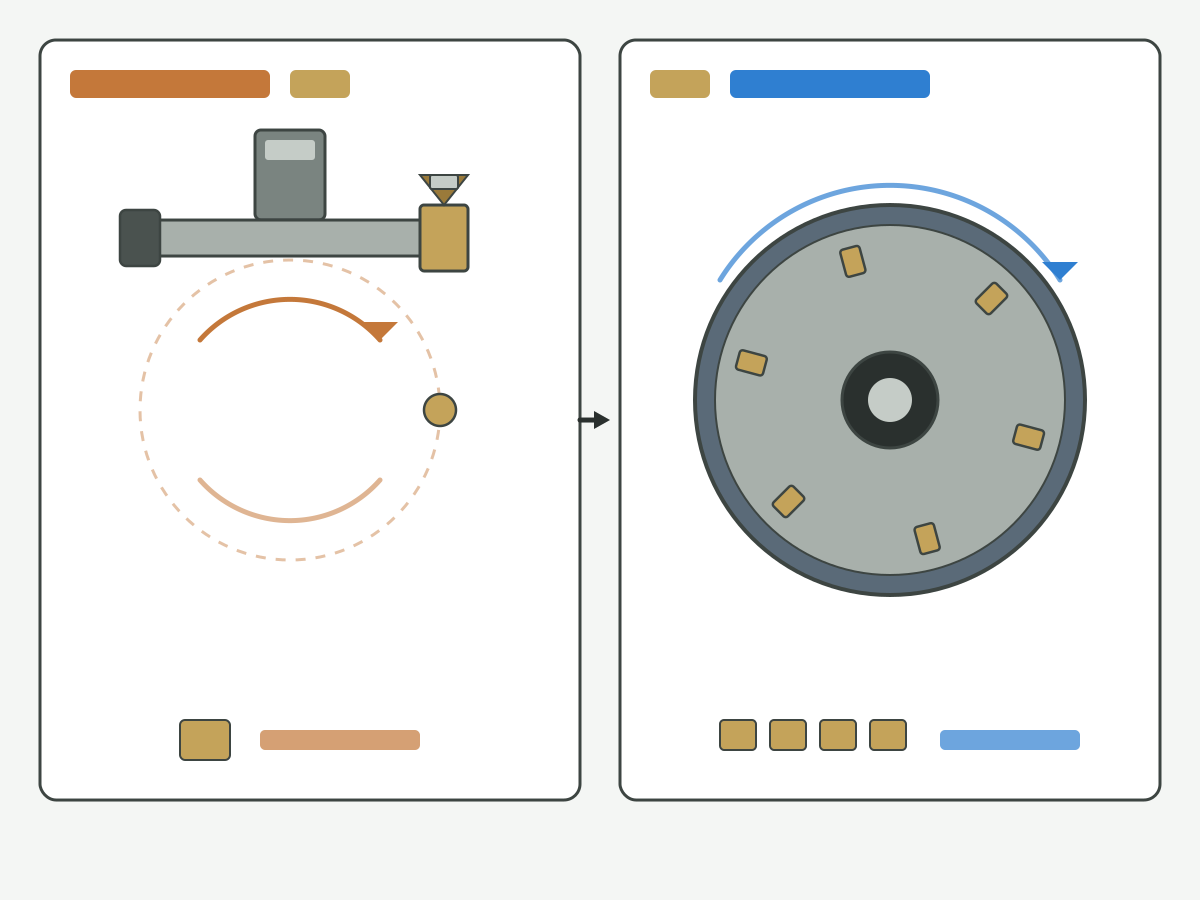
Schematic illustration: not a catalogue ranking or life-claim chart. Confirm fly-cutter tip count, face-mill insert layout, and engagement intent on your cutter data and setup sheet.
Machine power and fixturing
Facing diameter and insert count scale spindle load. The same "large face mill" fails when power, torque at RPM, or fixture stiffness is missing. Lock machine and clamp before you treat diameter as a free finish upgrade.
- Spindle power and torque: multi-insert face mills can demand more continuous power as ae and ap rise. Fly cutters often run lighter instantaneous load per tip but may need more time to clear stock. Record usable power at the planned RPM; do not invent a horsepower slogan from tool type alone.
- Fixture stiffness and clamp plan: wide face mills excite chatter when the part or fixture rings. Fly cutters can also chatter if stick-out is long or the tip is set aggressive. Name clamp points, support under the cut, and whether the flat is thin-walled.
- Arbor, holder, and stick-out: shell-mill bodies need a correct arbor fit and face seating. Fly-cutter bodies need a secure tip seat and balanced swing. Toolholding literacy such as this toolholding overview and this tool holder technology overview belongs beside stick-out notes on stiff facing setups.
- Table and machine class: light mills and older spindles often favour fly cutters or smaller face mills. Production machines with adequate power more often favour multi-insert facing when stock and volume justify it. Neither statement is an unconditional ranking.
- Sense and engagement context: climb versus conventional sense still changes chip thickness history on facing passes. Sense gates stay on the live climb vs conventional milling guide; name sense when power and finish interact.
Practice portals such as this cutting tools practice overview and this CNC milling overview support reading chatter and load symptoms; they are not HC shop results. Standards literacy such as this codes and standards portal, this international standards overview, and this national standards overview frames industry naming only.
| Condition | Lean fly cutter when… | Lean face mill when… | Stop / escalate when… |
|---|---|---|---|
| Power band named | Light spindle or modest continuous power at RPM | Machine can sustain multi-insert engagement at planned ae / ap | Nobody will state usable power or RPM band |
| Fixture stiffness known | Gentle load preferred; thin or ringing parts | Clamp and support take a wider, heavier cut | Chatter appears and clamp plan was never reviewed |
| Body / arbor readiness | Simple fly body and tip seat available | Correct shell arbor and insert kit available | Arbor fit or tip seat is improvised |
| Volume / setup time | One-off or low-volume flats; tip reset acceptable | Production facing; insert indexing is routine | Setup time dominates and nobody will trial either route |
Surface quality and stock removal
Finish and stock removal pull in opposite directions more often than catalogue photos suggest. Lock acceptance and stock per pass before you treat either tool as "the smooth one" or "the fast one."
- Fly cutter finish character: a single tip leaves a swirl or scallop pattern whose pitch depends on feed per revolution and tip geometry. Many shops accept that pattern on non-cosmetic flats or plan a light polish. Do not invent an Ra promise from tool type alone; name the acceptance method.
- Face mill finish character: multiple inserts and wiper geometries (when used) can reduce visible cusp height on production flats when runout, insert height, and feed are controlled. Finish still fails when one insert sits high, the body runs out, or ae is unstable. Record insert seating and runout checks.
- Stock removal: face mills usually remove more stock per minute when power and fixture allow, because more edges share the cut. Fly cutters usually take lighter passes and more time for the same stock. Heavy stock with a fly cutter is a time choice, not a finish upgrade.
- Pass strategy: rough with a face mill (or a heavier pass plan) and finish with a light fly-cutter or light face-mill pass is a valid two-step route when the shop can change tools. Record both tools; do not hide a two-step route behind one drawer SKU.
- Small faces and walls: when the feature is a pocket wall or small land better served by an end mill, leave facing OWN and use the live 2 flute vs 4 flute end mills guide and carbide end mills. Do not force a large face mill into a feature it cannot enter.
Third-party tooling literacy such as this engineering calculators portal and this cutting data notes portal adds context for naming engagement and feed; neither is an HC trial result. Research society literacy such as this CIRP research portal frames process research boundaries only. Coolant literacy such as this coolant know-how overview supports naming flood, MQL, or dry beside the facing choice. Metrology literacy such as this public metrology laboratory entry and this weights and measures overview supports naming Ra or visual acceptance beside trial numbers.
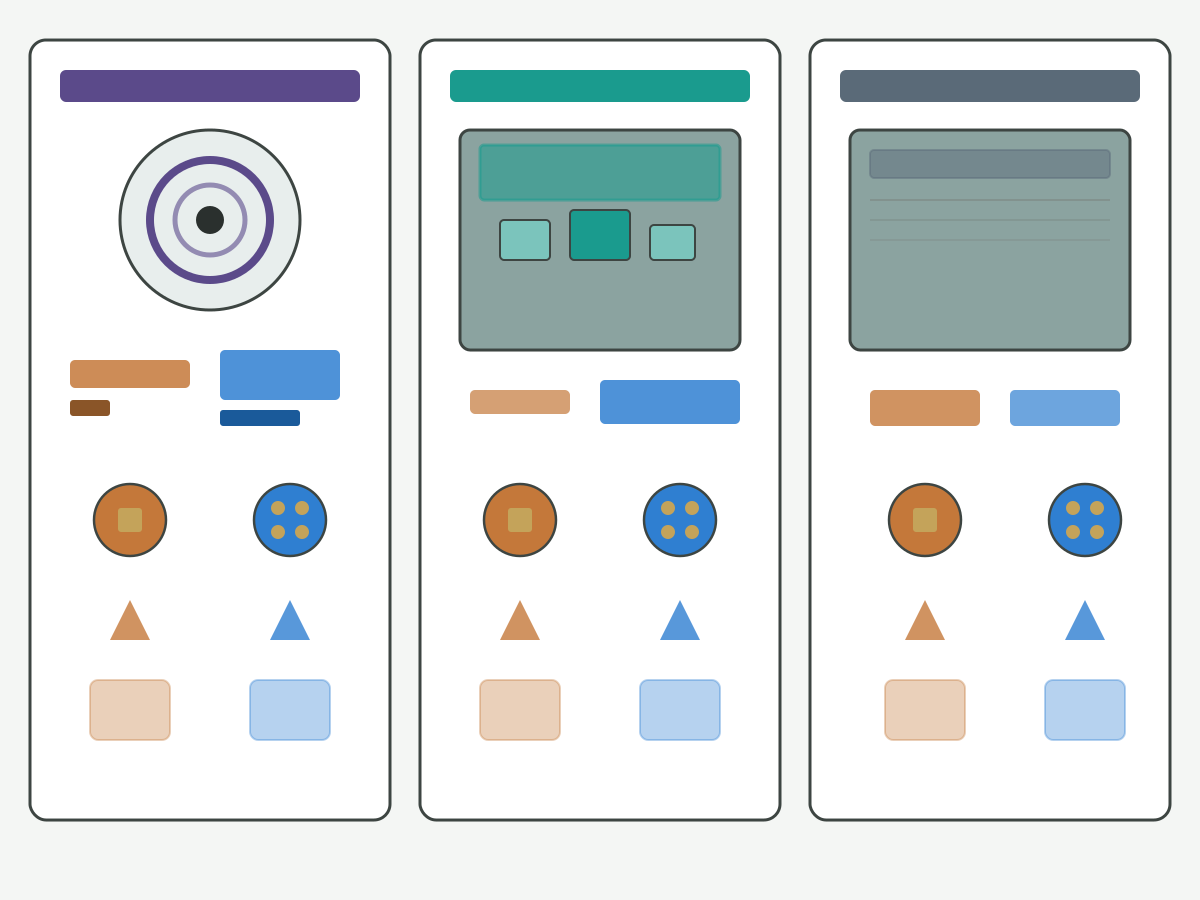
Schematic process decision illustration: boundaries only, not a catalogue ranking. Confirm power, stock per pass, and finish acceptance on your program and cutter data.
Tool cost and maintenance boundaries (qualitative)
Cost and maintenance differ by structure. Keep the discussion qualitative: no price, no invented life percentage, no ROI, and no case-count claims on this page.
- Fly cutter maintenance: tip grinding, tip replacement, or tip reset is the recurring work. Spare tips are few; geometry control sits on the setter. Downtime risk is tip damage on a single edge. Suits shops that already grind and set single-point tools.
- Face mill / shell maintenance: insert indexing and insert replacement are the recurring work. Spare inserts and correct screw / seat practice matter. One damaged insert can be indexed or replaced without reshaping a whole body. Suits production cells that stock insert kits.
- Body investment posture: a multi-insert body is a platform; inserts are consumables. A fly-cutter body is simpler; the tip is the consumable or resharpenable element. Neither posture invents a price comparison here. State which spare policy the shop can actually keep.
- What not to put on the RFQ as fact: unverified tool life hours, cost-per-part claims, ROI payback, or competitor catalogue prices. Ask for matched proposals against stock, finish, and machine notes instead.
- Out of OWN here: coatings encyclopedias, size chart books, full SFM libraries, face-milling process chapters still soft-noted until live, and holemaking OWN.
| Maintenance lens | Fly cutter posture | Face mill posture | Escalate when… |
|---|---|---|---|
| Edge renewal | Grind / reset / replace tip | Index or replace inserts | Nobody owns the setter or insert kit |
| Spare policy | Few tips; geometry control critical | Insert stock and seat/screw discipline | Spares are promised but not stocked |
| Failure mode | Single tip damage stops the cut | One insert high / damaged marks the face | Runout or seating is unchecked |
| RFQ language | State tip style and reset method | State insert family and body / arbor | Only a brand slogan is known |
Selection and compare table (conditional)
Use this table as a conditional map, not an unconditional ranking. Prefer the column that matches the bottleneck you named. When both fit, keep tool type open on the RFQ and trial both under the same acceptance method.
| Decision lens | Lean fly cutter when… | Lean face mill when… | Keep open / escalate when… |
|---|---|---|---|
| Structure | Single/few-point sweep; simple tip seat | Multi-insert / shell body; shared edges | Only a drawer SKU is known |
| Machine power | Light continuous power; gentle load preferred | Power and torque sustain multi-insert ae / ap | Power band missing |
| Fixturing | Thin or ringing parts need lighter excitation | Clamp and support take a wider cut | Chatter with no clamp review |
| Stock removal | Light stock; time acceptable | Heavier stock; production rate needed | Stock per pass never stated |
| Finish acceptance | Swirl pattern acceptable or polish planned | Multi-edge / wiper finish under runout control | Ra or visual policy missing |
| Maintenance | Shop can grind/set tips | Shop stocks and indexes inserts | Spare policy is undefined |
| RFQ posture | State fly-cutter intent with tip notes | State face-mill / shell intent with insert notes | Mark type open and attach trial plan |
A conditional table forces the bottleneck name onto the sheet. An unconditional "face mill is always better" slogan is not a process.
Procurement checklist (RFQ inputs)
Send what you know. Leave life, price, and unverified cycle-time fields blank. Do not invent an unconditional facing-tool ranking.
- Drawing revision and flat / face feature notes (size, shoulders, open face versus interrupted).
- Material grade, condition, and coolant / MQL / dry intent.
- Stock per pass, number of passes, and planned ae across the face.
- Finish acceptance (Ra band, visual swirl policy, or both) and inspection method.
- Machine class, usable spindle power / torque band at planned RPM, table rigidity notes.
- Fixture clamp plan, support under the cut, arbor / holder type, and stick-out method.
- Tool-type intent: fly cutter, indexable face mill / shell mill, or open; tip style or insert family if known.
- Trial-cut notes and acceptance method; identifiers for repeat orders.
Browse live constructions here: indexable face milling cutters and shell mills. When a small face or wall points to an end mill instead, browse carbide end mills. Open the request form when the package is ready: custom cutting tool RFQ.
Confirm the specification with engineering support
Before production ramp, confirm material condition, flat size, stock per pass, finish acceptance, machine power band, fixture plan, and fly-cutter versus face-mill intent with engineering. Hand the package to a product and RFQ path for a matched face-milling or fly-cutter recommendation, not a catalogue guess. HENTRY / HC supports drawing-based indexable face-milling and shell-mill proposals and engineering review. No price, MOQ, or unverified lead time is stated on this page. Speeds-and-feeds detail remains outside this page's primary library.
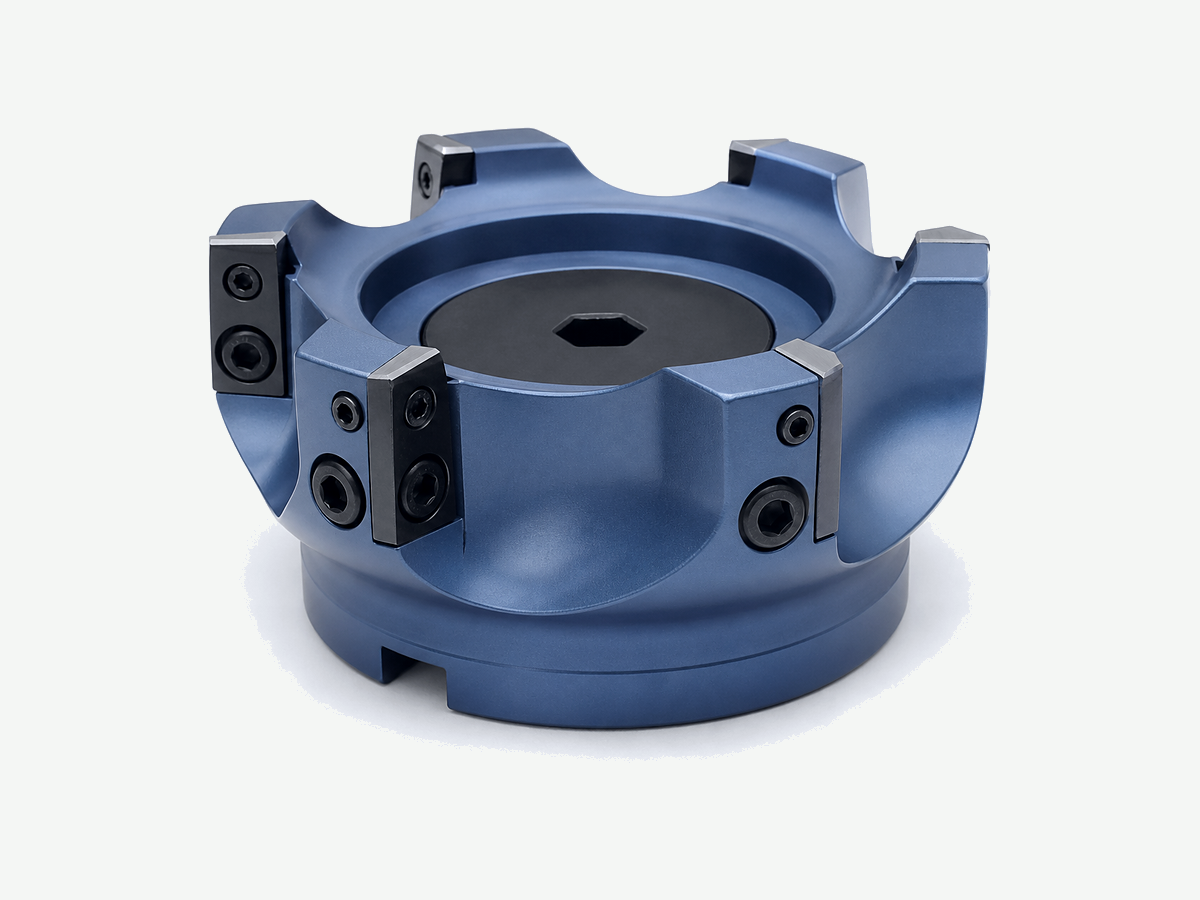
Specification fields to confirm
- Proposed tool model or drawing (fly body / tip, or face-mill / shell body + inserts).
- Material grade / condition and coolant mode.
- Flat size, stock per pass, and ae / ap bands.
- Finish acceptance method (Ra and/or visual).
- Machine power / torque band, fixture clamp plan, arbor / holder, stick-out.
- Tool-type intent (fly cutter, face mill / shell, or open).
- Inspection and sample acceptance expectations.
- Identifiers needed for repeat orders.
Trial plan (minimum)
- Same drawing revision and acceptance criteria as the checklist.
- First-off record of load, chatter, face marks / swirl, size, and flatness before compensation edits.
- Change one variable at a time when comparing fly cutter and face mill under the same stock and acceptance intent.
- Stop when chatter grows, marks look abnormal, size drifts, or the tool collides with the envelope.
- Do not claim either tool type "won" without those controls.
Review listed constructions here: explore indexable face milling cutters · explore shell mills · explore carbide end mills. Research and practice portals such as this CIRP research portal (also cited above for process research framing) and ISO public information such as this international standards overview support industry literacy only.
Request a face-milling / fly-cutter recommendation
Suggested enquiry subject: fly cutter vs face mill - [material] - [flat size] - [stock / finish] - [power / fixture] - [feature]
Fly Cutter vs Face Mill FAQ
When should I choose a fly cutter?
Choose a fly cutter when finish on a large flat, light stock per pass, and gentle spindle or fixture load dominate: single-point (or few-point) sweep, accepted swirl pattern or planned polish, and machines that cannot sustain a wide multi-insert engagement. Record power band, stock, and finish acceptance before you treat a fly cutter as a habit.
When should I choose a face mill or shell mill?
Choose a multi-insert face mill or shell-mill body when stock removal rate, insert indexing, and production facing dominate and the machine plus fixture can take the load. Confirm arbor fit, insert seating, and runout. Do not upsize diameter on an underpowered or loosely clamped setup for cosmetics alone.
How do machine power and fixturing change the choice?
Multi-insert engagement raises continuous load as width and depth rise; light spindles and ringing fixtures often favour a fly cutter or a smaller face mill. Stiff clamps and adequate power favour shared-edge facing when stock and volume justify it. Name usable power at RPM and the clamp plan; do not invent a free diameter upgrade.
Is a face mill always better for finish than a fly cutter?
No. Face mills can leave a fine production flat when inserts seat true and runout is controlled, but a high insert or poor seating marks the face. Fly cutters leave a swirl whose acceptance is a process decision, not an automatic defect. Name the acceptance method instead of quoting a tool-type slogan.
Can I rough with a face mill and finish with a fly cutter?
Yes, when the shop can change tools and both setups share the same acceptance method. Roughing with a multi-insert body can clear stock; finishing with a light fly-cutter pass can refine the flat when swirl is acceptable or polish follows. Record both tools and do not hide a two-step route behind one drawer SKU.
Which inputs should I send in an RFQ for fly cutter vs face mill selection?
Send drawing revision, material and coolant intent, flat size, stock per pass, finish acceptance, machine power band, fixture and arbor or holder notes, tool-type intent or open, tip or insert family if known, trial notes, and acceptance method. Leave unverified life and price fields blank.
Does this page replace the milling tools guide, peripheral milling, or 2-flute vs 4-flute pages?
No. Cutter-type navigation stays on the live milling tools guide. Side-edge engagement detail stays on the live peripheral milling guide. Climb versus conventional sense stays on its live guide. End-mill flute-count selection stays on the live 2-flute versus 4-flute guide. A dedicated face-milling process chapter remains soft-noted until live. This page owns fly-cutter versus face-mill structure, power and fixturing, finish and stock, qualitative maintenance boundaries, the conditional selection table, and the RFQ checklist only.
When does this page not apply?
It does not apply when you need invented life percentages, prices, ROI, or unverified case counts; when you need an unconditional best-facing-tool ranking; when you need a 2-versus-4 flute encyclopedia, coatings encyclopedia, size chart book, full SFM library, climb long guide, peripheral process book, face-milling process chapter, or holemaking OWN; or when material, flat size, stock, finish acceptance, and power or fixture notes are missing and nobody will stop to state them. Fix the inputs first.
Sources and related guides
Outbound references support milling and formula literacy, toolholding and coolant boundaries, standards and metrology portals, cutting-data literacy, CNC milling practice, and manufacturing research portals cited in the body. Manufacturer-specific cutting data remain tied to their own products. The decision walkthrough is an HC editorial teaching aid, not a measured customer result. Sources checked for this draft on 22 October 2026 (Asia/Shanghai).
- Milling knowledge overview (third-party education page; linked in body)
- Machining formulas overview (third-party education page; linked in body)
- Toolholding overview (third-party education page; linked in body)
- Tool holder technology overview (third-party education page; linked in body)
- Coolant know-how overview (third-party education page; linked in body)
- Engineering calculators portal (third-party tooling education; linked in body)
- Cutting data notes portal (third-party tooling education; linked in body)
- Codes and standards portal (public standards entry; linked in body)
- Public metrology laboratory entry (public metrology entry; linked in body)
- Weights and measures overview (public metrology entry; linked in body)
- National standards overview (public standards entry; linked in body)
- International standards overview (public standards entry; linked in body)
- Manufacturing society portal (public manufacturing literacy; linked in body)
- CIRP research portal (third-party research society; linked in body)
- Cutting tools practice overview (third-party education page; linked in body)
- CNC milling overview (third-party education page; linked in body)
Related live guides: milling tools guide · peripheral milling · climb vs conventional milling · 2 flute vs 4 flute end mills · indexable face milling cutters · shell mills · carbide end mills · custom cutting tool RFQ. A dedicated face-milling process guide and a face-mill versus shell-mill versus end-mill taxonomy page will be linked here after they publish (soft-note only until live). End-mill speeds and feeds stays a non-primary soft pointer here.