
This page helps CNC process engineers, programmers, and tooling buyers choose between two-flute and four-flute end mills by chip space, core rigidity, material and process conditions, and slotting versus side milling versus finishing intent, then open a matched RFQ. It teaches when evacuation dominates, when edge count and wall finish dominate, how flute count changes speeds-and-feeds comparison conditions (without rewriting a full SFM library), and how to fill a conditional selection table before buying. Sister OWN stays on the live milling tools, sizes, coatings, peripheral milling, climb versus conventional, and end-mill speeds and feeds guides. This page is 2-flute versus 4-flute OWN; it is not a coatings encyclopedia, size chart book, full SFM library, climb long guide, peripheral process book, face-milling OWN, or holemaking OWN, and it does not invent an unconditional "best flute" ranking or life claim.
Start from the live hub when you still need cutter-family framing: milling tools guide. For diameter and envelope callouts, use the live end mill sizes guide. For coating intent after flute count is locked, use the live end mill coatings guide. For side-edge engagement, use the live peripheral milling guide. For feed-sense gates, use the live climb vs conventional milling guide. For SFM, RPM, fz, and ae/ap arithmetic, use the live end mill speeds and feeds guide. Live solid carbide and four-flute constructions stay on carbide end mills and 4 flute carbide end mills. Ball-nose and corner-radius families stay on ball nose end mills and corner radius end mills when tip geometry drives the call.
Quick answer
- Prefer 2-flute when chip space and evacuation dominate: full-width slotting, sticky aluminium-family chips, soft materials that pack in the gullet, or any cut where two large chip valleys clear material faster than a denser flute pack. Fewer flutes leave more room per revolution for chips to leave the cut.
- Prefer 4-flute when rigidity and finish dominate: side milling, light radial engagement, steels and harder alloys where core strength and more cutting edges improve wall finish and feed capacity at a given fz, provided chips still clear. More flutes raise table feed at the same fz and leave a stiffer core for the same outer diameter.
- Do not treat flute count as a free multiplier: at the same fz, four flutes raise table feed versus two, but chip space per flute shrinks. Slotting a sticky material with four flutes can pack chips even when the SFM band looks fine. Re-check engagement and material before you copy a neighbour's tool.
- Next step: lock material, feature (slot / side / finish), ae and ap intent, and coolant mode, then open RFQ with flute count open if needed. Speeds-and-feeds arithmetic stays on the live speeds and feeds guide. This page is not a coatings encyclopedia, size chart book, full SFM library, climb long guide, peripheral process book, face-milling OWN, or holemaking OWN.
Selection path (stop when a field is missing):
| Step | What you lock | If missing |
|---|---|---|
| 1 Material and condition | Grade family, hardness or condition, sticky-chip risk, wet or dry or MQL intent | Stop; recover the material cert or setup note |
| 2 Feature and engagement | Slotting vs side milling vs finish; ae and ap bands | Do not pick flute count from habit alone |
| 3 Chip space vs rigidity | Whether gullet volume or core stiffness / edge count dominates | Keep both options open on the RFQ |
| 4 Flute count intent | 2-flute, 4-flute, or "open pending trial" | Flag if only a drawer SKU is known |
| 5 Speeds-feeds conditions | Point to live speeds and feeds guide; state z beside fz and Vf | Do not invent a full SFM library here |
| 6 Trial and RFQ | Trial-cut record + matched RFQ package | Open RFQ with incomplete SKU if needed |
Jump: Chip space vs rigidity · Material and process · Slotting, side, finish · Speeds and feeds conditions · Selection table · RFQ · Confirm · FAQ
Chip space versus rigidity (flute cross-section)
Two-flute and four-flute end mills share the same outer diameter family but split the circle differently. The trade is gullet volume versus core stiffness and edge count. Name that trade on the setup sheet before you debate coatings or size SKUs.
- Chip space (gullet volume): each flute needs a valley for chips to form and leave. Two flutes leave larger valleys; four flutes split the same circumference into more, smaller valleys. Sticky chips, full-width slots, and soft materials that produce long ribbons favour the larger valleys.
- Core rigidity: more flutes leave a larger remaining core for a given outer diameter, which helps resist bending on side cuts and finish passes. Rigidity is not a life percentage; it is a geometry reason to prefer more flutes when chips already clear.
- Edge count and table feed: at the same fz, table feed Vf scales with flute count z (Vf ≈ RPM × z × fz). Four flutes can raise metal removal at a given fz, but only if each flute still gets a clean chip. Do not raise z without checking evacuation.
- What this page is not: a rewrite of the live end mill sizes or end mill coatings guides, a full SFM library (see live end mill speeds and feeds), a climb long guide, a peripheral process book, face-milling OWN, or holemaking OWN.
Public milling literacy such as this milling knowledge overview and this machining formulas overview helps teams name flute count, chip load, and engagement without a universal catalogue ranking. Manufacturing society vocabulary such as this manufacturing society portal supports naming chip evacuation without inventing shop slang as a standard.
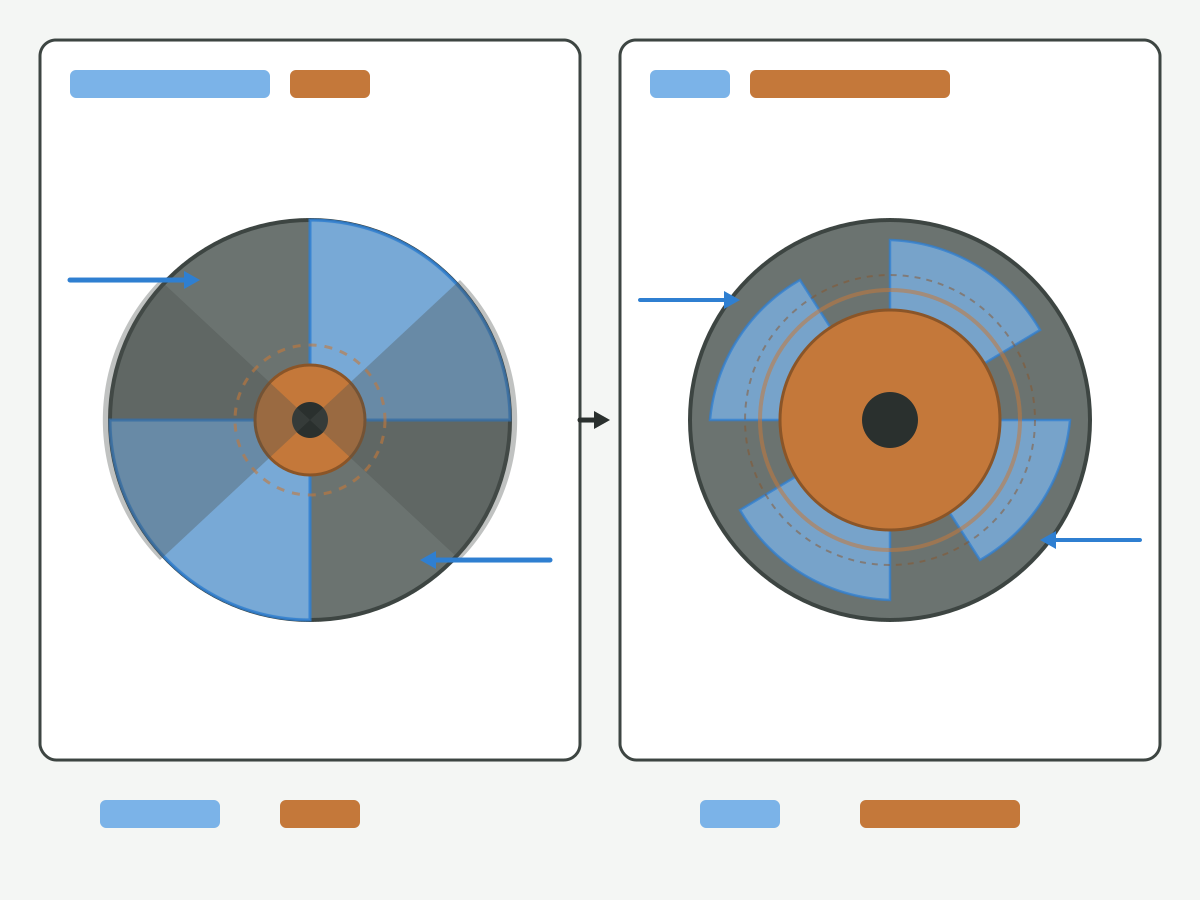
Schematic illustration: not a catalogue ranking or life-claim chart. Confirm flute count, gullet need, and core stiffness intent on your cutter data and setup sheet.
Material and process differences
The same flute count fails when material condition, chip behaviour, or process intent changes and nobody records the change. Lock material and process before you treat "2-flute for alu, 4-flute for steel" as a law.
- Aluminium-family and soft, sticky chips: long, ductile chips pack easily. Two flutes often clear better in slots and heavy radial cuts. High spindle speeds still need gullet room; flute count is not free.
- Carbon and alloy steels: chips are usually shorter and less sticky than soft aluminium. Four flutes often suit side milling and finishing when ae is moderate and chips clear. Full slots in steel still deserve a chip-space check.
- Stainless and work-hardening alloys: heat and work-hardening punish rubbing. Prefer a flute count that keeps a healthy fz without packing. Do not drop fz to "protect" a dense flute pack if the edge then rubs.
- Titanium-family and high-temperature alloys: heat and notch risk dominate. Follow cutter-data flute guidance for that family; do not invent a life claim from flute count alone.
- Geometry family pointer: square / flat, ball-nose, and corner-radius constructions share the flute-count trade but engage differently at the tip and corner. Live constructions sit on carbide end mills, 4 flute carbide end mills, ball nose end mills, and corner radius end mills.
- Out of OWN here: coating encyclopedias and size charts beyond their live guides; face-milling OWN and fly-cutter comparisons (soft-note until live); holemaking OWN; a dedicated two-flute product hard link while that URL is still 404.
Practice portals such as this cutting tools practice overview and this CNC milling overview support reading chip-packing and finish symptoms; they are not HC shop results. Standards literacy such as this codes and standards portal, this international standards overview, and this national standards overview frames industry naming only. Coolant literacy such as this coolant know-how overview supports naming flood, MQL, or dry beside the flute choice.
| Condition | Lean 2-flute when… | Lean 4-flute when… | Stop / escalate when… |
|---|---|---|---|
| Material band named | Sticky or long chips, soft aluminium-family slots | Shorter chips, steels, finish-focused walls | Nobody will state grade or condition |
| Chip clearing known | Gullet volume is the bottleneck | Chips already clear at planned ae | Packing appears and z was never reviewed |
| Rigidity / finish intent | Rough evacuation first; finish later with another tool | Side wall finish and core stiffness dominate | Finish is demanded inside a full slot with dense flutes |
| Coolant mode named | Flood or air helps large gullets clear ribbons | Stable delivery supports multi-edge finishing | Mode changes mid-job with no flute note |
Slotting, side milling, and finishing
Feature type often decides flute count faster than material slogans. Slotting loads the full diameter; side milling and finishing usually run lighter radial engagement and care more about wall quality.
- Slotting (heavy ae, often near 1×Dc): chips fill the gullet quickly. Two flutes usually give more room per revolution. If you must slot with four flutes, reduce ae or ap, improve coolant or air blast, and watch packing before you raise feed. Do not invent a life percentage for either choice.
- Side milling / peripheral passes: lighter ae leaves more time for chips to leave. Four flutes often improve feed capacity and wall finish when the core can take the load. Peripheral detail stays on the live peripheral milling guide; name ae when you pick z.
- Finishing: more cutting edges at a controlled fz can reduce cusp height on walls when the setup is stable. Finishing inside a tight slot still needs chip space; do not force four flutes into a packed gullet for cosmetics alone.
- Climb versus conventional context: feed sense changes chip thickness history. Sense gates stay on the live climb vs conventional milling guide; name sense when flute count and ae interact.
- Rough then finish: many shops rough with fewer flutes for evacuation, then finish with more flutes for wall quality. Record both tools; do not hide a two-step route behind one SKU habit.
Third-party tooling literacy such as this engineering calculators portal and this cutting data notes portal adds context for naming engagement and flute count; neither is an HC trial result. Research society literacy such as this CIRP research portal frames process research boundaries only. Toolholding literacy such as this toolholding overview and this tool holder technology overview belongs beside stick-out on stiff side and finish setups.
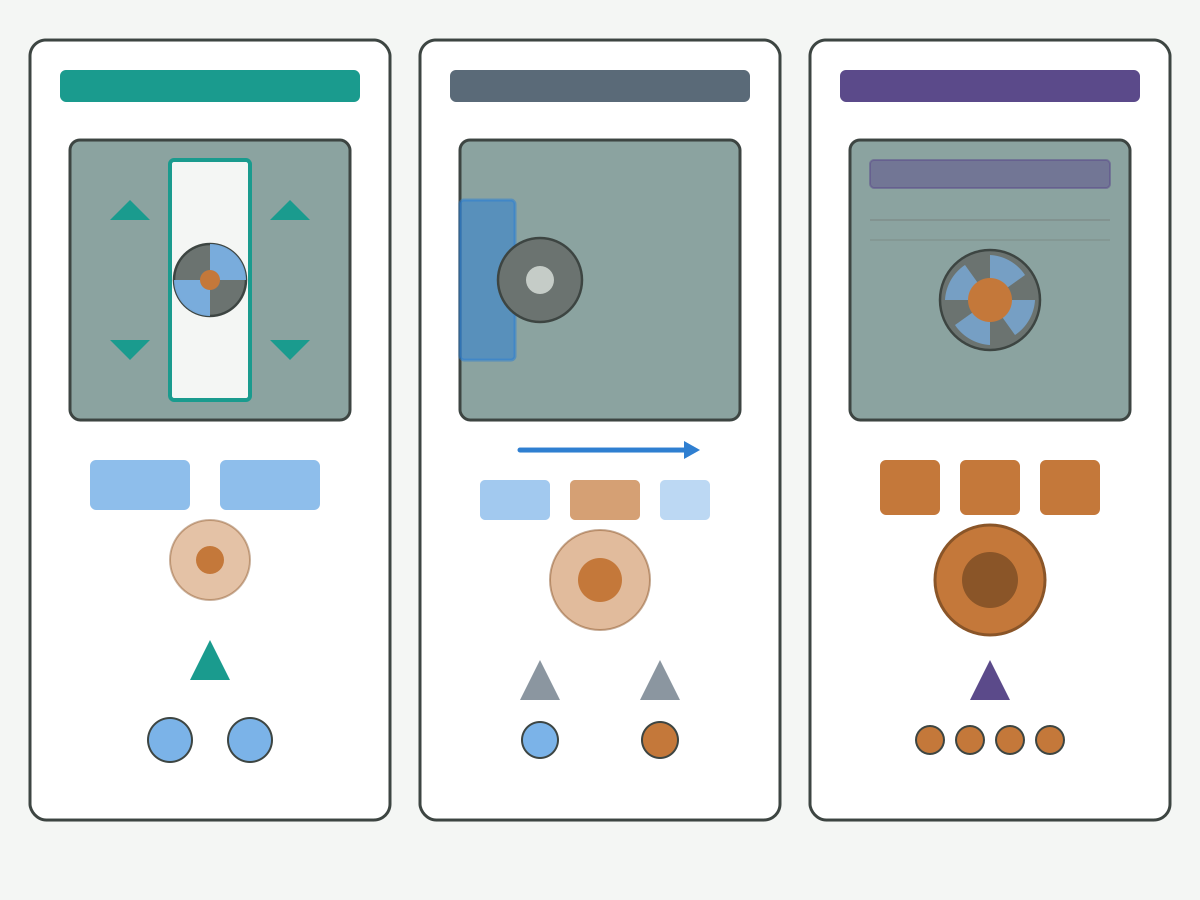
Schematic process decision illustration: boundaries only, not a catalogue ranking. Confirm feature type, ae, ap, and flute intent on your program and cutter data.
Speeds and feeds: comparison conditions (not a full library)
Flute count changes how you compare speeds and feeds. It does not replace the SFM to RPM to fz chain. Keep arithmetic, ae/ap correction, and the trial-cut loop on the live end mill speeds and feeds guide. This section only states comparison conditions beside any 2-flute versus 4-flute choice.
- Always state z next to fz and Vf: Vf ≈ RPM × z × fz. Two flutes and four flutes at the same fz do not share the same table feed. Copying Vf across flute counts without restating z is an error, not a preference.
- Same fz is not the same chip thickness history: ae, ap, and sense change effective chip load. Correct engagement on the speeds and feeds guide before you blame flute count.
- Chip space versus feed capacity: more flutes raise potential Vf at a given fz, but shrink gullet volume. If chips pack, reducing fz or ae, improving coolant, or dropping flute count beats inventing a higher SFM slogan.
- What to bring from this page to N017: material family, feature (slot / side / finish), planned z, ae and ap bands, coolant mode, and whether evacuation or finish drove the flute call. Do not invent a universal SFM table, life percentages, or a "standard full feeds" chart here.
- Coating and size pointers: after z is locked, coating intent points to the live end mill coatings guide; diameter and stick-out point to the live end mill sizes guide.
Metrology literacy such as this public metrology laboratory entry and this weights and measures overview supports naming acceptance beside trial numbers when flute count changes. Formula literacy on the speeds and feeds guide remains the arithmetic home for SFM, RPM, and fz.
| Comparison field | Write on the sheet | Common mistake |
|---|---|---|
| Flute count z | 2 or 4 (or open) next to fz and Vf | Publishing Vf without z |
| Feature / ae / ap | Slot, side, or finish with engagement bands | Copying finish fz into a full slot |
| Material and coolant | Grade, condition, flood / MQL / dry | Assuming "alu = 2" with no condition note |
| Arithmetic home | Pointer to live speeds and feeds guide | Inventing a full SFM library on this page |
Selection and compare table (conditional)
Use this table as a conditional map, not an unconditional ranking. Prefer the column that matches the bottleneck you named. When both fit, keep flute count open on the RFQ and trial both under the same acceptance method.
| Decision lens | Lean 2-flute when… | Lean 4-flute when… | Keep open / escalate when… |
|---|---|---|---|
| Chip space | Full slot, sticky chips, gullet packing risk | Chips already clear at planned ae | Packing appears on either tool and delivery is unknown |
| Core rigidity | Rough evacuation first; finish on a second tool | Side load and wall finish need a stiffer core | Stick-out or holder is the real limit |
| Feed capacity | Healthy fz with room to clear at lower z | Same fz with higher z raises Vf safely | Vf was copied without restating z |
| Finish intent | Finish pass planned on a different flute count | Light ae finish on a stable setup | Cosmetic finish demanded inside a packed slot |
| Material family | Soft aluminium-family and long-chip slots | Steels and shorter-chip side / finish work | Grade or condition missing |
| RFQ posture | State 2-flute intent with feature notes | State 4-flute intent with feature notes | Mark z open and attach trial plan |
Information gain: a conditional table forces the bottleneck name onto the sheet. An unconditional "4-flute is better" slogan is not a process.
Procurement checklist (RFQ inputs)
Send what you know. Leave life, price, and unverified cycle-time fields blank. Do not invent an unconditional flute ranking.
- Drawing revision and feature notes (slot, pocket wall, side mill, rough versus finish).
- Material grade, condition, sticky-chip risk, and coolant / MQL / dry intent.
- Cutting diameter, proposed flute count (2, 4, or open), geometry family (square / flat, ball-nose, corner-radius), and size pointers from the live sizes guide when relevant.
- ae and ap bands and climb versus conventional sense if locked.
- Speeds-feeds condition pointer: proposed SFM or Vc / fz bands marked instructional versus cutter-data sourced, with z stated beside Vf (arithmetic on the live speeds and feeds guide).
- Holder type, stick-out method, and envelope limits.
- Coating intent pointer (may be "open" pending the coatings guide).
- Trial-cut notes and acceptance method; identifiers for repeat orders.
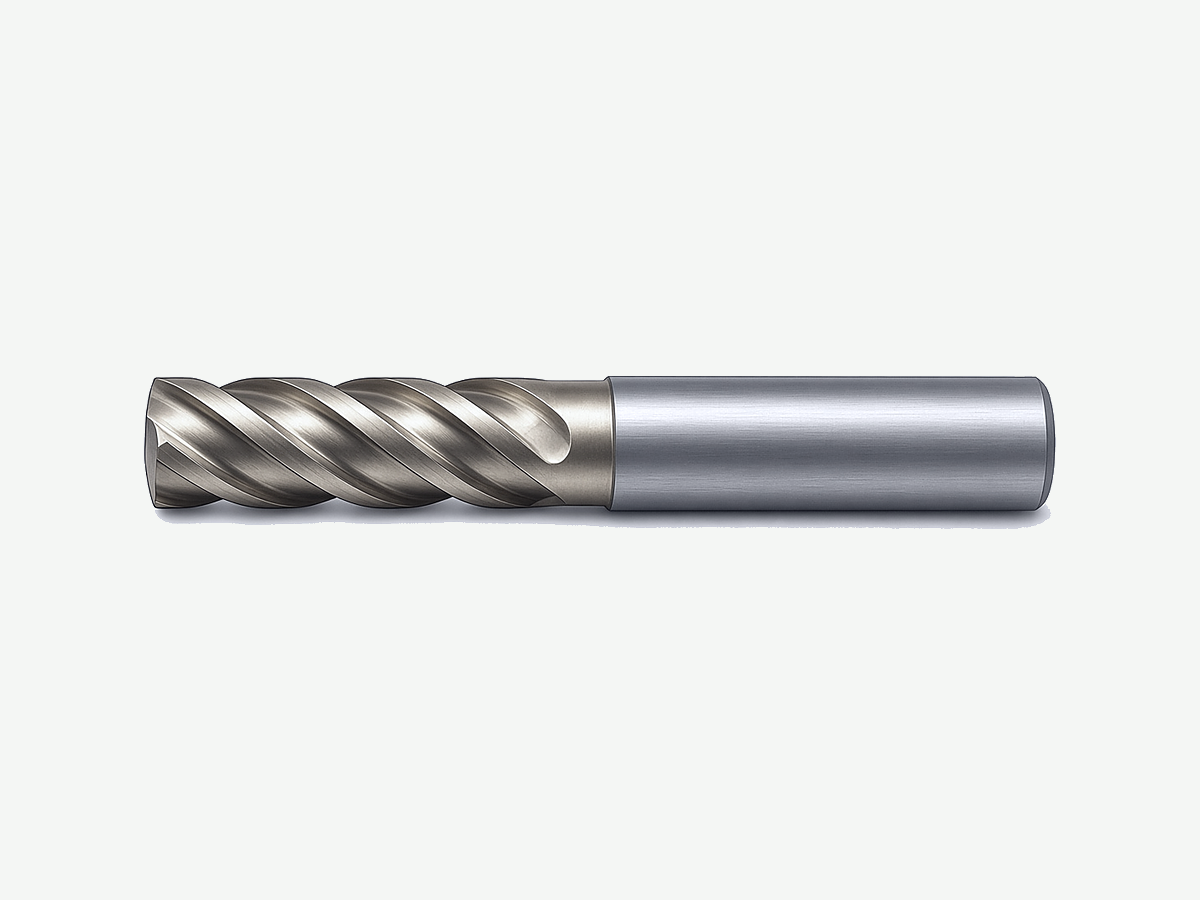
Browse live constructions here: carbide end mills, 4 flute carbide end mills, ball nose end mills, and corner radius end mills. Open the request form when the package is ready: custom cutting tool RFQ.
Confirm the specification with engineering support
Before production ramp, confirm material condition, feature type, flute-count intent, ae and ap, coolant mode, and speeds-feeds comparison conditions with engineering. Hand the package to a product and RFQ path that can return a matched 2- versus 4-flute end-mill recommendation, not a generic catalogue guess. HENTRY / HC supports drawing-based solid carbide and four-flute end-mill proposals and engineering review. No price, MOQ, or unverified lead time is stated on this page. Until a dedicated two-flute product URL publishes, keep two-flute intent on the RFQ and the carbide family pages.
Specification fields to confirm
- Proposed tool model or drawing.
- Material grade / condition and coolant mode.
- Feature type (slot / side / finish) and ae / ap bands.
- Flute-count intent (2, 4, or open) and geometry family.
- Dc, size envelope, holder type, and stick-out method.
- Speeds-feeds condition notes (z beside fz / Vf; pointer to live speeds and feeds guide).
- Inspection and sample acceptance expectations.
- Identifiers needed for repeat orders.
Trial plan (minimum)
- Same drawing revision and acceptance criteria as the checklist.
- First-off record of chip form, packing, wall marks, load, and size before compensation edits.
- Change one variable at a time when comparing 2-flute and 4-flute under the same ae / ap intent.
- Stop when chips pack, marks look abnormal, size drifts, or the tool collides with the envelope.
- Do not claim either flute count "won" without those controls.
Review listed constructions here: explore carbide end mills · explore 4 flute carbide end mills · explore ball nose end mills · explore corner radius end mills. Research and practice portals such as this CIRP research portal (also cited above for process research framing) and ISO public information such as this international standards overview support industry literacy only.
Request a 2- vs 4-flute end-mill recommendation
Suggested enquiry subject: 2 vs 4 flute end mill - [material] - [slot / side / finish] - [Dc / z intent] - [ae / ap] - [feature]
2 Flute vs 4 Flute End Mills FAQ
When should I choose a 2-flute end mill?
Choose two flutes when chip space and evacuation dominate: full-width slotting, sticky aluminium-family chips, soft materials that pack in the gullet, or any cut where large chip valleys clear faster than a denser flute pack. Record material, feature, and ae before you treat two flutes as a habit.
When should I choose a 4-flute end mill?
Choose four flutes when core rigidity, edge count, and wall finish dominate and chips already clear at the planned radial engagement: side milling, light ae finishing, and many steel-family passes. Do not force four flutes into a packed full slot for cosmetics alone.
How does flute count change speeds and feeds comparison?
Table feed scales with flute count at a given feed per tooth, so two-flute and four-flute tools at the same fz do not share the same table feed. Always write flute count beside fz and table feed. Full SFM, RPM, and ae/ap arithmetic belongs on the end-mill speeds and feeds guide; this page only locks the comparison conditions.
Is 4-flute always better for steel and 2-flute always better for aluminium?
No. Those habits fail when feature type and chip behaviour disagree with the slogan. Soft aluminium slots often favour two flutes, and steel side finishing often favours four, but sticky chips, full slots, coolant mode, and stick-out can reverse either call. Name the bottleneck instead of quoting a material slogan.
Can I rough with 2 flutes and finish with 4 flutes?
Yes, when the shop can change tools and both setups share the same acceptance method. Roughing with fewer flutes can clear chips; finishing with more flutes can improve wall quality on light ae. Record both tools and do not hide a two-step route behind one drawer SKU.
Which inputs should I send in an RFQ for 2-flute vs 4-flute selection?
Send drawing revision, material and coolant intent, feature type, cutting diameter, flute-count intent or open, geometry family, ae and ap and sense if known, speeds-feeds condition notes with flute count stated beside feed, holder and stick-out notes, coating intent pointer, trial notes, and acceptance method. Leave unverified life and price fields blank.
Does this page replace sizes, coatings, speeds and feeds, or the milling tools guide?
No. Cutter-type navigation stays on the live milling tools guide. Size callouts stay on the live end-mill sizes guide. Coating selection stays on the live end-mill coatings guide. Full SFM to RPM to fz arithmetic stays on the live end-mill speeds and feeds guide. Climb versus conventional and peripheral process detail stay on their live guides. This page owns chip space versus rigidity, material and process gates, slotting versus side versus finish, comparison conditions, the conditional selection table, and the RFQ checklist only.
When does this page not apply?
It does not apply when you need invented life percentages, prices, ROI, or unverified case counts; when you need an unconditional best-flute ranking; when you need a coating encyclopedia, size chart book, full SFM library, climb-versus-conventional long guide, peripheral process book, face-milling OWN, or holemaking OWN; or when material, feature type, and engagement are missing and nobody will stop to state them. Fix the inputs first.
Sources and related guides
Outbound references support milling and formula literacy, toolholding and coolant boundaries, standards and metrology portals, cutting-data literacy, CNC milling practice, and manufacturing research portals cited in the body. Manufacturer-specific cutting data remain tied to their own products. The decision walkthrough is an HC editorial teaching aid, not a measured customer result. Sources checked for this draft on 22 October 2026 (Asia/Shanghai).
- Milling knowledge overview (third-party education page; linked in body)
- Machining formulas overview (third-party education page; linked in body)
- Toolholding overview (third-party education page; linked in body)
- Tool holder technology overview (third-party education page; linked in body)
- Coolant know-how overview (third-party education page; linked in body)
- Engineering calculators portal (third-party tooling education; linked in body)
- Cutting data notes portal (third-party tooling education; linked in body)
- Codes and standards portal (public standards entry; linked in body)
- Public metrology laboratory entry (public metrology entry; linked in body)
- Weights and measures overview (public metrology entry; linked in body)
- National standards overview (public standards entry; linked in body)
- International standards overview (public standards entry; linked in body)
- Manufacturing society portal (public manufacturing literacy; linked in body)
- CIRP research portal (third-party research society; linked in body)
- Cutting tools practice overview (third-party education page; linked in body)
- CNC milling overview (third-party education page; linked in body)
Related live guides: milling tools guide · end mill speeds and feeds · end mill sizes · end mill coatings · peripheral milling · climb vs conventional milling · carbide end mills · 4 flute carbide end mills · ball nose end mills · corner radius end mills · custom cutting tool RFQ. A dedicated two-flute carbide end-mill product page, a face-milling OWN page, a fly-cutter versus face-mill comparison, and a general cutting-tool coatings encyclopedia will be linked here after they publish (soft-note only until live).